
Author

admin

Browsing

Group Eleven Resources Corp. (TSXV: ZNG,OTC:GRLVF) (OTCQB: GRLVF) (FSE: 3GE) (‘Group Eleven’ or the ‘Company’) is pleased to announce the latest three step-out drill holes from the discovery horizon at its Ballywire discovery (‘Ballywire’) at the 100%-owned PG West Project (‘PG West’), Republic of Ireland. Drilling at Ballywire’s deeper, Cu-Ag target (100-200m below discovery horizon) is in progress (to be reported as soon as possible).

Highlights:

  • 25-3552-37 (90m step-out NE of 25-3552-35, hosting widest intercept to date; announced 02-Jul-25) intersected intermittent mineralization over a 185m-long interval, including:

    • Cu-Ag Intercept (hosted in Ballysteen Limestone, beneath Waulsortian Limestone)

      • 6.2m of 312 g/t Ag and 0.95% Cu (starting from 303.9m downhole), including

      • 2.8m of 549 g/t Ag and 1.77% Cu, including

      • 0.3m (30cm) of 2,470 g/t Ag and 5.87% Cu

    • Zn-Pb-Ag Intercepts (hosted within Waulsortian Limestone)

      • 4.9m of 5.2% Zn+Pb (4.0% Zn and 1.2% Pb), 45 g/t Ag (starting from 125.9m), including

      • 0.1m (14cm) of 65.1% Zn+Pb (46.4% Zn and 18.7% Pb), 654 g/t Ag

  • 25-3552-36 (90m step-out SE of the above hole), intersected intermittent mineralization over a 38m-long interval, including:

    • 2.8m of 231 g/t Ag and 0.85% Cu, including

    • 0.2m (16cm) of 3,820 g/t Ag and 12.60% Cu (among highest Ag/Cu assays in Ireland)

  • 25-3552-34 (35m step-out NNW of the above hole), intersected intermittent mineralization over 16m-long interval, including 1.9m of 59 g/t Ag and 0.75% Cu

  • These results extend the strike length of Ballywire’s main discovery corridor by 135m from 1,300m to 1,435m, while further emphasising Cu-Ag potential at depth

  • This corridor is hosted within a larger 2.6km long trend of robust mineralization pierced by drilling to date at Ballywire, along a prospective trend of over 6km (defined by four regional gravity-high anomalies, only one of which has been systematically drill tested to date)

  • The Company’s ‘deeper Cu-Ag’ target (100-200m below the Zn-Pb-Ag horizon) is currently being drill tested with two holes completed and a third hole in progress

  • Three rigs are turning at Ballywire with approx. 5,700m of drilling completed year-to-date; Group Eleven aims to complete a further approx. 25,000m of drilling by end of 2026 (fully funded)

‘Today’s results expand our main discovery corridor by 135m and add to growing evidence suggesting a deeper Cu-Ag horizon one to two hundred metres below Ballywire’s current discovery horizon,’ stated Bart Jaworski, CEO. ‘This deeper target is currently being drilled, with two holes finished and a third started. We look forward to releasing these results as soon as assays are available. With three rigs turning each on excellent targets at Ballywire, a fourth rig likely to be added soon and a recently announced strengthened cash position now totalling C$8.4 million, Group Eleven is poised to keep generating shareholder value through the drill bit for the foreseeable future.’

Exhibit 1. Plan Map of Main Ballywire Discovery Corridor, Showing Holes 25-3552-34, -36 and -37

Note: For brevity, drill holes are labelled by the last two digits of their identification number (e.g. ‘-40’ means 25-3552-40)

To view an enhanced version of this graphic, please visit:
https://images.newsfilecorp.com/files/5685/264236_1b221f02341a2967_002full.jpg

Exhibit 2. Long-Section: Ballywire Cu-Ag Intercepts to Date vs. Deeper Cu-Ag Target

Note: In order to highlight Cu-Ag mineralization, the Zn-Pb-Ag bearing zones are not shown on the section; * ‘LLS’ means Lower Limestone Shale which is known to host Cu-Ag mineralization in the vicinity (5-45km) of Ballywire; ‘Deeper Cu-Ag Target’ is hosted predominantly by the LLS, but also by other lithologies between the Waulsortian Limestone and the LLS; LLS is believed to be approx. 100-200m below the Waulsortian Limestone

To view an enhanced version of this graphic, please visit:
https://images.newsfilecorp.com/files/5685/264236_1b221f02341a2967_003full.jpg

Ballywire Drill Update

The Ballywire prospect at the Company’s 100%-owned PG West Project in Republic of Ireland, represents the most significant mineral discovery in Ireland in over a decade. First announced in Sept-2022, the discovery has 56 holes drilled and reported by Group Eleven to date, including the most recent three holes (25-3552-34, -36 and -37) reported today (see Exhibits 1 to 4).

Today’s results add further evidence that the mineralized trend at Ballywire continues further east towards G11-3552-08. One of the Company’s three rigs is now drilling a fence of holes collared 200m east of this hole (see Exhibit 1), testing for the further continuation of the mineralized trend. A second rig is drilling a fence of holes testing for the deeper Cu-Ag target (within the Lower Limestone Shale) with two holes completed and the third recently started (see ‘-40’ in Exhibit 1, and ’25-3552-40′ in Exhibit 2). A third rig is drilling along the section of holes containing G11-468-01 and 00-468-5 (see Exhibit 1) to test for a SW continuation of high-grade mineralization. The Company plans to soon add a fourth rig at Ballywire, geared towards reconnaissance drilling further outboard of the current mineralized corridor. Meanwhile, two holes located 1.3km to the ENE (near gravity anomaly ‘D’; see Exhibit 3) were recently completed (assays pending), with follow up drilling planned upon receipt of a second drill permit (recently submitted) which would allow for more flexibility on drill locations further to the NE.

Exhibit 3. Regional Gravity Map Showing 6km Long Prospective Trend at Ballywire

To view an enhanced version of this graphic, please visit:
https://images.newsfilecorp.com/files/5685/264236_1b221f02341a2967_004full.jpg

Note: Of the four gravity-high anomalies above, only the ‘C’ anomaly has been systematically drilled to date

Assays from today’s drill holes are summarized above (see Exhibit 4). Mineralization consists predominantly of sphalerite, galena and pyrite, with the Cu-Ag bearing zones also containing chalcopyrite and suspected tennantite-tetrahedrite. Substantial Cu-Ag mineralization in 25-3552-37 is located within the Ballysteen Limestone, in contrast to 25-3552-35, where a strong Cu-Ag interval occurs at the base of the Waulsortian Limestone. Varying lithologies hosting Cu-Ag mineralization suggest a dynamic and potentially robust mineralizing system with respect to copper and silver.

Exhibit 4. Summary of Assays from 25-3552-37, -36 and -34 at Ballywire

Item From
(m)
To
(m)
Int
(m)
Zn
(%)
Pb
(%)
Zn+Pb
(%)
Ag
(g/t)
Cu
(%)
25-3552-37 124.88 310.10 185.22 0.43 0.18 0.61 15.7 0.05
Incl. 124.88 132.60 7.72 2.75 0.81 3.55 30.4 0.01
Incl. 124.88 125.99 1.11 6.20 2.39 8.59 90.4 0.02
And 125.85 132.60 6.75 3.08 0.92 4.00 33.5 0.01
Incl. 125.85 130.72 4.87 3.97 1.19 5.16 44.6 0.01
Incl. 125.85 125.99 0.14 46.40 18.70 65.10 654.0 0.08
And 127.85 132.60 4.75 3.00 0.74 3.74 28.1 0.01
Incl. 127.85 130.72 2.87 4.45 1.10 5.54 43.5 0.01
Incl. 127.85 128.78 0.93 6.37 1.42 7.79 64.6 0.01
And 129.78 130.72 0.94 7.21 1.91 9.12 68.4 0.02
And 151.70 164.80 13.10 1.32 0.17 1.48 6.1 0.00
Incl. 161.00 163.85 2.85 2.70 0.61 3.31 15.7 0.01
And 173.17 177.74 4.57 0.53 0.25 0.78 2.3
And 182.25 183.16 0.91 0.94 0.09 1.02 0.7
And 190.50 193.10 2.60 0.72 0.05 0.77 0.4
And 198.40 200.32 1.92 0.92 0.31 1.23 2.2
And 203.10 206.80 3.70 0.61 0.16 0.77 2.7
And 210.40 234.97 24.57 0.76 0.19 0.95 4.4
Incl. 219.90 234.97 15.07 0.91 0.25 1.16 5.3
Incl. 219.90 220.90 1.00 3.22 0.49 3.71 16.7 0.02
And 243.20 258.90 15.70 0.21 0.30 0.51 16.9 0.06
Incl. 250.15 251.80 1.65 0.36 0.39 0.75 104.8 0.45
And 264.35 266.10 1.75 0.08 0.08 0.17 17.5 0.01
And 295.30 300.75 5.45 0.07 0.37 0.44 17.1 0.20
And 303.90 310.10 6.20 0.07 1.29 1.36 311.7 0.95
Incl. 303.90 306.70 2.80 0.13 0.09 0.22 549.0 1.77
Incl. 305.40 306.70 1.30 0.24 0.06 0.30 1,104.6 3.25
Incl. 306.40 306.70 0.30 0.39 0.10 0.49 2,470.0 5.87
25-3552-36 239.96 278.35 38.39 0.34 0.26 0.60 2.0
Incl. 244.88 251.68 6.80 1.01 0.29 1.30 3.5
Incl. 248.76 250.72 1.96 1.86 0.50 2.37 5.1
And 261.31 268.84 7.53 0.53 0.94 1.47 4.8 0.02
Incl. 262.20 264.96 2.76 1.06 1.79 2.85 9.1 0.04
And 305.02 307.81 2.79 0.40 0.06 0.46 231.0 0.85
Incl. 305.74 305.90 0.16 1.58 0.25 1.82 3,820.0 12.60
Incl. 305.90 306.82 0.92 0.50 0.06 0.56 30.0 0.28
25-3552-34 205.50 205.60 0.10 8.07 0.28 8.35 38.9 0.06
And 232.22 248.29 16.07 0.15 0.12 0.27 8.0 0.09
Incl. 241.47 247.82 6.35 0.12 0.24 0.36 18.1 0.23
Incl. 244.53 246.43 1.90 0.25 0.64 0.89 59.2 0.75
Incl. 245.44 246.43 0.99 0.23 0.36 0.59 87.1 1.00


Note: True thickness of the mineralized interval in holes 25-3552-37, -36 and -34, as a percentage of the down-hole interval, is estimated to be 70-80%, 90-100% and 90-100% respectively; ‘-‘ means equal to or less than 0.01% (

Drilling at Ballywire continues with three rigs. Currently, twelve (12) new holes are completed or near completed (and in the process of being logged, sampled and assayed). Nine (9) of these are shown in Exhibit 1, with two other holes near gravity-high anomaly ‘D’ (located 1.3km to the ENE) and one hole collared approx. 200m NNW of G11-468-01 (see Exhibit 1).

Exhibit 5. Regional Map of Ballywire Discovery and Surrounding Prospects

To view an enhanced version of this graphic, please visit:
https://images.newsfilecorp.com/files/5685/264236_1b221f02341a2967_005full.jpg

Notes to Exhibit 5: (a) Pallas Green MRE is owned by Glencore (see Glencore’s Resources and Reserves Report dated December 31, 2024); (b) Stonepark MRE: see the ‘NI 43-101 Independent Report on the Zinc-Lead Exploration Project at Stonepark, County Limerick, Ireland’, by Gordon, Kelly and van Lente, with an effective date of April 26, 2018, as found on SEDAR; and (c) the historic estimate at Denison was reported by Westland Exploration Limited in ‘Report on Prospecting Licence 464’ by Dermot Hughes dated May, 1988; the historic estimate at Gortdrum was reported in ‘The Geology and Genesis of the Gortdrum Cu-Ag-Hg Orebody’ by G.M. Steed dated 1986; and the historic estimate at Tullacondra was first reported by Munster Base Metals Ltd in ‘Report on Mallow Property’ by David Wilbur, dated December 1973; and later summarized in ‘Cu-Ag Mineralization at Tullacondra, Mallow, Co. Cork’ by Wilbur and Carter in 1986; the above three historic estimates have not been verified as current mineral resources; none of the key assumptions, parameters and methods used to prepare the historic estimates were reported and no resource categories were used; significant data compilation, re-drilling and data verification may be required by a Qualified Person before the historic estimates can be verified and upgraded to be compliant with current NI 43-101 standards; a Qualified Person has not done sufficient work to classify them as a current mineral resource and the Company is not treating the historic estimates as current mineral resources. ‘Rathdowney Trend’ is the south-westerly projection of the Rathdowney Trend, hosting the historic Lisheen and Galmoy mines.

Qualified Person

Technical information in this news release has been approved by Professor Garth Earls, Eur Geol, P.Geo, FSEG, geological consultant at IGS (International Geoscience Services) Limited, and independent ‘Qualified Person’ as defined under Canadian National Instrument 43-101.

Sampling and Analytical Procedures

All core drilled at Ballywire is NQ (47.6mm) and is cut using a rock saw. Sample intervals vary between 0.10m to 1.28m with an average (over 285 samples) of 0.91m. The half-core samples are bagged, labelled and sealed at Group Eleven’s core store facility in Limerick, Ireland. Selected sample bags are examined by the Qualified Person. Transport is via an accredited courier service and/or by Group Eleven staff to ALS Laboratories in Loughrea Co. Galway, Ireland. Sample preparation at the ALS facility comprises fine crushing 70%

Quality Assurance/Quality Control (QA/QC) Information

Group Eleven inserts certified reference materials (‘CRMs’ or ‘Standards’) as well as blank material, to its sample stream as part of its industry-standard QA/QC programme. The QC results have been reviewed by the Qualified Person, who is satisfied that all the results are within acceptable parameters. The Qualified Person has validated the sampling and chain of custody protocols used by Group Eleven.

About Group Eleven Resources

Group Eleven Resources Corp. (TSXV: ZNG,OTC:GRLVF) (OTCQB: GRLVF) (FSE: 3GE) is drilling the most significant mineral discovery in the Republic of Ireland in over a decade. The Company announced the Ballywire discovery in September 2022, demonstrating high grades of zinc, lead, silver, copper, germanium and locally, antimony. Key intercepts to date include:

  • 10.8m of 10.0% Zn+Pb and 109 g/t Ag (G11-468-03)

  • 10.1m of 8.6% Zn+Pb and 46 g/t Ag (G11-468-06)

  • 10.5m of 14.7% Zn+Pb, 399 g/t Ag and 0.31% Cu (G11-468-12)

  • 11.2m of 8.9% Zn+Pb and 83 g/t Ag (G11-3552-03)

  • 29.6m of 10.6% Zn+Pb, 78 g/t Ag and 0.15% Cu (G11-3552-12) and

  • 11.8m of 11.6% Zn+Pb, 48 g/t Ag (G11-3552-18)

  • 15.6m of 11.6% Zn+Pb, 122 g/t Ag and 0.19% Cu (G11-3552-27)

  • 12.0m of 1.4% Zn+Pb, 560 g/t Ag, 2.30% Cu and 0.17% Sb (25-3552-31), including

  • 6.4m of 2.1% Zn+Pb, 838 g/t Ag, 3.72% Cu and 0.27% Sb (25-3552-31)

  • 39.7m of 9.5% Zn+Pb, 131 g/t Ag and 0.27% Cu (25-3552-35)

Ballywire is located 20km from Company’s 77.64%-owned Stonepark zinc-lead deposit1, which itself is located adjacent to Glencore’s Pallas Green zinc-lead deposit2. The Company’s two largest shareholders are Michael Gentile (14.2%) and Glencore Canada Corp. (14.1% interest). Additional information about the Company is available at www.groupelevenresources.com.

ON BEHALF OF THE BOARD OF DIRECTORS
Bart Jaworski, P.Geo.
Chief Executive Officer

E: b.jaworski@groupelevenresources.com | T: +353-85-833-2463
E: j.lau@groupelevenresources.com | T: 604-781-4915

Neither TSX Venture Exchange nor its Regulation Services Provider (as that term is defined in the policies of the TSX Venture Exchange) accepts responsibility for the adequacy or accuracy of this release.

Cautionary Note Regarding Forward-Looking Information

Technical and scientific information disclosed from neighbouring properties does not necessarily apply to the current project or property being disclosed. This press release contains forward-looking statements within the meaning of applicable securities legislation. Such statements include, without limitation, statements regarding the future results of operations, performance and achievements of the Company, including the timing, content, cost and results of proposed work programs, the discovery and delineation of mineral deposits/resources/ reserves and geological interpretations. Although the Company believes that such statements are reasonable, it can give no assurance that such expectations will prove to be correct. Forward-looking statements are typically identified by words such as: believe, expect, anticipate, intend, estimate, postulate and similar expressions, or are those, which, by their nature, refer to future events. The Company cautions investors that any forward-looking statements by the Company are not guarantees of future results or performance, and that actual results may differ materially from those in forward looking statements as a result of various factors, including, but not limited to, variations in the nature, quality and quantity of any mineral deposits that may be located. All of the Company’s public disclosure filings may be accessed via www.sedarplus.ca and readers are urged to review these materials, including the technical reports filed with respect to the Company’s mineral properties.

________________________
1 Stonepark MRE is 5.1 million tonnes of 11.3% Zn+Pb (8.7% Zn and 2.6% Pb), Inferred (Apr-17-2018)
2 Pallas Green MRE is 45.4 million tonnes of 8.4% Zn+Pb (7.2% Zn + 1.2% Pb), Inferred (Glencore, Dec-31-2024)

To view the source version of this press release, please visit https://www.newsfilecorp.com/release/264236

News Provided by Newsfile via QuoteMedia
This post appeared first on investingnews.com

Uncle Herschel is returning to the Cracker Barrel chair.

After online outrage by conservatives who accused the country-themed restaurant chain of changing its values or going “woke” when it rolled out a new logo, the company said Tuesday that it was returning to its old branding.

‘We thank our guests for sharing your voices and love for Cracker Barrel. We said we would listen, and we have. Our new logo is going away and our ‘Old Timer’ will remain,’ Cracker Barrel said on Facebook.

‘At Cracker Barrel, it’s always been — and always will be — about serving up delicious food, warm welcomes, and the kind of country hospitality that feels like family,’ the company said. ‘As a proud American institution, our 70,000 hardworking employees look forward to welcoming you to our table soon.’

The new Cracker Barrel logo on a menu in a restaurant in Homestead, Fla., on Thursday.Joe Raedle / Getty Images file

Cracker Barrel, which has restaurants in 43 states, on Aug. 18 announced its new ‘All the More’ campaign and logo change, which removed the old man perched on a chair and the barrel from Cracker Barrel signs.

The new logo did not go over well in some spheres, and on social media, conservative critics accused the restaurant chain of abandoning its traditional values or of being ‘woke.’

President Donald Trump weighed in on the matter earlier Tuesday, writing on his social media platform, Truth Social, that the company should return to the old logo.

After Cracker Barrel announced the reversal Tuesday, Trump said on the platform: ‘Congratulations ‘Cracker Barrel’ on changing your logo back to what it was. All of your fans very much appreciate it.’ Trump also wished the company good luck.

Paul Weaver / SOPA Images/LightRocket via Getty Images

Taylor Budowich, a deputy White House chief of staff, claimed on X that he’d spoken with people at Cracker Barrel by phone Tuesday about the issue and said, ‘They thanked President Trump for weighing in on the issue of their iconic ‘original’ logo.’

Cracker Barrel did not immediately respond to a request for comment about a White House call.

Shares of Cracker Barrel jumped sharply Tuesday night after it announced the reversal. Since the debut of the new logo on Aug. 18, shares are down nearly 13%.

Cracker Barrel tried to tamp down the controversy Monday by admitting ‘we could’ve done a better job sharing who we are and who we’ll always be’ and issuing reassurances that its values had not changed.

The change was part of a “strategic transformation” that started in 2024 to revitalize the brand, CNBC reported when the new logo was introduced. The company has said that the initiative included ‘refreshing the brand identity’ and making changes to its menu.

Other companies have been met with right-wing outrage for advertising or other business decisions, including when Bud Light had a branded content partnership with transgender TikToker Dylan Mulvaney.

This post appeared first on NBC NEWS

Google has eliminated more than one-third of its managers overseeing small teams, an executive told employees last week, as the company continues its focus on efficiencies across the organization.

“Right now, we have 35% fewer managers, with fewer direct reports” than at this time a year ago, said Brian Welle, vice president of people analytics and performance, according to audio of an all-hands meeting reviewed by CNBC. “So a lot of fast progress there.”

At the meeting, employees asked Welle and other executives about job security, “internal barriers” and Google’s culture after several recent rounds of layoffs, buyouts and reorganizations.

Welle said the idea is to reduce bureaucracy and run the company more efficiently.

“When we look across our entire leadership population, that’s mangers, directors and VPs, we want them to be a smaller percentage of our overall workforce over time,” he said.

The 35% reduction refers to the number of managers who oversee fewer than three people, according to a person familiar with the matter. Many of those managers stayed with the company as individual contributors, said the person, who asked not to be named because the details are private.

Google CEO Sundar Pichai weighed in at the meeting, reiterating the need for the company “to be more efficient as we scale up so we don’t solve everything with headcount.”

Google eliminated about 6% of its workforce in 2023, and has implemented cuts in various divisions since then. Alphabet finance chief Anat Ashkenazi, who joined the company last year, said in October that she would push cost cuts “a little further.” Google has offered buyouts to employees since January, and the company has slowed hiring, asking employees to do more with less.

Regarding the buyouts, executives at the town hall said that a total of 10 product areas have presented “Voluntary Exit Program” offers. They’ve applied to U.S.-based employees in search, marketing, hardware and people operations teams this year.

Fiona Cicconi, Google’s chief people officer, said at last week’s meeting that between 3% and 5% of employees on those teams have accepted the buyouts.

“This has been actually quite successful,” she said, adding “I think we can continue it.”

Pichai said the company executed the voluntary buyouts after listening to employees, who said they preferred that route to blanket layoffs.

“It’s a lot of work that’s gone into implementing the VEP program, and I’m glad we’ve done it,” Pichai said. “It gives people agency, and I’m glad to see it’s worked out well.”

Cicconi said one of the main reasons employees are taking the buyouts is because they want to take time off from work.

“It’s actually quite interesting to see who’s taking a VEP, and it’s people sort of wanting a career break, sometimes to take care of family members,” she said.

CNBC previously reported that the layoffs hurt morale as the company was downsizing while at the same time issuing blowout earnings and seeing its stock price jump. Alphabet’s shares are up 10% this year after climbing 36% in 2024 and 58% the year prior.

At another point in the town hall, employees asked if Google would consider a policy similar to Meta’s “recharge,” a month-long sabbatical that employees earn after five years at the company.

“We have a lot of leaves, not least our vacation, which is there for exactly that — resting and recharging,” said Alexandra Maddison, Google’s senior director of benefits.

She said the company is not going to offer paid sabbatical.

“We’re very confident that our current offering is competitive,” Maddison said.

Meta didn’t immediately respond to a request for comment.

Other executives jumped in to compare the two companies’ benefits.

“I don’t think they have a VEP at Meta by the way,” Cicconi said.

Pichai then asked, to some laughs from the audience, “Should we incorporate all policies of Meta while we’re at it? Or should we only pick and choose the few policies we like?”

“Maybe I should try running the company with all of Meta’s policies,” he continued. “No, probably not.”

This post appeared first on NBC NEWS

Perth, Australia (ABN Newswire) – Basin Energy Limited (ASX:BSN) (OTCMKTS:BSNEF) is pleased to invite shareholders and investors to an investor webinar where Managing Director, Pete Moorhouse will provide a Company update following the recently acquired extensive uranium and rare earth portfolio in Queensland and outline upcoming exploration plans.

DETAILS

Date: Thursday, 28 August 2025
Time: 11:30AM AEST / 9:30AM AWST

Registration:
https://www.abnnewswire.net/lnk/66GZ5R65

Participants will be able to submit questions via the panel throughout the presentation, however we highly encourage attendees to submit questions beforehand via chloe@janemorganmanagement.com.au

To view the Presentation, please visit:
https://www.abnnewswire.net/lnk/3Z6Y66N7

About Basin Energy Ltd:

Basin Energy Ltd (ASX:BSN) (OTCMKTS:BSNEF) is a green energy metals exploration and development company with an interest in three highly prospective projects positioned in the southeast corner and margins of the world-renowned Athabasca Basin in Canada and has recently acquired a significant portfolio of Green Energy Metals exploration assets located in Scandinavia.

Source:
Basin Energy Ltd

Contact:
Pete Moorhouse
Managing Director
pete.m@basinenergy.com.au
+61 7 3667 7449

Chloe Hayes
Investor and Media Relations
chloe@janemorganmanagement.com.au
+61 458619317

News Provided by ABN Newswire via QuoteMedia

This post appeared first on investingnews.com

Investor Insight

Corazon Mining Ltd presents a compelling investment case driven by a strategic pivot to WA gold exploration, capitalising on its recent acquisition of the Two Pools gold project. This acquisition offers significant near-term exploration upside, while the company retains a high-quality portfolio of base and battery metals projects, providing long-term optionality and leverage to the evolving critical minerals market. This strategy positions Corazon to deliver shareholder value through potential high-impact discovery and future project development.

Overview

Corazon Mining Ltd (ASX:CZN) is an Australian junior exploration company focused on high-quality gold and critical minerals projects in Australia and Canada.

Company Highlights

  • Two Pools Gold Project: The company’s primary focus is the newly acquired Two Pools Gold Project in Western Australia’s highly productive Plutonic Greenstone Belt. This underexplored tenure contains a recently identified 20km-long greenstone belt that was previously misclassified as granite.
  • Confirmed High-Grade Mineralisation: Historical drilling at Two Pools has delivered standout intercepts, including 12m @ 8.89 g/t Au (incl. 3m @ 34.25 g/t Au) and 18m @ 3.89 g/t Au (incl. 4m @ 15.96 g/t Au).
  • Trident-style Analogy: Drilling has confirmed mineralisation extends beneath overthrust granite, a key geological setting similar to Catalyst Metals’ nearby Trident Deposit, highlighting the potential for significant blind discoveries.
  • Strategic Location: Two Pools is located just 60km from Catalyst Metals’ Plutonic Processing Plant, offering strong future development synergies
  • Strategic Battery and Base Metals Portfolio: Corazon retains ownership of key projects in Canada and Australia including the MacBride Copper-Zinc-Gold Project and the historic Lynn Nickel-Copper-Cobalt sulphide camp in Manitoba, and the Mt Gilmore Copper-Cobalt-Gold project in NSW. These assets provide long-term exposure to critical metals.
  • Compelling Value Proposition: Corazon offers a unique investment opportunity with a small market capitalisation but large, high-quality assets.

Key Projects

Two Pools Gold Project (Western Australia)

Project Highlights:

  • A new, highly-prospective gold exploration project in the proven Plutonic-Marymia Greenstone Belt.
  • The project covers 193km2 of underexplored tenure containing a newly identified 20km-long greenstone belt
  • Historical Drilling and surface sampling have confirmed high-grade gold mineralisation, with a compelling geological setting analogous to other major deposits in the region.

Lynn Lake Base & Precious Metals (Manitoba, Canada)

Project Highlights:

  • High-quality base and precious metals asset, offering strategic, long-term value.
  • MacBride Copper-Zinc-Gold Project: High-grade, near-surface mineralisation and significant exploration upside for VMS-style deposits.

Other Projects

  • Mt Gilmore Copper-Cobalt-Gold (NSW, Australia): An emerging porphyry play with potential for a significant potential copper-gold system.

Management Team

Simon Coyle – Managing Director

Simon Coyle is a mining executive with over 20 years’ experience in the resources sector, spanning across gold, iron ore, manganese and lithium. He is a graduate of the Western Australian School of Mines and has held a number of senior operational leadership roles across both private and publicly listed companies.

Most recently, Coyle served as CEO and president of TSXV-listed Velox Energy Materials. Prior to this, he held senior roles at Pilbara Minerals, including general manager – operations, where he was instrumental in the development and expansion of its flagship lithium project, establishing it as one of the world’s leading spodumene concentrate producers. Coyle currently serves as non-executive director of Kali Metals.

Kristie Young – Non-executive Chair

Kristie Young is a professional Board Director who began her career as a mining engineer in the mid 90’s across both underground and open cut operations (incl. Hamersley Iron, Mt Isa Mines, Plutonic Gold, New Hampton Goldfields, Surpac), feasibility studies and project evaluation. She holds a BEng(Mining) Hons from the University of Queensland.

Over 25 years’ industry experience, including business development director roles with both EY and PwC. She brings more than 15 years’ experience on boards and committees and currently serves as a non-executive director of Brazilian Rare Earths (ASX:BRE), Livium (ASX:LIT), Tasmea Ltd (ASX:TEA), and MinEx CRC.

She is a Fellow of the AusIMM and a graduate and Fellow of the AICD.

Scott Williamson – Non-executive Director

Scott Williamson is a highly experienced mining engineer with an Engineering and Commerce degree from the West Australian School of Mines and Curtin University. With more than 20 years of experience spanning technical and corporate roles in the mining and finance sectors, he brings a wealth of industry expertise and strategic insight. A proven leader in business development, Scott has extensive experience in equity capital markets, complementing his strong technical skill set.

Currently, he serves as managing director of Blackstone Minerals and non-executive Director of Leeuwin Metals.

Scott also holds a WA First Class Mine Manager’s Certificate and is a member of the Australasian Institute of Mining and Metallurgy.

Robert Orr – Company Secretary and Chief Financial Officer

Robert Orr manages Corazon’s financial operations and corporate governance, ensuring compliance and effective financial management.

This post appeared first on investingnews.com

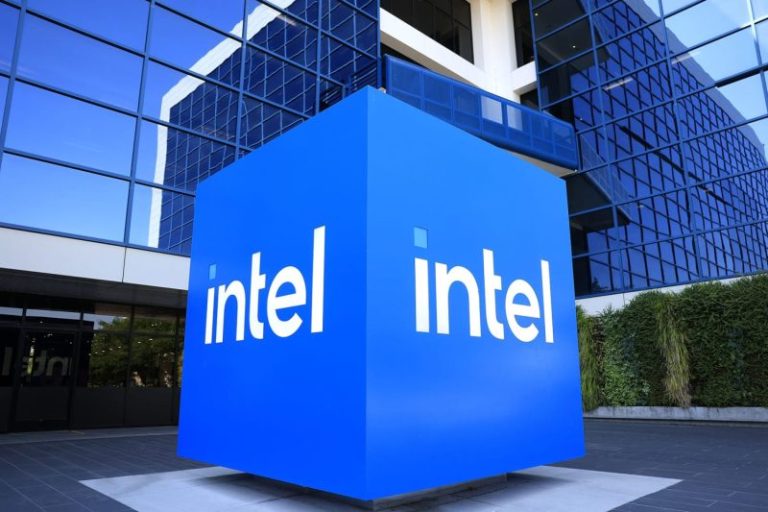
U.S. taxpayers are now the largest shareholders in Intel. What comes next isn’t so clear.

The Trump administration announced Friday that the government had taken a 10% stake in the California-based computer chipmaker, which has fallen behind rivals Nvidia and AMD in the artificial intelligence race. Over the past five years, Intel’s share price has declined more than 50%.

The administration has not provided any details about when or under what circumstances it would sell the Intel shares — or whether it would sell them at all. Nor did it say whether the United States would benefit from any dividends, although Intel has not paid out any since last year. The administration does not plan to take any board seats and has said it will vote against the company only in “limited” circumstances.

While Commerce Secretary Howard Lutnick suggested Friday that national security was a key motivator for taking the stake, President Donald Trump focused Monday more on the prospect of financial gains.

“I will make deals like that for our Country all day long,” Trump said on Truth Social. “I love seeing their stock price go up, making the USA RICHER, AND RICHER. More jobs for America!” he added.

Intel’s shares have climbed about 4% since the transaction was announced. Some experts said that while there is a potential upside to the agreement, it represents another norm-shattering expansion of presidential authority by Trump into the business world — and most likely not the last.

Already, the Trump administration has taken a “golden share” in Japan’s Nippon Steel as part of a deal granting approval to that company’s bid for U.S. Steel and giving the government a say in future Nippon transactions. Last month, the Defense Department announced it had purchased $400 million in rare earth miner MP Materials, making it the company’s largest shareholder. The White House also plans to take a cut of the sales that chipmakers Nvidia and AMD make to China.

Trump told reporters Monday that he hopes to see “many more” deals like Intel’s, adding that nobody “realizes how great it will be.” Kevin Hassett, director of Trump’s National Economic Council, said similar deals could help form the basis of a sovereign wealth fund, an idea that the administration had floated earlier as a way of giving U.S. taxpayers direct stakes in companies but had yet to fully develop.

“At some point there’ll be more transactions, if not in this industry, in other industries,” Hassett said on CNBC.

The U.S. stake in Intel does not amount to a complete government takeover. While the federal government has assumed total control of private corporations before, such incidents have usually happened during times of crisis — and not with the direct intention of trying to play the markets.

“He’s doing all this in a spooky, controversial way,” said Clyde Wayne Marks, a fellow in regulatory studies at the Competitive Enterprise Institute, a libertarian think tank. “Right now there is no crisis.”

President Woodrow Wilson nationalized railroads, as well as the telegraph, telephone, radio and wireless stations, during World War I. Nearly two decades ago, the government bailed out a host of private firms during the 2008-09 global financial crisis.

While the bailout involved holding corporate assets on the U.S. government’s books with the goal of returning earnings to taxpayers, there was never any serious intention to own them over the long term. And a Government Accountability Office study concluded in 2023 that the program ultimately came at a net cost of about $31 billion.

The U.S. government has long provided subsidies to private corporations in the form of loans and grants, to varying degrees of success. Two high-profile examples came during the Obama administration, when the Energy Department provided loans to a solar power company called Solyndra and to electric vehicle maker Tesla. Solyndra ultimately went bankrupt, while today Tesla is worth $1.2 trillion on the stock market.

Some have argued that the United States would have benefited from having taken a stake in Tesla. Yet at the time Tesla received the loan, in 2010, beliefs about the free market and the need to limit the government’s role in it prevailed not just among Republicans, but among Democrats, as well, experts say.

“Our system has not typically been built that way — it’s not how free enterprise is typically run,” said Dan Reicher, a former Energy Department official under Presidents Bill Clinton and Barack Obama. “History has proven that the more free-market approach, making the bottom line the bottom line for the companies running these operations, is a smarter way to go.”

Intel’s fortunes have sagged. Its manufacturing segment lost $3.2 billion in the second quarter, and last month it said it would lay off 15% of its workforce by year’s end while canceling billions in planned investments and delaying the completion date for a $28 billion chip plant near Columbus, Ohio.

In a securities filing Monday, Intel warned investors of the potential risks involved in the U.S. investment, among them that the arrangement may actually limit its ability to secure grants down the road, depending on its future performance. It could also harm international sales and make Intel subject to additional regulations and restrictions, both at home and abroad, it said.

On Monday, Trump was asked whether the Intel investment represented a new way of doing industrial policy.

“Yeah. Sure it is,” Trump said. “I want to try to get as much as I can.”

This post appeared first on NBC NEWS

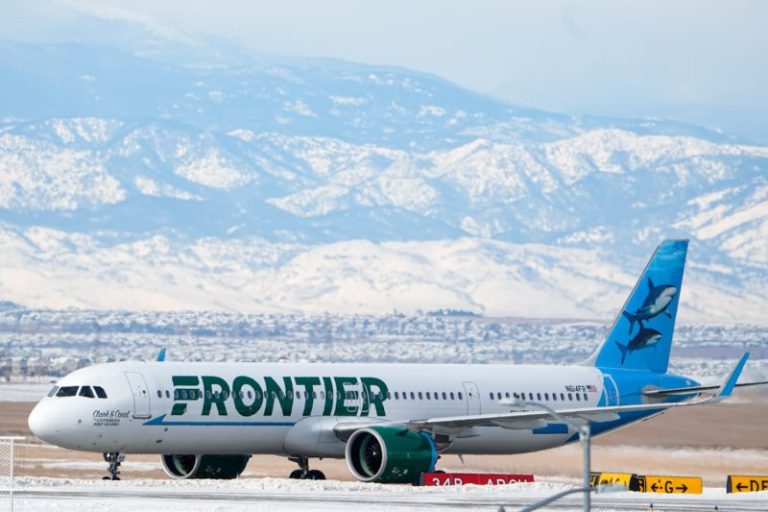
Frontier Airlines is going after customers of Spirit Airlines, whose financial footing has gotten so shaky in recent weeks that it warned earlier this month it might not be able to survive another year without more cash.

Frontier on Tuesday announced 20 routes it plans to start this winter, many of them in major Spirit markets like its base at Fort Lauderdale International Airport in Florida. Frontier overlaps with Spirit on 35% of its capacity, more than any other airline, according to a Monday note from Deutsche Bank airline analyst Michael Linenberg.

Some of Frontier’s new routes from Fort Lauderdale include flights to Detroit, Houston, Chicago and Charlotte, North Carolina. It’s also rolling out routes from Houston to New Orleans; San Pedro Sula, Honduras; and Guatemala City.

Frontier had tried and failed to merge with its budget airline rival several times since 2022.

“I’m not here to talk about M&A,” Frontier CEO Barry Biffle said in an interview with CNBC on Tuesday when asked whether Frontier would buy Spirit. Biffle said he expects that Frontier would pick up the majority of Spirit’s market share if Spirit collapsed.

Both carriers have struggled from changing customer tastes for more upmarket seats and trips abroad, an oversupply of domestic capacity, and higher labor and other costs. Spirit’s situation has become more dire however, after it emerged from four months of bankruptcy protection in March facing many of the same problems.

Ultra-low-cost airlines are also challenged by larger rivals like United Airlines, American Airline and Delta Air Lines that have rolled out their own no-frills basic economy tickets but also offer customers bigger choices of destinations and other perks onboard like snacks and beverages.

Stock prices of rival airlines surged after Spirit’s warning earlier this month.

Biffle said the carrier wants to become the country’s largest budget airline and has rolled out loyalty matching programs to grab more customers. Frontier’s capacity was slightly smaller than Spirit’s in the second quarter, through the latter had slashed its flying by nearly 24% from a year earlier, while Frontier was down only 2%.

Spirit last week said it drew down the entire $275 million of its revolver and while it reached a two-year extension on its credit card processing agreement with U.S. Bank N.A., it agreed that it would hold back up to $3 million a day from the carrier.

The airline lost $245.8 million in the second quarter. Frontier lost $70 million.

Spirit has been looking for ways to slash costs, including furloughing and demoting hundreds more pilots and cutting unprofitable routes. Hundreds of flight attendants are on unpaid leaves of absence.

Spirit CEO Dave Davis said in an Aug. 12 staff memo after its “going concern” warning that “the team and I are confident that we can build a Spirit that will continue to provide consumers the unmatched value that they have come to expect for many years to come.”

The carrier reached a deal with bondholders who agreed to convert debt to equity in its Chapter 11 bankruptcy, but it didn’t cut other costs like renegotiating aircraft leases. Leasing firms have been reaching out to rivals in recent weeks to gauge whether competitors would take any of the Airbus planes that are in Spirit’s hands, according to people familiar with the matter, who asked to speak anonymously because the talks were private.

— CNBC’s Phil LeBeau contributed to this report.

This post appeared first on NBC NEWS

Phosphate is mainly used in the form of fertilizer for crops and animal feed supplements. Only 5 percent of world phosphate production is used for other applications, such as corrosion prevention and detergents.

In its 2025 Mineral Commodity Summary, the US Geological Survey (USGS) states that global production of phosphate grew in 2024 alongside demand, totaling 240 million metric tons. Most of 2024 was marked by steady growth in agricultural demand in the face of declining quality reserves.

‘World consumption of P2O5 contained in fertilizers was estimated to have been 47.5 million tons in 2024 compared with 45.8 million tons in 2023,’ the USGS reported. ‘World consumption of P2O5 in fertilizers was projected to increase to 51.8 million tons by 2028. The leading regions for growth were expected to be Asia and South America.’

This list of the top phosphate countries by production is based on data from the USGS. Those interested in the phosphate mining sector will want to keep an eye on phosphate production data and mining companies in these countries.

1. China

Phosphate production: 110 million metric tons
Phosphate reserves: 3.7 billion metric tons

China’s phosphate production increased in 2024 to 110 million metric tons (MT), up from 105 million MT in 2023, placing it as number one on the list of top phosphate-producing countries by a long shot. China has the second largest phosphate reserves in the world at 3.7 billion metric tons of phosphate. The country is also the fourth largest producer of fellow fertilizer mineral potash.

The rise in Chinese output came in despite of the nation’s environmental crackdown on the mining industry. China’s government has placed restrictions on phosphate exports in an effort to drive down domestic prices of the fertilizer with its own supply. In December 2024, China halted new export applications for phosphate due to the rising cost of sulfur. The material is critical in the separation of phosphates from rock.

2. Morocco

Phosphate production: 30 million metric tons
Phosphate reserves: 50 billion metric tons

As the second largest phosphate-producing country, Morocco produced 30 million metric tons of the fertilizer in 2024, down from 33 million MT in the previous year. The North African nation’s phosphate output is expected to increased in the coming years due to ongoing capacity expansions, which are expected to be completed by 2027.

Morocco’s phosphate production comes from state-owned fertilizer company OCP Group’s mines, including its Gantour operation, one of the world’s largest phosphate mines.

Morocco holds the world’s largest phosphate reserves at 50 billion metric tons, accounting for over 67 percent of total global phosphate reserves.

3. United States

Phosphate production: 20 million metric tons
Phosphate reserves: 1 billion metric tons

In 2024, US phosphate mining production totaled 20 million metric tons, up slightly by 400,000 metric tons from the previous year. The nation’s 10 producing phosphate mines are located across four states: Florida, North Carolina, Idaho and Utah.

The two largest phosphate mining companies in the US are Mosaic (NYSE:MOS) and Nutrien (TSX:NTR). Global giant Mosaic’s Florida phosphates operation comprises three producing mines: Four Corners, South Fort Meade and Wingate. The three mines combined for 8,900 MT of phosphate rock concentrate in 2024. Nutrien operates the Aurora mine in North Carolina and White Springs mine in Utah.

Most phosphate rock mined in the US is used for manufacturing phosphoric acid and superphosphoric acid. These types of wet-process phosphate products are used for items such as animal feed supplements. About a quarter of this is exported in the form of merchant-grade phosphoric acid, upgraded granular diammonium and monoammonium phosphate fertilizer, as well as other fertilizer products, according to the USGS.

4. Russia

Phosphate production: 14 million metric tons
Phosphate reserves: 2.4 billion metric tons

Russia produced 14 million metric tons of phosphate in 2024, down by 1 million MT from the previous year, and the country’s phosphate reserves total 2.4 billion metric tons. Russia is also the second largest producer of potash.

A significant portion of Russia’s phosphate is produced by PhosAgro subsidiary Apatit from apatite minerals at the Khibiny deposit, which is located east of Finland in Russia’s Kola Peninsula. Phosphate operations are also found in Perm Krai at the Oleniy Ruchey apatite mine and processing facility owned by the Acron Group’s North-Western Phosphorous Company.

European nations were previously Russia’s biggest phosphate customers in the global market, but the country’s war in Ukraine initially had an impact, directly influencing phosphate prices. However, Russian phosphate exports were supported through increases in shipments to countries including India and Brazil.

5. Jordan

Phosphate production: 12 million metric tons
Phosphate reserves: 1 billion metric tons

Jordan’s phosphate production came in at 12 million metric tons in 2024, rising slightly from the previous year. Jordan’s phosphate reserves stand at an estimated 1 billion MT.

The country’s sole phosphate producer is state-owned Jordan Phosphate Mines Company, which operates as a phosphate miner and fertilizer producer. The company bills itself as the second largest phosphate exporter and the sixth largest producer of phosphate in the world, with combined production capacity between its three mines exceeding 11 million metric tons of phosphate annually.

6. Saudi Arabia

Phosphate production: 9.5 million metric tons
Phosphate reserves: 1 billion metric tons

Saudi Arabia produced 9.5 million metric tons of phosphate in 2024, down by 400,000 MT from 2023’s output level. The country is sitting on 1 billion MT of phosphate reserves. The Saudi Arabian Mining Company, also known as Ma’aden, produces up to 5 million metric tons of concentrated phosphate rock per year.

The Wa’ad Al Shamal Minerals Industrial City, an integrated phosphate fertilizer production complex, is a US$8 billion joint venture investment between Ma’aden at 60 percent, chemical manufacturer Saudi Basic Industries (TADAWUL:2010) at 15 percent and US fertilizer giant Mosaic at 25 percent. However, in January 2025, Mosaic sold its stake for US$1.5 billion in Ma’aden shares, bringing the latter company’s interest to 85 percent.

7. Brazil

Phosphate production: 5.3 million metric tons
Phosphate reserves: 1.6 billion metric tons

Brazil, another of the top phosphate countries by production, produced 5.3 million metric tons of phosphate in 2024, nearly on par with its production in the previous year. Brazil has a booming agricultural sector and is one of the world’s largest fertilizer consumers and importers. More phosphate production capacity in the country is expected to come online in 2027.

Mosaic is the country’s largest producer of both phosphate and nitrogen, and it also operates Brazil’s only potash mine. Swedish fertilizer company Eurochem launched a new US$1 billion phosphate fertilizer production facility in the State of Minas Gerais, Brazil, in April 2024. The facility has a phosphate mine and plant complex with an annual production capacity of 1 million MT of advanced phosphate fertilizers.

8. Egypt

Phosphate production: 5 million metric tons
Phosphate reserves: 2.8 billion metric tons

Egypt’s phosphate-mining production in 2024 totalled 5 million metric tons, on par with 2023 output levels. According to the US Geological Survey, Egypt’s phosphate reserves now sit at 2.8 billion MT.

The phosphate company Misr Phosphate operates the Abu Tartour, the Sibaiya and the Red Sea mines, all of which host high grades of phosphate.

9. Peru

Phosphate production: 4.7 million metric tons
Phosphate reserves: 210 million metric tons

Peru produced 4.7 million metric tons of phosphate in 2024, down by 300,000 MT from the previous year. About 98 percent of US phosphate imports originate from Peru.

Peru’s investment agency ProInversión made a US$940 million commitment in mid-2024 for the expansion Fosfatos del Pacífico’s Bayóvar mine in the Piura region, which is expected to bolster the country’s domestic phosphate production for the next 10 years.

10. Tunisia

Phosphate production: 3.3 million metric tons
Phosphate reserves: 2.5 billion metric tons

Tunisia’s phosphate output in 2024 totaled 3.3 million metric tons, down from 3.6 million metric tons the previous year. Tunisia is home to the fourth highest phosphate reserves in the world at 2.5 billion metric tons.

The North African country has been rising among the ranks of the world’s largest phosphate producing nations. In 2023 Tunisia’s state-owned phosphate firm Gafsa Phosphate Company ramped up its production as part of its US$76 million investment program.

FAQS for phosphate

What are phosphates?

Phosphates are compounds that usually include phosphorous and oxygen, and can have one or more common elements, such as sodium, calcium, potassium and aluminum.

Where are phosphate compounds found?

Phosphate is mostly found in phosphate rock, a non-detrital sedimentary rock that contains high amounts of phosphate minerals. Phosphate rock can come in different forms such as quartz, calcite, dolomite, apatite, iron oxide minerals and clay minerals.

Is phosphate the same as phosphorus in fertilizer?

Phosphate is the natural source of phosphorous, which provides essential nutrients for plant growth and development.

Securities Disclosure: I, Melissa Pistilli, hold no direct investment interest in any company mentioned in this article.

This post appeared first on investingnews.com

The U.S. government could take equity stakes in more companies, potentially through an American sovereign wealth fund, according to one of President Donald Trump’s top economic advisers.

National Economic Council Director Kevin Hassett made the comments Monday, days after the United States took a nearly 10% stake in Intel. The government secured a piece of the semiconductor maker with money intended for grants as part of the CHIPS and Science Act, passed during the Biden administration.

Speaking about the new Intel position, Hassett told CNBC: “It’s like a down payment on a sovereign wealth fund, which many countries have.” Governments throughout Europe, Asia and the Middle East use such funds to invest in companies and other financial assets.

The federal government has taken ownership stakes in private companies before, but only under extraordinary circumstances, such as during the global financial crisis of 2008.

Hassett said the Intel investment was a ‘very, very special circumstance because of the massive amount of CHIPS Act spending that was coming Intel’s way.’

He added: “So I’m sure that at some point there’ll be more transactions, if not in this industry, in other industries.’

The CHIPS Act was established as a way for the government to provide financing and capital to foreign and domestic companies that manufactured semiconductors and related products in the United States.

Americans and the American economy received the benefit of more than $200 billion in private capital investments since the act was signed into law, according to the Council on Foreign Relations. Many companies also announced plans to create new U.S. manufacturing and construction jobs.

Hassett has said the money was ‘going out and disappearing into the ether.’

He has also said, ‘We’re absolutely not in the business of picking winners and losers.’ However, the United States is now Intel’s largest single shareholder. The administration has also taken a ‘golden share’ in U.S. Steel as part of approving its merger with Japan’s Nippon Steel. Trump also said he negotiated with Nvidia CEO Jensen Huang to take a 15% cut of the chipmaker’s revenue from some chips sold in China. He also has a similar deal with rival chipmaker AMD.

Later Monday, Trump said, ‘I want them to do well anyway, but I want them to do well in particular now.’

He added, ‘I hope I’m going to have many more cases like’ the Intel stake. Asked whether taking equity stakes in private companies was the new way of doing business in the United States, Trump responded: ‘So are tariffs.’

After Hassett’s interview, Trump said on Truth Social: ‘I PAID ZERO FOR INTEL, IT IS WORTH APPROXIMATELY 11 BILLION DOLLARS. All goes to the USA.’ He also said he would ‘help those companies that make such lucrative deals with the United States.’

It was unclear why Trump said the United States did not pay anything for the stake. The government purchased 433.3 million Intel shares at $20.47 each, which equates to $8.9 billion.

Trump has also pushed companies to change course on key products, such as when he pre-emptively announced that Coca-Cola would add cane sugar to an American version of its namesake product.

Trump has also threatened firms such as Amazon, Mattel, Hasbro and Walmart with retaliation for hiking prices as a result of his sweeping global tariff regime.

Trump intervention in private industry has sparked widespread criticism, some of it from Republicans. Trump’s former U.N. ambassador Nikki Haley, a former Boeing board member, said on X: ‘Intel will become a test case of what not to do.’

After the CNBC interview, NBC News asked Hassett about setting up a sovereign wealth fund.

‘As we acquire things like Intel, then there’s sort of a question of where it goes and it’s held by the U.S. Treasury. And if the U.S. Treasury has more of that stuff, that is starting to look like [a] sovereign wealth fund, whether an official sovereign wealth fund is established is another question,’ he said.

‘But it’s not unprecedented for the U.S. to own equity’ in private companies, he added.

The United States took equity stakes in private companies during the global financial meltdown of 2008 and 2009.

Then, it bought troubled assets and took equity stakes in the likes of JPMorgan, Wells Fargo, Citigroup, Bank of America, AIG and other systemically important firms to stabilize the global financial system.

Trump has expanded his power over the business world, fueled by his view that the U.S. economy is like ‘a department store, and we set the price.’

‘I meet with the companies, and then I set a fair price, what I consider to be a fair price, and they can pay it, or they don’t have to pay it,’ Trump said in an April interview.

This post appeared first on NBC NEWS

Cracker Barrel tried to reassure customers Monday that its values have remained the same after it received criticism following a new logo reveal and general brand refresh.

The company promised customers in a statement that while its logo may be different, its values — “hard work, family, and scratch-cooked food made with care’ — are not.

“You’ve shown us that we could’ve done a better job sharing who we are and who we’ll always be,” the statement read, adding that Cracker Barrel will remain “a place where everyone feels at home, no matter where you’re from or where you’re headed.”

Last week, the company unveiled a new logo that no longer features a man leaning against a barrel or the words ‘Old Country Store.’ Instead, it featured the company’s name, in a color scheme that it said was inspired by the chain’s scrambled eggs and biscuits.

The change was part of a ‘strategic transformation’ that aimed to update the chain’s visual elements, spaces, food and retail offerings. The company’s shares are down about 8.5% since the reveal ignited criticism, especially from those in conservative circles.

Donald Trump Jr., the president’s son, amplified a post Wednesday suggesting that the logo change was intended to erase the American traditions aspect of the branding and make it more general and lean into diversity, equity and inclusion efforts.

On Monday, the chain also shared an update on the man in the original logo, Uncle Herschel, who is said is still featured on menus and road signs and in stores.

‘He’s not going anywhere — he’s family,’ the company said in the statement.

Cracker Barrel said its focuses remain country hospitality and generous portions of food at fair prices. The refresh, it said, was to ensure the restaurant will be there for the next generation.

‘That means showing up on new platforms and in new ways, but always with our heritage at the heart,’ it said.

‘We know we won’t always get everything right the first time, but we’ll keep testing, learning, and listening to our guests and employees.’

This post appeared first on NBC NEWS