Author

admin

Browsing

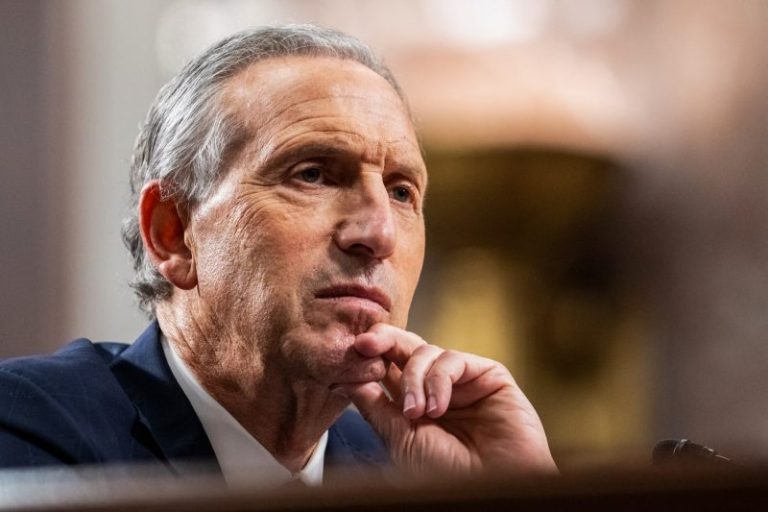
LAS VEGAS. — Former Starbucks CEO Howard Schultz said Wednesday that he “did a cartwheel” in his living room when current chief executive Brian Niccol first coined his “back to Starbucks” strategy.

The enthusiasm from the 71-year-old Starbucks chairman emeritus is a key stamp of approval for Niccol as he tries to lift the company’s slumping sales and restore the chain’s culture.

Schultz, who grew Starbucks from a small chain into a global coffee giant, made a surprise appearance at the company’s Leadership Experience in Las Vegas and cosigned Niccol’s plans. The three-day event has gathered more than 14,000 North American store leaders to hear from Starbucks management as the company embarks on a turnaround.

Niccol took the reins in September, joining the company after the board ousted Laxman Narasimhan, Schultz’s handpicked successor.

Schultz had returned in 2022 for his third stint as chief executive, but it was only an interim role. He previously told CNBC that he has no plans to come back again. Schultz no longer holds a formal role within the company, although CNBC has previously reported that he’s forever entitled to attend board meetings unless barred by the company’s directors.

During Niccol’s first week on the job, he outlined plans for the comeback in an open letter, making the commitment to get “back to Starbucks.” More details on how the chain planned to return to its roots followed in the ensuing months, from bringing back seating inside cafes to writing personalized messages on cups. Under Niccol’s leadership, the company’s marketing has shifted to focus on its coffee, rather than discounts and promotions.

When Starbucks announced Narasimhan’s firing and Niccol’s hiring, Schultz issued a statement of support, saying that the then-Chipotle CEO was the leader that the company needs. However, the Leadership Experience marks the first time that Niccol and Schultz have appeared publicly together.

During Narasimhan’s short tenure as CEO, Schultz did not mince words when the company’s performance fell short of his expectations. After a dismal quarterly earnings report, he weighed in publicly on LinkedIn, saying the company needs to improve its mobile order and pay experience and overhaul how it creates new drinks to focus on premium items that set it apart.

But Schultz said Starbucks’ problems went further than just operational issues and lackluster beverages and food.

“The culture was not understood. The culture wasn’t valued. The culture wasn’t being upheld,” he said on Wednesday.


This post appeared first on NBC NEWS

Joe kicks off this week’s video with a multi‑timeframe deep dive into the 10‑year U.S. Treasury yield (TNX), explaining why a sideways coil just below the 5% level could be “downright scary” for equities. From there, he demonstrates precise entry/exit timingwith a combination of ADX, MACD, and RSI. Joe also covers the short-term divergence developing in the QQQ, takes a look at the IWM, and wraps up with some analyses of this week’s viewer symbol requests, including INTC, MU, and more.

The video premiered on June 11, 2025. Click this link to watch on Joe’s dedicated page.

Archived videos from Joe are available at this link. Send symbol requests to stocktalk@stockcharts.com; you can also submit a request in the comments section below the video on YouTube. Symbol Requests can be sent in throughout the week prior to the next show.

Here’s a quick recap of the crypto landscape for Wednesday (June 11) as of 9:00 p.m. UTC.

Get the latest insights on Bitcoin, Ethereum and altcoins, along with a round-up of key cryptocurrency market news.

Bitcoin and Ethereum price update

Bitcoin (BTC) was priced at US$108,710, a slight decrease of 0.8 percent in 24 hours. The day’s range for the cryptocurrency brought a low of US$108,574 and a high of US$110,269.

Bitcoin price performance, June 11, 2025.

Chart via TradingView.

Bitcoin has surged over 10 percent since June 5, briefly reaching US$110,000 on Wednesday.

If Bitcoin breaks its US$112,000 all-time high, analysts believe it could make a rapid rise to US$114,000, with further gains predicted if momentum continues. Experts’ targets range from US$120,000 to US$150,000 in the short term, while long-term forecasts sit between US$1 million and US$2.4 million.

This week’s on-chain analysis from Glassnode shows a deviation from past bull markets, with long-term holders continuing to buy instead of selling. This points to growing institutional interest and a shift toward long-term thinking. Price swings are unusually low, suggesting a stable market, but moves could be sharp if demand shifts.

Ethereum (ETH) ended the day at US$2,810.96, a 1.6 percent increase over the past 24 hours. The cryptocurrency reached an intraday low of US$2,796.60 and saw a daily high of US$2,870.74

Altcoin price update

  • Solana (SOL) closed at US$162.72, down 0.5 percent over 24 hours. SOL experienced a low of US$163.05 and reached a high of US$167.80 on Wednesday.
  • XRP was trading at US$2.29, down by 0.3 percent to its lowest valuation in 24 hours. The cryptocurrency reached a high of US$2.33 for the day.
  • Sui (SUI) was trading at US$3.42, showing a decreaseof 0.7 percent over the past 24 hours and its lowest valuation of the day. It peaked at US$3.51.
  • Cardano (ADA) closed at its lowest price of the day at US$0.7041, down 0.5 percent over the past 24 hours. Its highest valuation was US$0.7285.

Today’s crypto news to know

Experts make ETF approval calls

Bloomberg exchange-traded fund (ETF) analysts Eric Balchunas and James Seyffart are calling for a ‘potential Alt Coin ETF Summer,’ according to a note released on Wednesday.

“Get ready for a potential Alt Coin ETF Summer with Solana likely leading the way (as well as some basket products) via @JSeyff note this morning which includes fresh odds for all the spot ETFs,” an X post from Balchunas states.

They predict that the US Securities and Exchange Commission (SEC) could approve exchange-traded funds (ETFs) tracking broad crypto indexes by July. The SEC could also “act early on spot Solana and staking ETF filings” after REX-Osprey filed for Solana and Ethereum ETFs with staking components using a C-Corp structure on May 30.

Seyffart and Balchunas now place the approval odds of SOL and Litecoin ETFs at 90 percent. Spot Solana ETF approval odds also jumped to 91 percent on Wednesday on Polymarket.

Stripe to acquire Privy

Stripe has announced plans to acquire Privy, a specialized cryptocurrency wallet infrastructure developer, for an undisclosed amount in a deal signaling Stripe’s deepening involvement in the digital asset space.

Under the terms of the purchase, Privy will operate as a subsidiary within Stripe, focusing on providing infrastructure for developers engaged in building solutions on cryptocurrency rails. According to Privy’s announcement, this transition to Stripe’s umbrella will empower the company with “more resources, flexibility, and firepower.”

Privy’s core expertise lies in offering comprehensive infrastructure for companies involved in the development and management of digital asset wallets. Its tech enables millions of secure crypto wallets on a global scale.

This acquisition aligns with the broader trend of established financial institutions and tech giants integrating blockchain and cryptocurrency technologies into their portfolios.

Ukraine considers adding crypto to national reserves

The Verkhovna Rada, Ukraine’s parliament, received a draft bill on Tuesday (June 10) that proposes modifications to banking laws. These changes would permit the National Bank of Ukraine to incorporate cryptocurrencies into its reserves, standing alongside gold and foreign currencies. According to Yaroslav Zhelezniak, a member of parliament who confirmed the introduction of the bill via Telegram, bill 13356 would allow crypto to be included, but the central bank would retain full discretion over how much of its reserves to allocate to crypto and would not be required to add it.

Zhelezniak clarified in a video interview with Kyrylo Khomiakov, Binance’s regional head for Central and Eastern European countries and Central Asia, that while the draft bill has been introduced, the Ukrainian government isn’t pushing for cryptocurrency, but wants to keep pace with its increasing global usage.

“This story has the right to life, and, as we see, many countries are implementing it,” he said.

Bullish confidentially files for US IPO amid pro-crypto climate

Crypto exchange Bullish has confidentially filed for a US initial public offering (IPO), signaling renewed optimism in digital assets as Donald Trump’s administration ushers in a more crypto-friendly regulatory landscape.

Backed by billionaire Peter Thiel and led by former NYSE President Tom Farley, Bullish’s IPO plans mark a major comeback after its failed SPAC merger in 2021. The company’s move follows Circle’s (NYSE:CRCL) blockbuster US$1.1 billion IPO and coincides with a wave of new filings, including Gemini’s confidential application last week.

Jefferies is slated to lead underwriting for Bullish, though the bank has declined to comment.

Ondo brings tokenized US treasuries to XRP ledger

Ondo Finance has launched its tokenized short-term US Treasury product, OUSG, on the XRP Ledger (XRPL), using Ripple’s new RLUSD stablecoin for settlement. This marks the first time tokenized Treasuries are accessible on XRPL, allowing institutional investors to mint and redeem around the clock with instant settlement.

OUSG provides exposure to low-risk, short-term Treasuries and is already live on Ethereum and Solana, with a combined US$670 million in assets across chains. With US$30 million in total value locked already on XRPL, this expansion could significantly scale institutional DeFi on public ledgers.

Strategy hit with lawsuit over alleged misleading Bitcoin strategy

Strategy (NASDAQ:MSTR) is facing a class-action lawsuit alleging that the Michael Saylor-led firm misled shareholders about the risks of its Bitcoin-heavy investment approach.

Law firm Levi & Korsinsky filed the suit on Tuesday, calling on investors who bought shares between April 2024 and April 2025 to join the case, with a lead plaintiff deadline set for July 15.

The complaint cites the company’s recent US$5.91 billion unrealized loss due to Bitcoin’s volatility and claims executives downplayed risk while hyping upside potential. On April 7, the company dropped nearly 9 percent after disclosing a Q1 loss; by May 1, Strategy had formally admitted to the nearly US$6 billion hit.

A second lawsuit, filed by Anas Hamza, is also underway for alleged violations of the Securities Exchange Act.

Saylor has defended the firm’s strategy, arguing that its capital structure is resilient even in the face of a 90 percent Bitcoin crash. Strategy has not issued an official comment on the lawsuits.

Securities Disclosure: I, Giann Liguid, hold no direct investment interest in any company mentioned in this article.

Securities Disclosure: I, Meagen Seatter, hold no direct investment interest in any company mentioned in this article.

This post appeared first on investingnews.com

Thousands of activists from around the world are expected to descend on Egypt on Thursday for a “Global March to Gaza,” a movement aiming to break the Israeli blockade that has pushed the territory to the brink of famine.

The march puts Egypt in an awkward position as it tries to balance its ties with Israel and the United States against its public condemnation of the war’s brutal toll on Gaza’s civilians. A key mediator with direct channels to both Hamas and Israel, Cairo has been wary of the conflict spilling over into its territory. It has kept its side of the Rafah crossing closed to Palestinians, even as anger at Israel’s actions continues to rise at home.

In a statement Wednesday, Israeli Defense Minister Israel Katz said he expects the Egyptian government “to prevent the arrival of jihadist demonstrators to the border of Egypt-Israel and not to allow them to carry out provocations and to try to enter into Gaza.”

This will “endanger the security of IDF (Israel Defense Forces) soldiers and we will not allow it,” Katz added.

The international activists will be joined by another convoy of 2,000 protesters arriving from Tunisia. That group arrived in Libya, which neighbors Egypt, on Wednesday, organizers said.

Among those joining the march are Nkosi Zwelivelile Mandela, a former South African lawmaker and grandson of Nelson Mandela, and Hala Rharrit, a former US State Department diplomat who resigned from her US government position during the Biden administration over Washington’s handling of the Gaza war.

As Israel’s war in Gaza enters its 21st month, high-profile international campaigners are becoming increasingly active in their attempt to break the siege.

On Monday, Israel intercepted a Gaza-bound aid ship, the “Madleen,” detaining its passengers and taking them to Israel.

Among the activists on board was Swedish climate and human rights activist Greta Thunberg and French member of the European Parliament Rima Hassan. Thunberg departed Israel on Tuesday and Hassan remains in Israeli detention.

Israel imposed a full humanitarian blockade of Gaza on March 2, cutting off food, medical supplies and other aid to the more than 2 million Palestinians in the territory for 11 weeks.

Faced with growing international pressure, it began allowing a trickle of aid in late May. But humanitarian organizations say it is only a fraction of the aid that entered the enclave before the war.

Organizers of the Global March to Gaza have said that they have reached out to Egyptian authorities, informing them of their plans and asking for cooperation and protection but have received no response.

The Egyptian foreign ministry said in a statement that activists must obtain permits ahead of their arrival in Cairo.

“Egypt stresses the importance of adhering to these established regulatory measures to ensure the safety of visiting delegations due to the sensitive security conditions in this border area since the onset of the crisis in Gaza,” the ministry said, adding that “that no requests or invitations will be considered or responded to if submitted outside the framework specified by the regulatory provisions.”

Organizers said they followed “all the required protocols detailed in this statement.”

On Thursday, organizers said 170 people are currently facing delays and deportations at Cairo airport, but that thousands of participants are already in Egypt and are determined to continue their march.

Egyptian authorities “have no reason not to support this march,” Rharrit said, adding that delegations across the world had informed Egyptian embassies of their plan well ahead of time.

“There have been meetings with Egyptian ambassadors. Egyptian authorities have not said no,” she said, adding that the march is “in line with everything Egypt has been trying to do diplomatically.”

This post appeared first on cnn.com

FireFly Metals (ASX:FFM,TSX:FFM,OTC Pink:MNXMF) has attained firm commitments to raise up to about AU$95 million, giving it a total of AU$135 million for its multi-pronged growth strategy.

The company highlighted on Tuesday (June 10) that the equity financing will be completed via the issuance of approximately 94.7 million fully paid ordinary shares; it will receive around AU$1 per new share.

The funds will be raised via three transactions, with the first being an AU$11.2 million charity flow-through placement to Canadian investors. This will be followed by a AU$54.9 million two-tranche institutional placement, as well as a AU$28.8 million fully underwritten Canadian bought-deal offering with BMO Capital Markets.

Alongside the equity raising, FireFly is inviting shareholders to participate in a non-underwritten share purchase plan (SPP) that can potentially raise up to AU$5 million before costs.

Proceeds of the equity raising and the SPP will collectively be allotted to advance the Green Bay copper-gold project in Canada, including transaction costs and working capital.

Located in the Baie Verte district of Northeast Newfoundland on Canada’s east coast, Green Bay was acquired by FireFly in August 2023. Green Bay includes Ming underground mine, which was mined between 1972 and 1982, with activity restarting in 2012. Historic production totaled 6.7 million metric tons (MT) at 2 percent for 134,000 MT of copper.

Measured and indicated resources at Ming are at 21.5 million MT at 1.8 percent for 307,000 MT of copper equivalent, while inferred resources are at 28.4 million MT at 2 percent for 576,000 MT of copper equivalent.

FireFly began drilling at Ming in October 2023, completing 79 drill holes across 37,110 meters within a year.

“The overwhelming demand for the raising reflects the quality and growth outlook at Green Bay, our commitment to a multi-rig exploration campaign and the demand among global investors for top-shelf copper-gold projects,” said FireFly Managing Director Steve Parsons in the company’s press release.

He called the asset, alongside FireFly’s exploration team and AU$135 million in funding, “the ideal recipe for growth.”

FireFly states on its website that it will continue with its low-cost rapid resource growth strategy, with the underground exploration drill drive at the Ming deposit to be extended during this year.

The company debuted on the Toronto Stock Exchange in December 2024.

Securities Disclosure: I, Gabrielle de la Cruz, hold no direct investment interest in any company mentioned in this article.

This post appeared first on investingnews.com

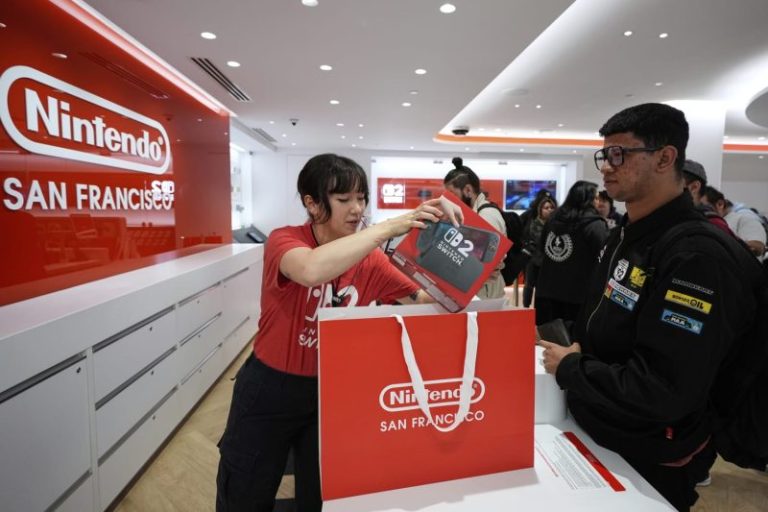
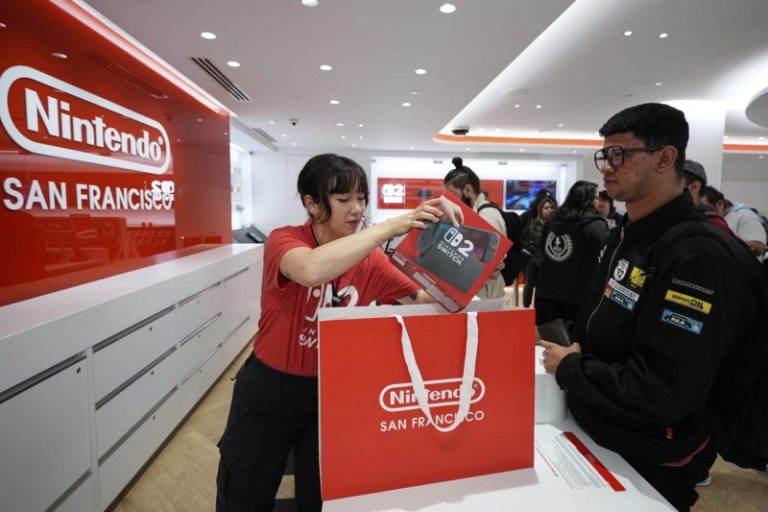
Nintendo sold more than 3.5 million units of its flagship Switch 2 gaming system in the four days following its launch, with online stores of major U.S. retailers putting up “out of stock” signs.

The record-breaking start for the company’s first new console in eight years, puts Nintendo on the path to realizing its aim of selling 15 million units of the Switch 2 console in the fiscal year ending March 2026.

However, analysts continue to believe that those expectations are modest, and forecast the strong initial demand to sustain.

“The market expected a record from Nintendo, and as it turns out, Nintendo delivered,” Serkan Toto, CEO and founder of gaming industry consultancy Kantan Games, told CNBC.

“All signals prior to launch pointed to significant demand, and I believe we will see further records broken over the next weeks or months,” he added.

Toto has maintains that the Switch 2 will sell over 20 million units in its first 12 months. David Gibson, senior research analyst at MST Financial told CNBC that he expects 20 million sales for the year ending March 2026.

The Switch 2, which was released on June 5, has been met with much fanfare, with people lining up for hours ahead of midnight releases at Nintendo stores.

“Fans around the world are showing their enthusiasm for Nintendo Switch 2 as an upgraded way to play at home and on the go,” Nintendo of America President and Chief Operating Officer Doug Bowser said in a statement, adding the company was thankful for the response.

Tokyo-listed shares of Nintendo, which have gained nearly 30% so far this year, were down 3.5% on Wednesday, LSEG data showed. The company has seen its shares rise nearly fivefold since the original Switch debuted in early March 2017.

It remains to be seen if the Switch 2 can recapture the magic of its predecessor, which had set the bar with 15 million unit sales in its first year. It went on to sell more than 152 million units to become the second-highest selling Nintendo device ever, behind the Nintendo DS.

The record initial sales of the Switch are in line with the strong demand analysts had predicted. However, the rush has put into question Nintendo’s ability to meet demand.

Retailers including Walmart, GameStop, Target and Best Buy were out of stock of the consoles, their online stores showed Wednesday.

In April, Nintendo’s Bowser told CNBC that the company had been working with “retail partners to ensure there’s ample supply for not only the launch weekend, but well beyond.”

However, Nintendo President Shuntaro Furukawa stated the same month that 2.2 million people in Japan had entered the lottery to purchase the Switch 2 on launch day, exceeding expectations and what the company had initially planned to deliver to stores.

Kantan Games’ Toto said shortages in Japan were expected to persist, but would be less impactful elsewhere.

“Except for Japan where demand for Switch 2 is extraordinarily high, it looks like fans who really want the console and invest time in trying to secure one actually can get one,” he said. “It might take a while, but as far as can be monitored, supply seems to be more robust than around the launch of the original Switch in 2017.”

President Donald Trump’s “reciprocal tariffs” on most countries around the world also present headwinds for the Switch 2.

In April, the company announced that it would delay preorders of the Switch 2 in the U.S. while it considers the impact of tariffs.

The Switch 2 retails for $449 in the U.S., which makes it Nintendo’s priciest console to date.

Nintendo’s Bowser said in April the company was going to “monitor where tariffs are going” before making any further decisions on price hikes.

MST Financial’s Gibson said that a resolution to Trump’s tariffs and lower duty rates could see the Switch 2 prices drop in the U.S.

The Switch 2 builds on the success of the original Switch, featuring a larger screen and improved performance. The system also introduces the new GameChat2 feature, which allows players to voice or video chat with friends online and share game screens.

This post appeared first on NBC NEWS

Nintendo sold more than 3.5 million units of its flagship Switch 2 gaming system in the four days following its launch, with online stores of major U.S. retailers putting up “out of stock” signs.

The record-breaking start for the company’s first new console in eight years, puts Nintendo on the path to realizing its aim of selling 15 million units of the Switch 2 console in the fiscal year ending March 2026.

However, analysts continue to believe that those expectations are modest, and forecast the strong initial demand to sustain.

“The market expected a record from Nintendo, and as it turns out, Nintendo delivered,” Serkan Toto, CEO and founder of gaming industry consultancy Kantan Games, told CNBC.

“All signals prior to launch pointed to significant demand, and I believe we will see further records broken over the next weeks or months,” he added.

Toto has maintains that the Switch 2 will sell over 20 million units in its first 12 months. David Gibson, senior research analyst at MST Financial told CNBC that he expects 20 million sales for the year ending March 2026.

The Switch 2, which was released on June 5, has been met with much fanfare, with people lining up for hours ahead of midnight releases at Nintendo stores.

“Fans around the world are showing their enthusiasm for Nintendo Switch 2 as an upgraded way to play at home and on the go,” Nintendo of America President and Chief Operating Officer Doug Bowser said in a statement, adding the company was thankful for the response.

Tokyo-listed shares of Nintendo, which have gained nearly 30% so far this year, were down 3.5% on Wednesday, LSEG data showed. The company has seen its shares rise nearly fivefold since the original Switch debuted in early March 2017.

It remains to be seen if the Switch 2 can recapture the magic of its predecessor, which had set the bar with 15 million unit sales in its first year. It went on to sell more than 152 million units to become the second-highest selling Nintendo device ever, behind the Nintendo DS.

The record initial sales of the Switch are in line with the strong demand analysts had predicted. However, the rush has put into question Nintendo’s ability to meet demand.

Retailers including Walmart, GameStop, Target and Best Buy were out of stock of the consoles, their online stores showed Wednesday.

In April, Nintendo’s Bowser told CNBC that the company had been working with “retail partners to ensure there’s ample supply for not only the launch weekend, but well beyond.”

However, Nintendo President Shuntaro Furukawa stated the same month that 2.2 million people in Japan had entered the lottery to purchase the Switch 2 on launch day, exceeding expectations and what the company had initially planned to deliver to stores.

Kantan Games’ Toto said shortages in Japan were expected to persist, but would be less impactful elsewhere.

“Except for Japan where demand for Switch 2 is extraordinarily high, it looks like fans who really want the console and invest time in trying to secure one actually can get one,” he said. “It might take a while, but as far as can be monitored, supply seems to be more robust than around the launch of the original Switch in 2017.”

President Donald Trump’s “reciprocal tariffs” on most countries around the world also present headwinds for the Switch 2.

In April, the company announced that it would delay preorders of the Switch 2 in the U.S. while it considers the impact of tariffs.

The Switch 2 retails for $449 in the U.S., which makes it Nintendo’s priciest console to date.

Nintendo’s Bowser said in April the company was going to “monitor where tariffs are going” before making any further decisions on price hikes.

MST Financial’s Gibson said that a resolution to Trump’s tariffs and lower duty rates could see the Switch 2 prices drop in the U.S.

The Switch 2 builds on the success of the original Switch, featuring a larger screen and improved performance. The system also introduces the new GameChat2 feature, which allows players to voice or video chat with friends online and share game screens.

This post appeared first on NBC NEWS

The U.S. stock market has been painting a subtle picture recently. While the broader indexes, such as the S&P 500 ($SPX), Nasdaq Composite ($COMPQ), and Dow Jones Industrial Average ($INDU), are indeed grinding higher, the daily movements have been relatively subdued. This is a noticeable shift from the more dynamic action we observed in April.

Investors may be waiting for Wednesday’s May Consumer Price Index (CPI), the results of the U.S.-China trade talks, or the next market-moving news headline. What’s encouraging is the underlying strength in market breadth. We’re seeing a healthy number of one-month new highs across most broader indexes (with the exception of Dow Utilities), Bullish Percent Indexes signaling bullish tendencies, and investors gravitating toward offensive sectors vs. defensive ones.

On the surface, everything points to a continuation of the bullish trend. However, as astute investors, our primary objective is to protect our capital. This means we mus always consider the possibility of a downside correction and be prepared to adapt.

This is where the StockCharts Market Summary page becomes an indispensable tool for your market analysis.

Let’s dive into how the Market Summary page can help you gain a unique perspective on market dynamics.

Beyond the Headlines: Uncovering Global Trends

One of the powerful features of the Market Summary page is its ability to provide a global snapshot. If you navigate to the Global Snapshot tab in the Equities panel and sort the “+/- SMA(200)” column in descending order, you’ll notice something fascinating: the Eurozone occupies the top spot while the Total US sits at the bottom (see image below).

FIGURE 1. A GLOBAL SNAPSHOT. The Eurozone is trading well above its 200-day simple moving average (SMA) while the Total US is only 4.37% above its 200-day SMA.Image source: StockCharts.com. For educational purposes.

This insightful view suggests that global markets have been trending well above their 200-day simple moving average than the US market. This insight is worth a deeper dive.

Consider the daily charts of the iShares MSCI Eurozone ETF (EZU) and Vanguard Total Stock Market ETF (VTI) which serve as proxies for these regions.

Since April 8, EZU has been on a steep ascent, demonstrating upward momentum. This price action is similar to the S&P 500, but if you consider the relative performance of the SPDR S&P 500 (SPY) vs. EZU, SPY is underperforming EZU (see bottom panel in the chart below).

FIGURE 2. DAILY CHART OF EZU. The ETF is exhibiting a steep ascent and is outperforming SPY. Will the trend become less steep or continue its steep uptrend? Be sure to monitor the RSI.Chart source: StockCharts.com. For educational purposes.

The Relative Strength Index (RSI) is showing lackluster momentum. Generally, a steep trend loses its mojo after a while and reverts to a more normal trend.

Meanwhile, though VTI has also moved higher, its percentage rise was slightly less than EZU. Also, as EZU hit an all-time high, VTI is still trying to reach that milestone (see chart below).

FIGURE 3. DAILY CHART OF VTI. The ETF is also exhibiting a steep ascent but is trying hard to reach its all-time high.Chart source: StockCharts.com. For educational purposes.

The RSI is showing lackluster momentum, similar to that of EZU, which could mean the steep ascent may be losing its steam.

Identifying Global Opportunities

It will be interesting to see how the global financial market evolves from here. Who will be the first to revert to a more normal sloping trend? Will EZU continue its outperformance, or will VTI take the lead?

And let’s not forget the global ETFs positioned in the middle of the pack. Regions like Asia (ex Japan), Latin America, or Emerging Markets could take the lead. For example, the Vanguard FTSE Emerging Markets ETF (VWO) has exhibited a more classic uptrend. Over the past year, it has outperformed SPY by around 127% (see chart below). The RSI is also showing greater momentum than the other charts we analyzed.

FIGURE 4. DAILY CHART OF VWO. This ETF is exhibiting a more normal uptrend and, over the last year, has outperformed SPY by a whopping 127%. RSI is also rising, suggesting there could be momentum here.Chart source: StockCharts.com. For educational purposes.

Empowering Your Stock Market Analysis

To stay ahead of market trends and uncover hidden gems, investors and traders should regularly monitor the charts in the Market Summary ChartLists. If you haven’t already, download the StockCharts Market Summary ChartPack (it’s free for subscribers).

Scrolling through the pre-built ChartLists will help you to:

  • Stay on top of the market’s price action across sectors, industries, and global regions.
  • Identify market internals, such as breadth and sentiment.
  • Uncover some hidden gems that could translate into favorable investment opportunities.

Disclaimer: This blog is for educational purposes only and should not be construed as financial advice. The ideas and strategies should never be used without first assessing your own personal and financial situation, or without consulting a financial professional.

Resolution Minerals Ltd (“RML” or the “Company”) (ASX: RML) is pleased to announce that it has entered into a binding agreement for the acquisition of a brownfields Antimony and Gold project located in Idaho of the United States of America.

HIGHLIGHTS

  • Resolution Minerals Ltd (ASX:RML) has entered into a binding agreement to acquire the Horse Heaven Antimony-Gold-Silver-Tungsten Project (“Horse Heaven” or “Project”), located in the historical Stibnite Mining District of Valley County, central Idaho.
  • Horse Heaven shares its eastern boundary with NASDAQ-listed Perpetua Resources’ Stibnite Gold- Antimony Project (PPTA.NAS ~A$2bn market cap).
  • Horse Heaven hosts two highly prospective Gold- Antimony-Tungsten prospects known as the Antimony Ridge Fault Zone (“ARFZ”) and the Golden Gate Fault Zone (“GGFZ”).
  • Drill-ready targets; drilling planned to start in 2025
  • The Antimony Ridge Fault Zone has an approximate strike length of 1.2 km and hosts known gold–antimony– silver-tungsten mineralisation associated with hydrothermally altered and sheared granodiorite.
  • The Golden Gate Fault Zone has an approximate strike length of 3.5km and hosts the Golden Gate Hill target. It hosts known disseminated gold mineralisation, like Antimony Ridge Fault Zone, associated with hydrothermally altered and sheared granodiorite.
  • Tungsten was produced from Golden Gate Hill between the 1950’s and 1980’s.
  • Results from past systematic sampling and preliminary drilling at both prospects are highly encouraging, indicating large tonnage mining potential.
  • Highlight past rock chip results at Horse Heaven (Antimony Ridge) (Appendix C) include:
    • Rock chip sample 329003 with 3.68g/t gold, 303g/t silver and 2.72% antimony over 4m.
    • Rock chip sample 329014 with 1.33g/t gold, 367g/t silver and 13.75% antimony over 1m.
    • Rock chip sample 329015 with 4.65g/t gold, 70.5g/t silver and 19.15% antimony over 1m.
    • Rock chip sample 329085 with 3.21g/t gold, 178g/t silver and 0.37% antimony over 3m.
    • Rock chip sample 329089 with 5.99g/t gold, 246g/t silver and 0.71% antimony over 1m.
  • Highlight past drilling results at Horse Heaven (Appendix B) include drill intersections of:
    • Drill hole 87-GGR-31: 85.34m @ 0.937g/t Au (true width unknown), including 38.10m @ 1.459g/t Au.
    • Drill hole 86-GGR-10: 105.16m @ 0.787g/t Au (true width unknown); including 51.82m @ 0.990g/t Au.
    • Drill hole 86-GGR-01: 30.48m @ 1.354g/t Au (true width unknown).
  • Historical, non-JORC gold resource of 216,000 ounces of gold in 7,256,800 tons of material at a grade of 0.93g/t at Golden Gate Hill, and gold resource of 70,000 ounces of gold in 3,174,850 tons of material at a grade of 0.69g/t at Antimony Hill are noted in previous reports of Horse Heaven.

Cautionary note:

The estimate is a ‘historical estimate’ under ASX Listing Rule 5.12 and is not reported in accordance with the JORC Code. A Competent Person has not yet undertaken sufficient work to classify the historical estimate as mineral resources or ore reserves in accordance with the JORC Code. It is uncertain that, following evaluation and/or further exploration work, it will be possible to report this historical estimate as mineral resources or ore reserves in accordance with the JORC Code.

  • Horse Heaven also hosts 10km to 15km of additional strike length of potentially mineralised faults and shears traversing favourable host rocks.
  • The Exploration Model applicable for the Horse Heaven Project is Intrusion Related Gold System (“IRGS”) and a deposit analogue for the Horse Heaven Project is the adjacent NASDAQ-listed Perpetua Resources Corp (PPTA.NAS, ~A$2 billion market cap) owned Stibnite Gold Mine.*
  • The Stibnite Gold Mine is located 5km to the east of the Horse Heaven Project and, once reopened, will be the only domestically mined source of antimony in the U.S.1
  • Past exploration at Horse Heaven includes historical (1890 to 1950), late 1900s (1970 to 1990s) and modern (2000 to 2023) exploration phases, with the latter mainly conducted by TSX-V-listed Stallion Uranium Corp.
  • Antimony, Tungsten and Gold at record high prices as China tightens grip on critical minerals exports.
  • The Horse Heaven Project complements the Company’s recently acquired Australian Au-Sb-Cu projects to create a dynamic portfolio highly leveraged for gold and antimony.

RML’s Executive Director, Aharon Zaetz commented:

“The Board considers that the acquisition of the Horse Heaven Project has the potential to be a transformative event for RML. As many governments around the world look to onshore their supply of critical minerals, such as antimony and tungsten, we have secured a commanding ground position with known antimony occurrences and next to what is likely to become the largest antimony producer in the USA.

RML’s entry into US critical minerals comes at a terrific time, with the market attributing huge premiums to ASX-listed companies operating in the space over the last 8 weeks, such as Dateline Resources (DTR), Trigg Minerals (TMG) and Locksley Resources (LKY) which have all seen significant re-ratings in recent weeks, thanks to the supportive pro-mining policies of new President Donald Trump.”

Click here for the full ASX Release

This post appeared first on investingnews.com