Author

admin

Browsing

Charlie Javice, the founder of a startup company that sought to dramatically improve how students apply for financial aid, was sentenced Monday to more than seven years in prison for cheating JPMorgan Chase out of $175 million by greatly exaggerating how many students it served.

Javice, 33, was sentenced in Manhattan federal court for her March conviction by Judge Alvin K. Hellerstein, who said she committed “a large fraud” by duping the bank giant in the summer of 2021. She made false records that made it seem the company, called Frank, had over 4 million customers when it had fewer than 300,000, Hellerstein found.

The judge said Javice had assembled a “very powerful list” of her charitable acts, which included organizing soup kitchens for the homeless when she was 7 years old and designing career programs for formerly incarcerated women.

In court papers, defense lawyers noted that Javice has faced extraordinary public scrutiny, reputational destruction and professional exile, “making her a household name” in the same way Elizabeth Holmes became synonymous with her blood-testing company, Theranos.

Defense attorney Ronald Sullivan told Hellerstein that his client was very different from Holmes because what she created actually worked, unlike Holmes, “who did not have a real company” and whose product “in fact endangered patients.”

In seeking a 12-year prison sentence for Javice, prosecutors cited a 2022 text Javice sent to a colleague in which she called it “ridiculous” that Holmes got over 11 years in prison.

Hellerstein largely dismissed arguments that he should be lenient because the acquisition pitted “a 28-year-old versus 300 investment bankers from the largest bank in the world,” as Sullivan put it.

Still, the judge criticized the bank, saying “they have a lot to blame themselves” after failing to do adequate due diligence. He quickly added, though, that he was “punishing her conduct and not JPMorgan’s stupidity.”

Sullivan said the bank rushed its negotiations because it feared another bank would acquire Frank first.

A prosecutor, Micah Fergenson, though, said JPMorgan “didn’t get a functioning business” in exchange for its investment. “They acquired a crime scene.”

Fergenson said Javice was driven by greed when she saw that she could pocket $29 million from the sale of her company.

“Ms. Javice had it dangling in front of her and she lied to get it,” he said.

Given a chance to speak, Javice said she was “haunted that my failure has transformed something meaningful into something infamous.” She said she “made a choice that I will spend my entire life regretting.”

Javice, sometimes speaking through tears, apologized and sought forgiveness from “all the people touched or tarnished by my actions,” including JPMorgan shareholders, Frank employees and investors, along with her family.

Javice, who lives in Florida, has been free on $2 million bail since her 2023 arrest.

At trial, Javice, a graduate of the University of Pennsylvania’s Wharton School of Business, was convicted of conspiracy, bank fraud and wire fraud charges. Her lawyers had argued that JPMorgan went after Javice because it had buyer’s remorse.

In her mid-20s, Javice founded Frank, a company with software that promised to simplify the arduous process of filling out the Free Application for Federal Student Aid, a complex government form used by students to apply for aid for college or graduate school.

Frank’s backers included venture capitalist Michael Eisenberg. The company said its offering, akin to online tax preparation software, could help students maximize financial aid while making the application process less painful.

The company promoted itself as a way for financially needy students to obtain more aid faster, in return for a few hundred dollars in fees. Javice appeared regularly on cable news programs to boost Frank’s profile, once appearing on Forbes’ “30 Under 30” list before JPMorgan bought the startup in 2021.

Javice was among a number of young tech executives who vaulted to fame with supposedly disruptive or transformative companies, only to see them collapse amid questions about whether they had engaged in puffery and fraud while dealing with investors.

In their pre-sentence submission, prosecutors wrote that they were requesting a lengthy prison sentence to send a message that fraud in the sale of startup companies is “no less blameworthy than other types of fraud and will be punished accordingly.”

Prosecutors added that the message was “desperately needed” because of “an alarming trend of founders and executives of small startup companies engaging in fraud, including making misrepresentations about their companies’ core products or services, in order to make their companies attractive targets for investors and/or buyers.”

This post appeared first on NBC NEWS

Electronic Arts, maker of video games like “Madden NFL,” “Battlefield,” and “The Sims,” is being acquired for $52.5 billion in what could become the largest-ever buyout funded by private-equity firms.

The private equity firm Silver Lake Partners, Saudi Arabia’s sovereign wealth fund PIF, and Affinity Partners will pay EA’s stockholders $210 per share. Affinity Partners is run by President Donald Trump’s son-in-law, Jared Kushner.

PIF, which was already the largest insider stakeholder in Electronic Arts, will be rolling over its existing 9.9% stake in the company.

The commitment to the massive deal is inline with recent activity by Saudi Arabia’s sovereign wealth fund, wrote Andrew Marok of Raymond James.

“The Saudi PIF has been a very active player in the video gaming market since 2022, taking minority stakes in most scaled public video gaming publishers, and also outright purchases of companies like ESL, FACEIT, and Scopely,” he wrote. “The PIF has made its intentions to scale its gaming arm, Savvy Gaming Group, clear, and the EA deal would represent the biggest such move to date by some distance.”

Electronic Arts would be taken private and its headquarters will remain in Redwood City, California.

The total value of the deal eclipses the $32 billion price paid to take Texas utility TXU private in 2007.

If the transaction closes as anticipated, it will end EA’s 36-year history as a publicly traded company that began with its shares ending its first day of trading at a split-adjusted 52 cents.

The IPO came seven years after EA was founded by former Apple employee William “Trip” Hawkins, who began playing analog versions of baseball and football made by “Strat-O-Matic” as a teenager during the 1960s.

CEO Andrew Wilson has led the company since 2013 and he will remain in that role, the firms said Monday.

“Electronic Arts is an extraordinary company with a world-class management team and a bold vision for the future,” said Kushner, who serves as CEO of Affinity Partners. “I’ve admired their ability to create iconic, lasting experiences, and as someone who grew up playing their games — and now enjoys them with his kids — I couldn’t be more excited about what’s ahead.”

This marks the second high-profile deal involving Silver Lake and a technology company with a legion of loyal fans in recent weeks. Silver Lake is also part of a newly formed joint venture spearheaded by Oracle involved in a deal to take over the U.S. oversight of TikTok’s social video platform, although all the details of that complex transaction haven’t been divulged yet.

Silver Lake has also previously bought out two other well-known technology companies, the now-defunct video calling service Skype in a $1.9 billion deal completed in 2009, and a $24.9 billion buyout of personal computer maker Dell in 2013. After Dell restructured its operations as a private company, it returned to the stock market with publicly traded shares in 2018.

By going private, EA will be able to reprogram its operations without being subjected to the investment pressures and scrutiny that sometimes compel publicly held companies to make short-sighted decisions aimed at meeting quarterly financial targets. Although its video games still have a fervent following, EA’s annual revenues have been stagnant during the past three fiscal years, hovering from $7.4 billion to $7.6 billion.

Meanwhile, one of its biggest rivals Activision Blizzard was snapped up by technology powerhouse Microsoft for nearly $69 billion in 2023, while the competition from mobile video game makers such as Epic Games has intensified.

After being taken private, formerly public companies often undergo extensive cost-cutting that includes layoffs, although there has been no indication that will be the case with EA. After jettisoning about 5% of its workforce in 2024, EA ended March with 14,500 employees and then laid off several hundred people in May.

The deal is expected to close in the first quarter of 2027. It still needs approval from EA shareholders.

EA’s stock rose more than 5% before the opening bell.

This post appeared first on NBC NEWS

Copper Quest Exploration (CSE:CQX, OTCQB:IMIMF, FRA:3MX) is focused on creating shareholder value through the exploration and development of its North American critical mineral portfolio, with more than 40,000 hectares across tier-one jurisdictions in Canada and the US.

In British Columbia, the company’s assets include the Stars copper-molybdenum discovery in the Bulkley Porphyry Belt, the Stellar property with historic showings and new anomalies, an earn-in on the Rip project, a large porphyry copper-molybdenum system, and the Thane Project in the Toodoggone Belt, prospective for copper-gold-molybdenum.

The Stars project is a 9,694-hectare, road-accessible copper-molybdenum property in the prolific Bulkley Porphyry Belt, home to past producers such as Imperial Metals’ Huckleberry mine and Newmont’s Equity Silver Mine. Stars is defined by a 5 × 2.5 km annular magnetic anomaly coincident with a mineralized monzonite intrusion. Drilling in 2018 confirmed a significant porphyry system at the Tana Zone, highlighted by intercepts of 0.466 percent copper over 195.1 meters from 23 meters, including 40 meters averaging nearly 1 percent copper, and 0.20 percent copper over 396.7 meters from 28 meters. All holes to date have returned copper levels well above background, with alteration, intrusive textures, and veining typical of productive porphyry systems.

Company Highlights

  • Large, Tier-one Land Position: More than 40,000 hectares across British Columbia’s Bulkley and Toodoggone Porphyry Belts, plus a newly acquired copper-gold porphyry project in Idaho, USA.
  • Flagship Discovery at Stars: Drill intercepts of 0.466 percent copper over 195.1 m confirm a fertile porphyry copper-molybdenum system with over 30 km of untested intrusive contacts.
  • Multiple Copper Systems: Canadian portfolio includes Stars, Stellar, Rip (earn-in up to 80 percent) and Thane, each offering district-scale potential in proven belts.
  • Idaho Acquisition: The Nekash copper-gold porphyry project in Lemhi County, Idaho, is a milestone acquisition aligned with its strategy to build a portfolio of highly prospective copper assets across North America.

This Copper Quest Exploration profile is part of a paid investor education campaign.*

Click here to connect with Copper Quest Exploration (CSE:CQX) to receive an Investor Presentation

This post appeared first on investingnews.com

Investor Insight

With a growth-oriented strategy, Golconda Gold is positioning itself as one of the highest-torque junior gold producers in the sector with assets in prolific gold districts in South Africa and the US. For investors bullish on gold, Golconda is a unique opportunity: a profitable producer with meaningful growth ahead, exposure to both gold and silver, and the discipline to deliver shareholder value in a capital-efficient way.

Overview

Golconda Gold (TSXV:GG;OTCQB:GGGOF) is an unhedged gold producer and explorer with operations in South Africa and the United States. The company is focused on optimizing its current mining and processing operations, reducing costs, and growing organically while pursuing accretive acquisition opportunities.

Its growth story is underpinned by two cornerstone assets: Galaxy Gold, the company’s cash-flowing, long-life South African operation; and Summit, a high-grade silver-gold project in New Mexico poised for a restart. Galaxy provides a steadily growing, self-funded production base, while Summit is positioned as the next major catalyst for Golconda, broadening investor exposure to silver and US operations. These assets enable Golconda to deliver meaningful production growth without dilution, providing investors direct leverage to gold prices at a time when juniors remain undervalued relative to commodity prices.

With strong insider ownership and a disciplined approach to capital, Golconda offers investors a unique combination of operating stability, near-term growth and upside exploration potential.

Company Highlights

  • Significant Production Growth: On track to triple production over three years at Galaxy while bringing Summit online in Q2 2026.
  • Summit Restart and Spin-out: Fully permitted past-producing mine in New Mexico, expected to restart in Q2 2026 and spin out as a standalone US-focused gold-silver producer in Q4 2026.
  • No Dilution Strategy: Growth funded through operating cash flow rather than equity raises, ensuring torque to gold without shareholder dilution.
  • Insider Alignment: Management and insiders control more than 40 percent of shares, aligning leadership directly with shareholder interests.
  • Jurisdictional Strengths: Operations in South Africa’s Barberton Greenstone Belt (long history of gold mining, strong infrastructure) and in the US southwest.
  • Exploration Upside: Both Galaxy and Summit hold substantial untested upside with additional ore bodies and underexplored zones.

Key Projects

Galaxy Gold Mine

Galaxy is Golconda’s cornerstone asset and currently the company’s sole producing mine. Situated in the Barberton Greenstone Belt, one of South Africa’s most prolific gold districts with nearly 150 years of mining history, the mine benefits from established infrastructure, sealed-road access and proximity to skilled mining services. The property hosts a large resource base of 941,000 oz of gold in the measured and indicated categories grading 2.79 grams per ton (g/t), plus 1.37 million oz (Moz) inferred at 2.62 g/t.

Snapshot of Galaxy Gold Mine Operations

The operation is an underground, trackless mechanized mine, currently producing at a run rate of ~12,000 oz/year, with a multi-stage ramp-up plan to 25,000 oz/year by 2027 and up to 45,000 oz/year by 2028. Ore is processed through a 50,000 tonnes per month (tpm) crush-mill-float plant, which was refurbished with a new mill, concentrate tanks, and a filter press. The plant is already capable of handling the full ramp-up capacity, allowing it to expand with minimal capital outlay.

Galaxy produces a refractory gold concentrate sold directly to Ocean Partners, eliminating the need for BIOX or other complex high-capex processing routes. This low-risk sales model enables Galaxy to operate profitably and reinvest cash flow into mine development. The mine plan leverages both the Princeton and Galaxy ore bodies, with development into additional levels and ore bodies among the 21 known mineralized zones on the property. Over its history, Galaxy (formerly, the Agnes mine) has produced more than 1.3 Moz of gold, with current exploration drilling continuing to identify significant upside at depth and along strike.

Economically, Galaxy is highly accretive: at $3,000/oz gold, the operation generates an after-tax NPV5 percent of US$201 million, with life-of-mine free cash flow exceeding US$270 million on conservative assumptions. The operation has a projected all-in sustaining cost (AISC) of ~US$1,000/oz once ramp-up is complete, positioning it competitively within the global cost curve.

Summit Gold-Silver Mine and Banner Mill

The Summit mine, located in the Steeple Rock Mining District of southwestern New Mexico, is a high-grade past-producing underground operation. The New Mexico portfolio also includes the Banner mill, a 240 tpd flotation facility located 57 miles from Summit via paved highways and sealed roads. Golconda acquired the project from Waterton in 2021, along with a streamlined land package totaling ~4,000 acres of patented and unpatented claims.

Summit Mine and Banner Mills snapshot

Summit hosts a defined resource of 1.4 Moz silver and 26,000 oz gold in measured and indicated categories, plus 5.1 Moz silver and 74,000 oz gold inferred. The mine is fully permitted and is expected to restart in Q2 2026, with first concentrate production within 9 to 12 months. The restart strategy is fully funded internally from Galaxy cash flows, ensuring no dilution to shareholders.

The planned annual production profile targets ~10,000 oz gold and 444,000 oz silver at steady state, with an average AISC of US$1,600/oz gold equivalent. At $3,000/oz gold and $35/oz silver, Summit delivers an after-tax NPV5 percent of US$105 million, with cumulative free cash flow of ~US$135 million over its mine life. The project is structured to be spun out into a standalone US-only gold-silver producer by Q4 2026, broadening investor appeal and potentially unlocking a higher valuation multiple.

The Banner Mill 240-tpd flotation facility 57 miles from the Summit mine

Exploration upside at Summit is significant. The Billali Zone, northwest of the main deposit, has returned historical intercepts including 681 g/t silver and 9.38 g/t gold over 4.4 m and hosts a 1992 historical resource of 288,000 tonnes grading 121 g/t silver and 3.67 g/t gold. The nearby Mohawk Area features a 2,000 ft IP anomaly with drill intercepts including 1.5 m at 437.5 g/t silver and 9.34 g/t gold at depth. Both zones remain open and underexplored, providing clear potential to extend mine life and scale production.

Summit’s restart and planned spin-out will give Golconda a second producing asset in a Tier 1 jurisdiction, diversify its commodity mix with silver exposure, and broaden its investor base, while maintaining the company’s no-dilution philosophy.

Management Team

Ravi Sood – Chairman and CEO

Ravi Sood has more than 25 years of experience in capital markets and operations. He is the founder and former CEO of Navina Asset Management, and director of Elemental Altus Royalties and Sparq Systems. He founded and/or co-founded multiple companies in mining, energy and renewables.

Andrew Bishop – Chief Financial Officer

A chartered accountant with more than 22 years of financial and mining experience in Africa and North America, Andrew Bishop brings strong financial discipline and operational insight to Golconda. He was previously with Aureus Mining, Avesoro Resources and Golden Star.

Wayne Hatton Jones – Chief Operating Officer

Wayne Hatton Jones is a mining professional with 38 years of experience in Africa, Asia and Europe. He previously worked at Goldridge, Avocet, Randgold and Harmony. His expertise includes mine development, metallurgy and operations.

This post appeared first on investingnews.com

(TheNewswire)

Vancouver, British Columbia TheNewswire – September 29, 2025 – Element79 Gold Corp. (CSE: ELEM,OTC:ELMGF) (FSE: 7YS0) (OTC: ELMGF) (the ‘Company’ or ‘Element79’) announces its attendance at the Munich Rohstoffmesse (Raw Materials Conference), taking place at the Munich Small Olympic Hall from October 3rd-4th, 2025.

The confirmed investment audience – more than 1,500 participants are expected – includes private investors, fund and asset managers, family offices, and institutional investors from across Europe.

Registration for the Munich Commodity Fair is free for investors; tickets can be requested online at https://www.rohstoffmesse-muenchen.de/ . The conference will bring together more than 100 companies and renowned speakers from the European market, including Dirk Müller, Jochen Staiger, Florian Grummes, and Professor Dr. Torsten Dennin.

Element79 Gold Corp CEO Michael Smith discussed: ‘We have had a presence in the European market for several years, and we see active trading on both our FSE ticker, 7YS0, as well as a significant amount of daily trading volumes on our CSE ticker, ELEM, come from Alternate Trading Systems, which reflect trading on international exchanges.  I’m excited to share the evolving story at Element79 Gold Corp with the European community and this is a great venue for us to do that!’

About Element79 Gold Corp.

Element79 Gold Corp is a mining company focused on the exploration and development of its portfolio of high-potential gold projects. The Company’s main focus is its Nevada portfolio, anchored by the Gold Mountain and Elephant Projects, both located in the world-class Battle Mountain Trend. In addition, Element79 continues to advance its high-grade Lucero Project in southern Peru, positioning the Company for long-term exploration growth.

For more information about the Company, please visit www.element79.gold or contact:

For corporate matters and investor relations inquiries, please contact:
Mike Smith, Chief Executive Officer
E-mail: investors@element79.gold
Phone: +1.855.5ELEM79 (535-3679)

Cautionary Note Regarding Forward-Looking Statements

This press release contains ‘forward-looking information’ and ‘forward-looking statements’ under applicable securities laws. These statements are based on management’s current expectations and assumptions and are subject to risks and uncertainties that may cause actual results to differ materially. Investors are cautioned not to place undue reliance on forward-looking statements. Neither the Canadian Securities Exchange nor the Market Regulator accepts responsibility for the adequacy or accuracy of this release.

Copyright (c) 2025 TheNewswire – All rights reserved.

News Provided by TheNewsWire via QuoteMedia

This post appeared first on investingnews.com

Standard Uranium Ltd. (TSXV: STND,OTC:STTDF) (OTCQB: STTDF) (FSE: 9SU0) (‘Standard Uranium’ or the ‘Company’) is pleased to announce that it has signed a definitive property option agreement (the ‘Option Agreement’), dated September 26, 2025, with Collective Metals Inc. (CSE: COMT) (the ‘Optionee’), an arms-length party. Pursuant to the Option Agreement, the Optionee has been granted the option (the ‘Option’) to acquire a seventy-five percent interest in the 4,002-hectare Rocas Project (‘Rocas’ or the ‘Project’) located in the eastern Athabasca Basin region (Figure 1).

Rocas Project Highlights:

  • Prime Location – More than 7.5 km of exploration strike length along a strong NE-SW magnetic low trend coincident with EM conductors and cross-cutting faults, providing shallow drill targets south of Key Lake.
  • Uranium at Surface – Mineralized outcrop grab samples along approximately 900 metres of strike length, grading up to 0.5 wt.% U3O8 and never drill tested1 (Figure 2).
  • New Uranium Targets – Results from a high-resolution ground gravity survey completed in 2024 highlight potential alteration halos and high-priority exploration targets along well defined structural corridors.

Sean Hillacre, Standard Uranium President and VP Exploration, stated: ‘We are very pleased to have executed the Rocas Option deal with our new partners at Collective Metals quickly, allowing our team to get boots on the ground before the snow flies in Saskatchewan. This inaugural program will allow us to build a comprehensive understanding of the geology across Rocas prior to a maiden drill program, in addition to ground-truthing historic uranium occurrences through scintillometer prospecting and re-sampling.’

Figure 1. Regional map of Standard Uranium’s Rocas Project. The Project is located 75 kilometers southwest of the Key Lake Mine and Mill facilities along Highway 914.

To view an enhanced version of this graphic, please visit:
https://images.newsfilecorp.com/files/10633/268295_a4e5e0de94dd487b_001full.jpg

About the Rocas Project

The Rocas project comprises 4,002 hectares, located 75 kilometers southwest of the Key Lake Mine and Mill facilities along Highway 914, and approximately 72 kilometers south of the present-day margin of the Athabasca Basin. The project was acquired via staking in May 2023 and recently expanded by an additional 931 hectares. Standard Uranium holds a 100%-interest in the Property.

The Project covers 7.5 kilometres of a northeast trending magnetic low/electromagnetic (‘EM’) conductor corridor which hosts several uranium showings, including historical mineralized outcrop grab samples along approximately 900 metres of strike length, grading up to 0.5 wt.% U3O81. Notably, none of the historical uranium occurrences have been drill-tested.

Historical airborne EM work in 2017 defined conductive trends on the Project west of and sub-parallel to the Key Lake Road shear zone, corresponding with favourable metasedimentary basement lithologies. Multiple parallel conductors, offsets, and termination points indicate the trend widening and potential cross-cutting structures. Additionally, a 2007 field sampling program identified anomalous lakebed geochemical anomalies that statistically rank as greater than 95th percentile U, Co, V, and Zn along the conductor corridor, including high U/Th ratios2.

Figure 2. Geophysical map of the Rocas Project highlighting EM conductors, faults, historical uranium showings, and anomalous lakebed geochemistry.

To view an enhanced version of this graphic, please visit:
https://images.newsfilecorp.com/files/10633/268295_a4e5e0de94dd487b_002full.jpg

Exploration Plans

The Company’s technical team will mobilize to the Rocas Project on September 30th, 2025, to undertake a detailed mapping, prospecting, and sampling program to ground-truth historical uranium showings at surface. Collected grab samples will be transported to Saskatchewan Research Council Geoanalytical Laboratories in Saskatoon, SK for geochemical analysis.

In 2024, the Company contracted MWH Geo-Surveys (Canada) Ltd. to complete a high-resolution ground gravity survey along known conductive exploration trends on the Rocas project. The survey was designed to aid in the identification of potential zones of hydrothermal alteration of host rocks associated with uranium mineralization events.

Multiple new drill target zones have been identified on the Rocas project, outlined via the confluence of low gravity anomalies, historical surface mineralization, lakebed geochemical anomalies, EM conductors, and crosscutting fault zones.

Ongoing geophysical interpretation and modeling is planned throughout 2025 to integrate historical results with newly collected datasets, which will provide high-priority drill targets and significantly derisk the Project prior to modern drilling next year.

The Company believes the Project is highly prospective for the discovery of shallow, high-grade* basement-hosted uranium mineralization. Located south of the current margin of the Athabasca Basin, Rocas boasts shallow drill targets with bedrock under minimal cover of glacial till.

3-Year Earn-In Option

The Option is exercisable by the Optionee completing cash payments and share issuances, and incurring the following exploration expenditures on the Project:

Consideration 
Payments
Consideration 
Shares
Exploration 
Expenditures
Year 1 $75,000 (1)(3)$100,000 $1,500,000
Year 2 $50,000 (2)(3)$275,000 $1,500,000
Year 3 $125,000 (2)(4)$325,000 $1,500,000
Total $250,000 $700,000 $4,500,000


Notes:
(1)Issuable at a deemed price equivalent to the last closing price of the common shares of the Optionee on the Canadian Securities Exchange immediately prior to entering into the Option Agreement.
(2)Issuable at a deemed price equivalent to the volume-weighted average closing price of the common shares of the Optionee on the Canadian Securities Exchange in the thirty (30) trading days immediately prior to issuance.
(3)Subject to an eighteen (18) month escrow, with three (3) equal releases on the six (6), twelve (12) and eighteen (18) month anniversaries of issuance.
(4)Subject to a twelve (12) month escrow, with two (2) equal releases on the six (6) and twelve (12) month anniversaries of issuance.

Prior to exercise of the Option, the Company will act as the operator of the Project and will be entitled to charge a 10% fee on expenditures in Year 1, increasing to 12% in Year 2 and Year 3.

Following successful completion of the obligations of the Option (i.e., at the end of Year 3), Optionee will acquire a 75% equity in the Property, with Standard retaining 25% as well as a 2.5% net smelter returns royalty on the Project, of which 1.0% may be purchased back at any time for a one-time cash payment of $1,000,000.

The parties intend on forming an unincorporated joint venture for the further development of the Project. No finders’ fee is payable by the Company in connection with the Option.

Qualified Person Statement

The scientific and technical information contained in this news release has been reviewed, verified, and approved by Sean Hillacre, P.Geo., President and VP Exploration of the Company and a ‘qualified person’ as defined in NI 43-101.

Historical data disclosed in this news release relating to sampling results from previous operators are historical in nature. Neither the Company nor a qualified person has yet verified this data and therefore investors should not place undue reliance on such data. The Company’s future exploration work may include verification of the data. The Company considers historical results to be relevant as an exploration guide and to assess the mineralization as well as economic potential of exploration projects.

References

1 Mineral Assessment Report 74B09-0007: Uranex Ltd., 1977 & SMDI# 2465: https://mineraldeposits.saskatchewan.ca/Home/Viewdetails/2465

2 Mineral Assessment Report 74B09-0032: Forum Uranium Corp., 2007

*The Company considers uranium mineralization with concentrations greater than 1.0 wt% U3O8 to be ‘high-grade’.

**The Company considers radioactivity readings greater than 300 counts per second (cps) to be ‘anomalous’.

About Standard Uranium (TSXV: STND,OTC:STTDF)

We find the fuel to power a clean energy future

Standard Uranium is a uranium exploration company and emerging project generator poised for discovery in the world’s richest uranium district. The Company holds interest in over 235,435 acres (95,277 hectares) in the world-class Athabasca Basin in Saskatchewan, Canada. Since its establishment, Standard Uranium has focused on the identification, acquisition, and exploration of Athabasca-style uranium targets with a view to discovery and future development.

Standard Uranium’s Davidson River Project, in the southwest part of the Athabasca Basin, Saskatchewan, comprises ten mineral claims over 30,737 hectares. Davidson River is highly prospective for basement-hosted uranium deposits due to its location along trend from recent high-grade uranium discoveries. However, owing to the large project size with multiple targets, it remains broadly under-tested by drilling. Recent intersections of wide, structurally deformed and strongly altered shear zones provide significant confidence in the exploration model and future success is expected.

Standard Uranium’s eastern Athabasca projects comprise over 43,185 hectares of prospective land holdings. The eastern basin projects are highly prospective for unconformity related and/or basement hosted uranium deposits based on historical uranium occurrences, recently identified geophysical anomalies, and location along trend from several high-grade uranium discoveries.

Standard Uranium’s Sun Dog project, in the northwest part of the Athabasca Basin, Saskatchewan, is comprised of nine mineral claims over 19,603 hectares. The Sun Dog project is highly prospective for basement and unconformity hosted uranium deposits yet remains largely untested by sufficient drilling despite its location proximal to uranium discoveries in the area.

For further information, contact:

Jon Bey, Chief Executive Officer, and Chairman
Suite 3123, 595 Burrard Street
Vancouver, British Columbia, V7X 1J1

Tel: 1 (306) 850-6699
E-mail: info@standarduranium.ca

Cautionary Statement Regarding Forward-Looking Statements

This news release contains ‘forward-looking statements’ or ‘forward-looking information’ (collectively, ‘forward-looking statements’) within the meaning of applicable securities legislation. All statements, other than statements of historical fact, are forward-looking statements and are based on expectations, estimates and projections as of the date of this news release. Forward-looking statements include, but are not limited to, statements regarding the intended use of proceeds from the Offering.

Forward-looking statements are subject to a variety of known and unknown risks, uncertainties and other factors that could cause actual events or results to differ from those expressed or implied by forward-looking statements contained herein. There can be no assurance that such statements will prove to be accurate, as actual results and future events could differ materially from those anticipated in such statements. Certain important factors that could cause actual results, performance or achievements to differ materially from those in the forward-looking statements are highlighted in the ‘Risks and Uncertainties’ in the Company’s management discussion and analysis for the fiscal year ended April 30, 2024.

Forward-looking statements are based upon a number of estimates and assumptions that, while considered reasonable by the Company at this time, are inherently subject to significant business, economic and competitive uncertainties and contingencies that may cause the Company’s actual financial results, performance, or achievements to be materially different from those expressed or implied herein. Some of the material factors or assumptions used to develop forward-looking statements include, without limitation: the future price of uranium; anticipated costs and the Company’s ability to raise additional capital if and when necessary; volatility in the market price of the Company’s securities; future sales of the Company’s securities; the Company’s ability to carry on exploration and development activities; the success of exploration, development and operations activities; the timing and results of drilling programs; the discovery of mineral resources on the Company’s mineral properties; the costs of operating and exploration expenditures; the presence of laws and regulations that may impose restrictions on mining; employee relations; relationships with and claims by local communities and indigenous populations; availability of increasing costs associated with mining inputs and labour; the speculative nature of mineral exploration and development (including the risks of obtaining necessary licenses, permits and approvals from government authorities); uncertainties related to title to mineral properties; assessments by taxation authorities; fluctuations in general macroeconomic conditions.

The forward-looking statements contained in this news release are expressly qualified by this cautionary statement. Any forward-looking statements and the assumptions made with respect thereto are made as of the date of this news release and, accordingly, are subject to change after such date. The Company disclaims any obligation to update any forward-looking statements, whether as a result of new information, future events or otherwise, except as may be required by applicable securities laws. There can be no assurance that forward-looking statements will prove to be accurate, as actual results and future events could differ materially from those anticipated in such statements. Accordingly, readers should not place undue reliance on forward-looking statements.

Neither the TSX-V nor its Regulation Services Provider (as that term is defined in the policies of the TSX-V) accepts responsibility for the adequacy or accuracy of this release.

To view the source version of this press release, please visit https://www.newsfilecorp.com/release/268295


News Provided by Newsfile via QuoteMedia

This post appeared first on investingnews.com

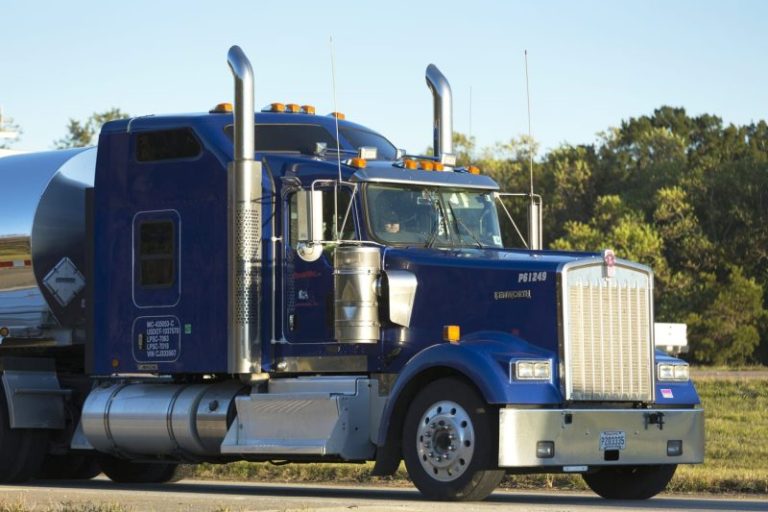
President Donald Trump on Thursday announced a new round of punishing tariffs, saying the United States will impose a 100% tariff on imported branded drugs, 25% tariff on imports of all heavy-duty trucks and 50% tariffs on kitchen cabinets.

Trump also said he would start charging a 30% tariff on upholstered furniture next week.

He said the new heavy-duty truck tariffs were to protect manufacturers from “unfair outside competition” and said the move would benefit companies such as Paccar-owned PCAR.O Peterbilt and Kenworth and Daimler Truck-owned DTGGe.DE Freightliner.

Trump has launched numerous national security probes into potential new tariffs on a wide variety of products.

He said the new tariffs on kitchen, bathroom and some furniture were because of huge levels of imports that were hurting local manufacturers.

“The reason for this is the large-scale ‘FLOODING’ of these products into the United States by other outside Countries,” Trump said, citing national security concerns about U.S. manufacturing.

The U.S. Chamber of Commerce urged the department not to impose new tariffs, noting the top five import sources are Mexico, Canada, Japan, Germany and Finland “all of which are allies or close partners of the United States posing no threat to U.S. national security.”

Mexico is the largest exporter of medium- and heavy-duty trucks to the United States. A study released in January said imports of those larger vehicles from Mexico have tripled since 2019.

Higher tariffs on commercial vehicles could put pressure on transportation costs just as Trump has vowed to reduce inflation, especially on consumer goods such as groceries.

Tariffs could also affect Chrysler-parent Stellantis STLAM.MI, which produces heavy-duty Ram trucks and commercial vans in Mexico. Sweden’s Volvo Group VOLVb.ST is building a $700 million heavy-truck factory in Monterrey, Mexico, set to start operations in 2026.

Mexico is home to 14 manufacturers and assemblers of buses, trucks, and tractor trucks, and two manufacturers of engines, according to the U.S. International Trade Administration.

The country is also the leading global exporter of tractor trucks, 95% of which are destined for the United States.

“We need our Truckers to be financially healthy and strong, for many reasons, but above all else, for National Security purposes!” Trump added.

Mexico opposed new tariffs, telling the Commerce Department in May that all Mexican trucks exported to the United States have on average 50% U.S. content, including diesel engines.

Last year, the United States imported almost $128 billion in heavy vehicle parts from Mexico, accounting for approximately 28% of total U.S. imports, Mexico said.

The Japanese Automobile Manufacturers Association also opposed new tariffs, saying Japanese companies have cut exports to the United States as they have boosted U.S. production of medium- and heavy-duty trucks.

This post appeared first on NBC NEWS

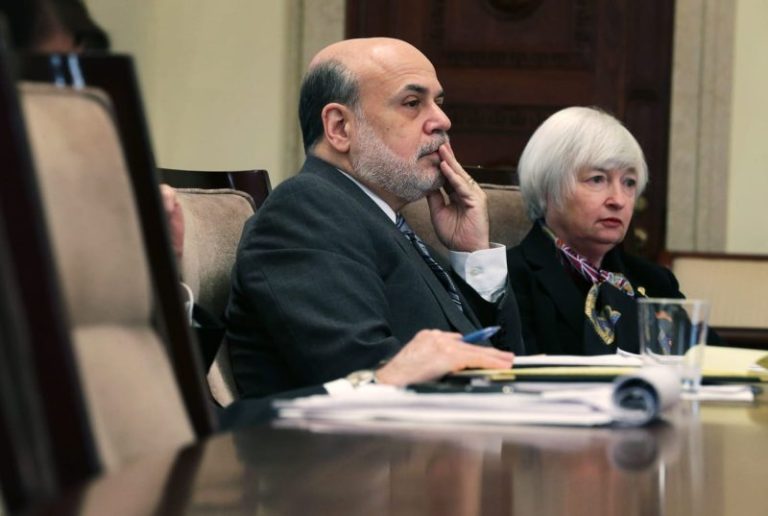
A group of the country’s top economic leaders, including every living former Federal Reserve chair, filed an amicus brief with the Supreme Court on Thursday in support of Fed governor Lisa Cook, who President Donald Trump is seeking to remove.

The group, led former central bank chiefs Alan Greenspan, Ben Bernanke and Janet Yellen, said that “allowing the removal of Governor Lisa D. Cook while the challenge to her removal is pending would threaten that independence and erode public confidence in the Fed.”

The bipartisan group, which also includes former Treasury Secretaries Robert Rubin, Larry Summers, Hank Paulson, Jack Lew and Timothy Geithner, added that “the independence of the Federal Reserve, within the limited authority granted by Congress to achieve the goals Congress itself has set, is a critical feature of our national monetary system.”

As the U.S. central bank, the Federal Reserve is part of the U.S. government and its leaders are put in place by elected officials, but it also retains a considerable amount of independence that is meant to allow it to make decisions purely out of economic concerns rather than political ones.

The former economic officials said that an erosion of Fed independence could result “in substantial long-term harm and inferior economic performance overall.”

The Supreme Court is considering whether Trump has the authority to fire Cook, who has been a target for the White House for weeks as part of a broader pressure campaign to push the Fed to more aggressively cut interest rates.

Cook’s attempted removal stems from allegations of mortgage fraud, made in August by top Trump ally and Federal Housing Finance Authority Director Bill Pulte.

Cook has repeatedly denied the allegations and has not been charged with any crime. Documents reviewed by NBC News in mid-September appeared to contradict Pulte’s allegations.

Two courts have so far blocked Cook’s removal, leading Trump to ask the Supreme Court a week ago to allow him to fire her. In a court filing, Solicitor General D. John Sauer said a judge’s ruling that blocked the firing constituted “improper judicial interference.”

In a filing to the Supreme Court on Thursday, Cook’s lawyers said that ‘she committed neither ‘fraud’ nor ‘gross negligence’ in relation to her mortgages.’

Cook asked the court to deny Trump’s attempt to remove her while the case is argued.

The White House has repeatedly maintained that Trump “lawfully removed Lisa Cook for cause.”

The brief filed Thursday is a who’s who of the country’s top economic minds. Former Fed governor Dan Tarullo is also listed as a signatory to the brief, as well as the economists Ken Rogoff, Phil Gramm and John Cochrane.

Glenn Hubbard, Greg Mankiw, Christina Romer, Cecilia Rouse, Jared Bernstein and Jason Furman, a group who served as top officials on the White House’s council of economic advisers during Republican and Democrat administrations, also signed the brief.

None of the officials who signed the filing have served in either of Trump’s administrations.

Lisa Cook is sworn in during a Senate Banking hearing in 2023.Drew Angerer / Getty Images file

Trump is the first president in U.S. history to try to remove a sitting Fed official.

‘There is broad consensus among economists, based on decades of macroeconomic research, that a more independent central bank will lead to lower and more stable inflation without creating higher unemployment — thus helping to achieve the Federal Reserve’s statutory objective of price stability and maximum employment,’ the officials said in the brief.

‘The Federal Reserve walks a careful line in pursuit of its goals.’

They noted that ‘elected officials often favor lowering interest rates to boost employment, particularly leading up to an election.’

‘Although that approach may satisfy voters temporarily, it does not lead to lasting gains for unemployment or growth and can instead lead to persistently higher inflation in the long-term and thus ultimately harm the national economy.’

The former Fed chairs and economic officials, in their filing, highlight a notorious case of political pressure on the Fed:

‘In the early 1970s, President Richard Nixon famously exerted political pressure over then-Chair of the Fed Arthur Burns to lower unemployment by reducing interest rates. During this period ‘the Fed made only limited efforts to maintain policy independence and, for doctrinal as well as political reasons, enabled a decade of high and volatile inflation.’ This contributed to an ‘inflationary boom’ and deep recession that took years to bring back under control.’

This post appeared first on NBC NEWS

This week’s market action reflected renewed caution amid evolving signals from the US Federal Reserve, with tech stocks facing pressure from shifting interest rate expectations and renewed overvaluation concerns.

Artificial intelligence (AI) heavyweight NVIDIA (NASDAQ:NVDA) announced a US$100 billion investment partnership with OpenAI on Monday (September 22), deploying at least 10 gigawatts of NVIDIA-powered data centers.

The initial US$10 billion investment will occur once the first gigawatt is operational in late 2026. OpenAI will purchase chips from NVIDIA with this investment, and NVIDIA will receive non-controlling equity in OpenAI.

The news was initially met with optimistic market sentiment, buoying NVIDIA shares and related AI-focused tech stocks.

Similarly, data center developers experienced a surge in their stock prices due to the increasing need for AI infrastructure. This was further fueled by announcements of significant expansion projects, such as the Stargate initiative. This rally hasn’t translated to ongoing price momentum at this point.

Global markets gained ahead of Fed Chair Jerome Powell’s Tuesday (September 23) remarks, in Providence, Rhode Island, during which he offered cautious guidance and dimmed hopes for near-term rate cuts.

Meanwhile, Canada’s S&P/TSX Composite Index (INDEXTSI:OSPTX) marked a milestone, breaking 30,000.

The milestone came as Bank of Canada Governor Tiff Macklem stressed the urgent need for economic reforms to counteract risks from US trade protectionism and the US dollar’s declining safe-haven status.

A more cautious tone emerged midweek, with analysts and investors weighing potential risks around the scale of the deal, including concerns about circular financing and renewed questions about market concentration.

Oracle’s (NYSE:ORCL) issuance of US$18 billion in public debt to expand its AI data center operations fueled concerns about escalating leverage risks. Meanwhile, at the macro leve, factors such as stronger-than-expected US unemployment numbers, and geopolitical tension after US President Donald Trump’s contentious remarks at the UN General Assembly, contributed to a market pause. Major US indexes marked their third straight day of losses on Thursday (September 25), with the tech sector bearing much of the brunt.

Nasdaq-100 performance, September 19 to 26, 2025.

Chart via Nasdaq.

The market rebounded slightly on Friday (September 26) as the latest US personal consumption expenditures index data aligned with expectations, giving investors relief and a sense of continued stability.

The Nasdaq-100 (INDEXNASDAQ:NDX) and S&P 500 (INDEXSP:.INX) posted modest losses for the week, reflecting a wait-and-see mood heading into the fourth quarter.

3 stocks that moved markets this week

Apple (NASDAQ:AAPL)

  • Share price performance: Shares of Apple have risen 11.45 percent since September 12 pre-orders, positively impacted by strong iPhone 17 sales exceeding expectations.

    Intel (NASDAQ:INTC)

    • Share price performance: Shares of Intel rose 19.65 percent this week as the legacy tech company continued to strengthen its market position.

      GlobalFoundries (NASDAQ:GFS)

        • News highlights: The US said it is planning to implement a 1:1 chip production rule to reduce reliance on overseas semiconductor supply. Under this proposal, chip manufacturers would be required to produce domestically as many semiconductors as their customers import from foreign suppliers. Companies failing to maintain this 1:1 domestic-to-import production ratio over time may face tariffs.

        Apple, Global Foundries and Intel performance, September 23 to 26, 2025.

        Chart via Google Finance.

        ETF performance

        Gains across AI-focused exchange-traded funds (ETFs) this week reflected ongoing investor optimism for AI innovation and infrastructure buildup. The VanEck Semiconductor ETF (NASDAQ:SMH) led the pack with a 1.74 percent increase, followed by the Invesco PHLX Semiconductor ETF (NASDAQ:SOXQ), which gained 0.85 percent, and the iShares Semiconductor ETF (NASDAQ:SOXX), which advanced by 0.82 percent.

        Other market news

                      Tech news to watch next week

                      • TikTok deal developments: Watch for updates on ongoing TikTok negotiations, as regulatory and geopolitical scrutiny persists. Any breakthroughs or setbacks could have significant implications for global tech and social media landscapes.
                        • Fermi America IPO: Fermi America, the data center developer founded by former Energy Secretary Rick Perry, prepares for a Nasdaq IPO targeting a valuation near US$13 billion on October 1. The outcome and investor reception to this IPO will serve as a bellwether for the AI infrastructure sector and data center buildout investment appetite.

                        Securities Disclosure: I, Meagen Seatter, hold no direct investment interest in any company mentioned in this article.

                        This post appeared first on investingnews.com

                        Statistics Canada released its natural resource indicators report for the second quarter of 2025 on Thursday (September 25), which includes real gross domestic product (GDP), export and import data for Canadian resources.

                        According to the announcement, the real GDP for the sector decreased by 2.4 percent during the quarter, following a 1.8 percent rise in the first quarter, and outpaced the 0.4 percent decline in the broader Canadian economy.

                        Forestry saw the most significant decline, with real GDP falling by 4.9 percent; however, declines were felt throughout the sector. Real GDP of the energy sector dropped 2.5 percent, led by refined petroleum products decreasing 7.4 percent and electricity decreasing 3.5 percent. Minerals and mining decreased 1.2 percent, with primary metallic mineral products dropping the most in the category at 3.7 percent.

                        Exports declined by 6.6 percent, with forestry again registering the largest decrease at 15.5 percent, followed by energy decreasing 5.9 percent and minerals and mining dropping 4 percent. The reporting agency noted that declines coincided with increased tariffs on goods, especially steel and aluminum, entering the United States.

                        Meanwhile, imports increased by 6.6 percent during the quarter, following a 2.9 percent rise in the first quarter, and were mainly attributable to a 17.3 percent increase in mineral and mining imports, which included a 35.4 percent rise in metallic mineral products.

                        In major mining news this week, Freeport-McMoRan (NYSE:FCX) announced on Wednesday (September 24) that the closure of its Grasberg operations in Indonesia would be extended. The closure came after 800,000 metric tons of liquid materials entered its main Grasberg block cave on September 8, trapping seven workers. So far, the bodies of two workers have been recovered, and the remaining five workers are still missing.

                        Operations at two underground mines that were unaffected by the accident should restart mid-way through the fourth quarter, according to the company, but operations at the Grasberg block cave will not return to full production until at least 2027.

                        Grasberg is among the largest copper and gold mines in the world, contributing 1.7 billion pounds of copper and 1.4 million ounces of gold annually.

                        The announcement caused copper prices to surge by 5 percent in trading on Wednesday to US$4.84 per pound on the COMEX. Meanwhile, shares in Freeport tumbled by 16.95 percent to US$37.67 that day, and fell another 6 percent to US$35.46 on Thursday.

                        For more on what’s moving markets this week, check out our top market news round-up.

                        Markets and commodities react

                        Canadian equity markets were in positive territory this week by the end of trading Thursday.

                        The S&P/TSX Composite Index (INDEXTSI:OSPTX) set another new record high this week, climbing above the 30,000 mark for the first time on Tuesday before retreating to close Thursday at 29,731.98. The S&P/TSX Venture Composite Index (INDEXTSI:JX) performed even better, peaking at 929.64 Tuesday and ending the week at 920.18. For its part, the CSE Composite Index (CSE:CSECOMP) peaked on Wednesday at 168.38, but retreated to end Thursday at 163.31.

                        The gold price continued to climb this week, setting another new record, as it achieved an intraday high of US$3,788 per ounce on Tuesday. While the price retreated slightly, it was still up 1.7 percent on the week at US$3,749.21 by Thursday’s close.

                        The silver price saw more significant gains, rising 8.14 percent to set a year-to-date high of US$45.19 per ounce at 4 p.m. EST Thursday. The silver price is trading at 14 year highs and has been closing in on its record US$47.91 set in March 2011.

                        Copper had sizable gains this week on the news of the closure of Freeport’s Grasberg mine discussed above. The copper price was up 5 percent on Wednesday, but shed some gains Thursday to end the day with a weekly gain of 4.12 percent to US$4.80 per pound. The S&P Goldman Sachs Commodities Index (INDEXSP:SPGSCI) gained 1.54 percent gain to end Thursday at 558.11.

                        Top Canadian mining stocks this week

                        How did mining stocks perform against this backdrop?

                        Take a look at this week’s five best-performing Canadian mining stocks below.

                        Stocks data for this article was retrieved at 4:00 p.m. EDT on Thursday using TradingView’s stock screener. Only companies trading on the TSX, TSXV and CSE with market caps greater than C$10 million are included. Mineral companies within the non-energy minerals, energy minerals, process industry and producer manufacturing sectors were considered.

                        1. Lithium Americas (TSX:LAC)

                        Weekly gain: 126.93 percent
                        Market cap: C$2.02 billion
                        Share price: C$9.94

                        Lithium Americas is a lithium development company focused on advancing its flagship Thacker Pass project in Nevada, US, which is considered a critical component of the US’s domestic lithium supply chain.

                        The project is a 62/38 joint venture between Lithium America and General Motors (NYSE:GM), with the latter investing US$625 million in the project last year for its stake. The companies are currently working to advance Phase 1 of the project into production, targeting a capacity of 40,000 metric tons per year of battery-quality lithium carbonate. First production is expected in Q4 2027, and GM has the right to buy all Phase 1 lithium production.

                        Shares in the company surged this week following news reports on the status of a US$2.26 billion loan from the US Department of Energy (DOE). On Tuesday, Reuters reported that the White House is seeking an equity stake of up to 10 percent in Lithium Americas as it renegotiates the terms of the loan. The company had planned to make its first draw from the loan this month, according to Reuters’ sources.

                        On Wednesday, Lithium Americas noted its rising share price in a press release about the situation. The company stated it was continuing to work with the DOE and General Motors to reach a mutually agreeable resolution regarding the first draw of the loan and potential amendments, noting discussions also included the topic of ‘corresponding consideration,’ or fair compensation, for the lithium company.

                        2. Scandium Canada (TSXV:SCD)

                        Weekly gain: 75 percent
                        Market cap: C$20.09 million
                        Share price: C$0.07

                        Scandium Canada is a scandium exploration company working to advance its Crater Lake scandium project in Northern Québec, Canada. The property consists of 96 contiguous claims covering an area of 47 square kilometers. To date, the company has identified five primary zones of interest at Crater Lake.

                        An updated mineral resource estimate released on May 12 demonstrated an indicated resource of 16.3 million metric tons of ore at an average grade of 277.9 grams per metric ton (g/t) scandium oxide, plus an inferred resource of 20.9 million metric tons at 271.7 g/t. The MRE also included grades of other rare earths at the project.

                        Gains in Scandium Canada’s share price began when trading opened Tuesday, the day after Reuters reported on White House plans to source scandium oxide from Rio Tinto (ASX:RIO,NYSE:RIO,LSE:RIO), which produces scandium oxide from its facility in Québec.

                        The company’s shares continued rising throughout the week. On Wednesday, Reuters reported that the Group of Seven nations is discussing instituting rare earth price floors as a means to increase rare earth production in their countries to counter China’s dominance. The considerations follow the G7 leaders’ announcement of a critical minerals action plan in June, which aims to strengthen the Western supply of critical minerals.

                        In company news, on Thursday Scandium Canada announced an update on advancements for its proprietary aluminum-scandium alloys, which it is aiming to commercialize.

                        3. Sendero Resources (TSXV:SEND)

                        Weekly gain: 64.58 percent
                        Market cap: C$14.74 million
                        Share price: C$0.79

                        Sendero Resources is a copper and gold exploration company focused on its Peñas Negras copper-gold project located along the border between Chile and Argentina in the Vicuña mining district.

                        Vicuña is home to several significant operations, including the Josemaria and Filo del Sol copper-gold mines, which are 50/50 joint ventures between Lundin Mining (TSX:LUN) and BHP Group (ASX:BHP,NYSE:BHP,LSE:BHP).

                        Peñas Negras covers an area of 211 square kilometers in Argentina’s portion of the district and bears geological similarities to the aforementioned deposits, according to Sendero.

                        Shares in the company were up this week, but the company has not released news since July 21, when it reported granting stock options to company employees and consultants.

                        4. Tincorp Metals (TSXV:TIN)

                        Weekly gain: 58.82 percent
                        Market cap: C$14.65 million
                        Share price: C$0.27

                        Tincorp Metals is a mineral exploration company with a pair of tin assets in Bolivia, and also owns a gold project in the Yukon, Canada.

                        Its SF Tin project covers a 2 square kilometer area in the Potosí Department of West-central Bolivia. The site hosts a historical open-pit mine and was previously explored by Rio Tinto in the 1990s. Tincorp’s 2022 exploration program encountered a highlighted intercept of 0.20 percent tin, 0.94 percent zinc, 0.17 percent lead and 24.01 g/t silver over 182.6 meters.

                        The company’s Porvenir project is an 11.25 square kilometer property in Western Bolivia that hosts historical open-pit and underground mining operations. Its exploration of the site in 2023 encountered a highlighted intercept with 0.65 percent tin, 1.97 percent zinc, 4 g/t silver and 0.10 percent copper over 21.2 meters.

                        The most recent news from Tincorp came on September 17 when it announced it had closed on a non-brokered private placement for 3 million common shares for gross proceeds of C$375,000. The company said it intends to use the net proceeds for working capital requirements and corporate purposes.

                        5. Wealth Minerals (TSXV:WML)

                        Weekly gain: 58.33 percent
                        Market cap: C$56.41 million
                        Share price: C$0.19

                        Wealth Minerals is a lithium exploration and development company with several Chilean lithium brine assets. Much of its news in Q2 and Q3 has been about advancing its Kuska project in the Salar de Ollagüe. The Kuska project covers 10,500 hectares in the Antofagasta region near the Bolivian border.

                        In May, the company created the Kuska Minerals 95/5 joint venture with the Quechua Indigenous Community of Ollagüe for the Kuska project.

                        A February 2024 preliminary economic assessment (PEA) for Kuska demonstrated an indicated resource of 139,000 metric tons of contained lithium from 8 million cubic meters of brine with an average grade of 175 milligrams per liter lithium. The report also demonstrated a post-tax net present value of US$1.15 billion, with an internal rate of return of 28 percent and a payback period of 6.9 years.

                        In September 2024, the Chilean government selected the Salar de Ollagüe to be among the first group of six salars considered for production licenses. Wealth applied for a special lithium operation contract (CEOL) for Kuska, but was denied due to not meeting the criteria of 80 percent ownership of the area designated by Chile, referred to as a polygon, that contained its concessions.

                        On Tuesday, the company reported that the Chilean government has reopened applications after simplifying the process for assigning a CEOL with revised requirements. During consultation with the local Indigenous communities, the ministry agreed to exclude ‘the areas of greatest cultural interest to Indigenous communities and the populated areas that were part of the polygon.’ Wealth Minerals is now verifying it meets all conditions before reapplying.

                        The following day, Wealth announced that it had entered into a letter agreement to acquire the past-producing Andacollo Oro Gold project in Chile. The project has historic measured and indicated resources of 2.02 million ounces of gold from 130 million metric tons with a grade of 0.48 g/t.

                        According to the company, it believes the acquisition is the right choice for shareholders as it expects the drivers of the current investment interest in gold, namely worry about monetary and fiscal policies, to remain unchanged.

                        Additionally, in connection with the transaction, the company announced it was opening a non-brokered private placement for a minimum of 41.67 million shares with the intention of raising gross proceeds of C$5 million.

                        FAQs for Canadian mining stocks

                        What is the difference between the TSX and TSXV?

                        The TSX, or Toronto Stock Exchange, is used by senior companies with larger market caps, and the TSXV, or TSX Venture Exchange, is used by smaller-cap companies. Companies listed on the TSXV can graduate to the senior exchange.

                        How many mining companies are listed on the TSX and TSXV?

                        As of May 2025, there were 1,565 companies listed on the TSXV, 910 of which were mining companies. Comparatively, the TSX was home to 1,899 companies, with 181 of those being mining companies.

                        Together, the TSX and TSXV host around 40 percent of the world’s public mining companies.

                        How much does it cost to list on the TSXV?

                        There are a variety of different fees that companies must pay to list on the TSXV, and according to the exchange, they can vary based on the transaction’s nature and complexity. The listing fee alone will most likely cost between C$10,000 to C$70,000. Accounting and auditing fees could rack up between C$25,000 and C$100,000, while legal fees are expected to be over C$75,000 and an underwriters’ commission may hit up to 12 percent.

                        The exchange lists a handful of other fees and expenses companies can expect, including but not limited to security commission and transfer agency fees, investor relations costs and director and officer liability insurance.

                        These are all just for the initial listing, of course. There are ongoing expenses once companies are trading, such as sustaining fees and additional listing fees, plus the costs associated with filing regular reports.

                        How do you trade on the TSXV?

                        Investors can trade on the TSXV the way they would trade stocks on any exchange. This means they can use a stock broker or an individual investment account to buy and sell shares of TSXV-listed companies during the exchange’s trading hours.

                        Article by Dean Belder; FAQs by Lauren Kelly.

                        Securities Disclosure: I, Dean Belder, hold no direct investment interest in any company mentioned in this article.

                        Securities Disclosure: I, Lauren Kelly, hold no direct investment interest in any company mentioned in this article.

                        This post appeared first on investingnews.com