Author

admin

Browsing

A peace agreement brokered by the White House to stem the bloodshed in the eastern Democratic Republic of Congo (DRC), where a militia allegedly backed by Rwanda occupies vast swaths of land, will be signed in Washington D.C. on Friday by officials of the two African nations.

But many remain unconvinced that the accord – portrayed as a “wonderful treaty” by United States President Donald Trump – can end the complex and long-running conflict, while the militia itself has yet to commit to laying down its weapons.

Trump was upbeat about the prospects for peace when teams from Rwanda and the DRC initialed a draft agreement on June 18, while at the same time suggesting that he would not get credit for his role in ending this or other conflicts.

On June 20, he wrote on Truth Social: “This is a Great Day for Africa and, quite frankly, a Great Day for the World! I won’t get a Nobel Peace Prize for this.”

He added: “I won’t get a Nobel Peace Prize no matter what I do, including Russia/Ukraine, and Israel/Iran, whatever those outcomes may be, but the people know, and that’s all that matters to me!”

Trump touts himself as a “peacemaker” and has expanded his interest in global conflicts to the brutal war in the mineral-rich eastern DRC. His peace deal could also pave the way for America’s economic interests in the region, as it eyes access to the DRC’s critical minerals.

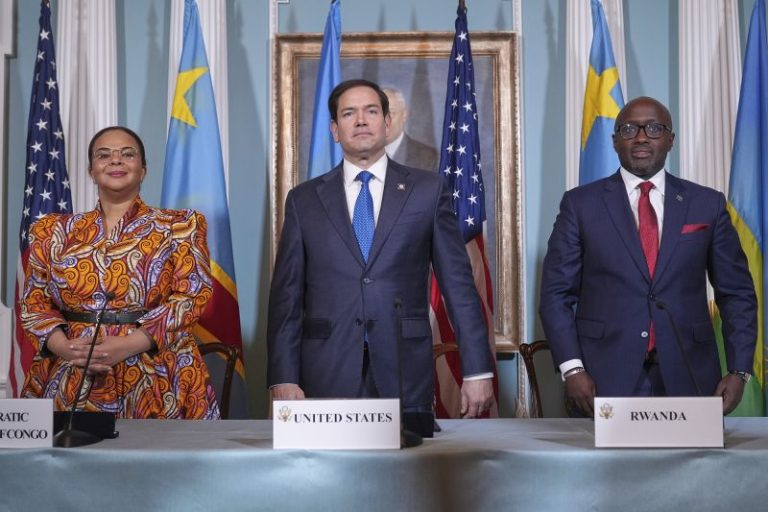
US Secretary of State Marco Rubio will preside over the signing of the peace agreement by DRC Foreign Minister Thérèse Kayikwamba Wagner and her Rwandan counterpart Olivier Nduhungirehe on Friday.

More than 7,000 people have been killed, and some one million others displaced since January, when the M23 militia waged a fresh offensive against the Congolese army, seizing control of the two largest cities in the country’s east.

There has been increasing reports of summary executions – even of children – in occupied areas, where aid groups say they are also witnessing an epidemic of rape and sexual violence.

A complex war

The crisis in the eastern DRC, which shares a border with Rwanda and harbors large deposits of minerals critical to the production of electronics, is a fusion of complex issues.

In that genocide, hundreds of thousands of Tutsis and moderate Hutus were killed by Hutu militias.

Rwanda criticizes the DRC, which faces problems with militia violence, for integrating a proscribed Hutu militia group into its army to fight against the mainly Tutsi M23.

M23, which first emerged in 2012, is one of the most prominent militias battling for control of the DRC’s mineral wealth. The rebel group also claims to defend the interests of the Tutsis and other Congolese minorities of Rwandan origin.

UN experts and much of the international community believe that Rwanda backs M23 and supports the rebels with troops, leaving the nation on the cusp of war with the DRC over this alleged territorial violation.

The Rwandan government has not acknowledged this claim but insists it protects itself against the Hutu militia operating in the DRC, which it describes as an “existential security threat to Rwanda.”

M23 occupies strategic mining towns in the DRC’s eastern provinces of North and South Kivu.

In a report in December, the UN Group of Experts on the DRC said they found evidence that minerals “were fraudulently exported to Rwanda” from the DRC “and mixed with Rwandan production.”

Rwandan President Paul Kagame drew outrage last year when he admitted in a public address that Rwanda was a transit point for minerals smuggled from the DRC but insisted his country was not stealing from its neighbor.

What’s contained in the US peace deal?

Washington’s peace accord contains provisions on “respect for territorial integrity and a prohibition of hostilities,” including “disengagement, disarmament, and conditional integration of non-state armed groups,” according to a joint statement issued by the US, Rwanda and the DRC on June 18.

Other points include “facilitation of the return of refugees and internally displaced persons, as well as humanitarian access” and the establishment of a “regional economic integration framework” that could attract significant US investments into Rwanda and the DRC.

Asked whether AFC would surrender its arms, Victor Tesongo, a spokesperson for the coalition, said it was “not there yet” and that it was waiting on developments in Doha. He did not confirm whether airports in the eastern DRC that had been shut by the rebels would reopen for aid supply.

Why US efforts may fail

Previous truce agreements have failed to bring lasting peace between M23 and the Congolese armed forces.

In April, the rebels jointly declared a truce after meeting with representatives of the DRC during negotiations led by Qatar. Fighting flared up days after.

Qatar has been facilitating talks after Angolan President João Lourenço quit his mediation role following months of inability to broker peace.

One of those root causes, he said, was the “unfair distribution” of the DRC’s mineral wealth, which he claimed, “benefits a small elite and foreign powers, while ordinary Congolese, especially in the east, suffer displacement and misery.”

The DRC is roughly the size of western Europe and is home to more than 100 million people. The Central African nation is also endowed with the world’s largest reserves of cobalt – used to produce batteries that power cell phones and electric vehicles – and coltan, which is refined into tantalum and has a variety of applications in phones and other devices.

However, according to the World Bank, “most people in DRC have not benefited from this wealth,” and the country ranks among the five poorest nations in the world.

Kubelwa said another trigger for the conflict in the DRC was the country’s “weak institutions” and “suppression of dissent.”

A fragile peace

The DRC foreign minister’s office said it would comment on the deal after the document is signed.

Congolese human rights activist and Nobel laureate Denis Mukwege has described the deal as “vague” and tilted in Rwanda’s favor.

After details of the draft agreement were announced last week, he posted a statement on X criticizing it for failing to recognize “Rwanda’s aggression against the DRC,” which he wrote, “suggests it (the peace accord) benefits the unsanctioned aggressor, who will thus see its past and present crimes whitewashed as ‘economic cooperation.’”

He added: “In its current state, the emerging agreement would amount to granting a reward for aggression, legitimizing the plundering of Congolese natural resources, and forcing the victim to alienate their national heritage by sacrificing justice in order to ensure a precarious and fragile peace.”

For Kubelwa, “a true and lasting solution must go beyond ceasefires and formal agreements. It must include genuine accountability, regional truth-telling, redistribution of national wealth, reform of governance, and a broad national dialogue that includes all Congolese voices not just elites or foreign allies.”

“Without this, peace remains a fragile illusion,” he said.
This post appeared first on cnn.com

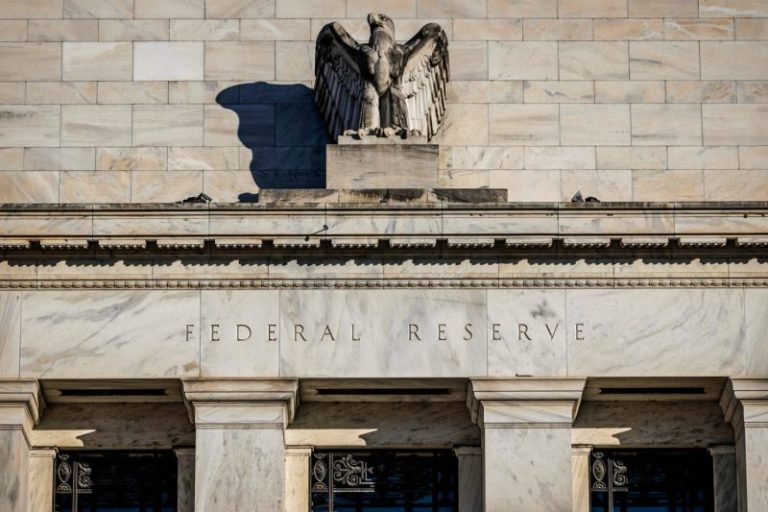
The Federal Reserve on Wednesday proposed easing a key capital rule that banks say has limited their ability to operate, drawing dissent from at least two officials who say the move could undermine important safeguards.

Known as the enhanced supplementary leverage ratio, the measure regulates the quantity and quality of capital banks should be keeping on their balance sheets. The rule emanated from a post-financial crisis effort to ensure the stability of the nation’s largest banks.

However, in recent years as bank reserves have built and concerns have grown over Treasury market liquidity, Wall Street executives and Fed officials have pushed to roll back the requirements. The regulations targeted treat all capital the same.

“This stark increase in the amount of relatively safe and low-risk assets on bank balance sheets over the past decade or so has resulted in the leverage ratio becoming more binding,” Fed Chair Jerome Powell said in a statement. “Based on this experience, it is prudent for us to reconsider our original approach.”

The Fed board put the proposal open for a 60-day public comment window.

In its draft form, the measure would call for reducing the top-tier capital big banks must hold by 1.4%, or some $13 billion, for holding companies. Subsidiaries would see a larger drop, of $210 billion, which would still be held by the parent bank. The standard applies the same rules to so-called globally systemic important banks as well as their subsidiaries.

The rule would lower capital requirements to range of 3.5% to 4.5% from the current 5%, with subsidiaries put in the same range from a previous level of 6%.

Current Vice Chair for Supervision Michelle Bowman and Governor Christopher Waller released statements supporting the changes.

“The proposal will help to build resilience in U.S. Treasury markets, reducing the likelihood of market dysfunction and the need for the Federal Reserve to intervene in a future stress event,” Bowman stated. “We should be proactive in addressing the unintended consequences of bank regulation, including the bindingness of the eSLR, while ensuring the framework continues to promote safety, soundness, and financial stability.”

On the whole, the plan seeks to loosen up banks to take on more lower-risk inventory such as Treasurys, which are now treated essentially the same as high-yield bonds for capital purposes. Fed regulators essentially are looking for the capital requirements to serve as a safety net rather than a bind on activity.

However, Governors Adriana Kugler and Michael Barr, the former vice chair of supervision, said they would oppose the move.

“Even if some further Treasury market intermediation were to occur in normal times, this proposal is unlikely to help in times of stress,” Barr said in a separate statement. “In short, firms will likely use the proposal to distribute capital to shareholders and engage in the highest return activities available to them, rather than to meaningfully increase Treasury intermediation.”

The leverage ratio has come under criticism for essentially penalizing banks for holding Treasurys. Official documents released Wednesday say the new regulations align with so-called Basel standards, which set standards for banks globally.

This post appeared first on NBC NEWS

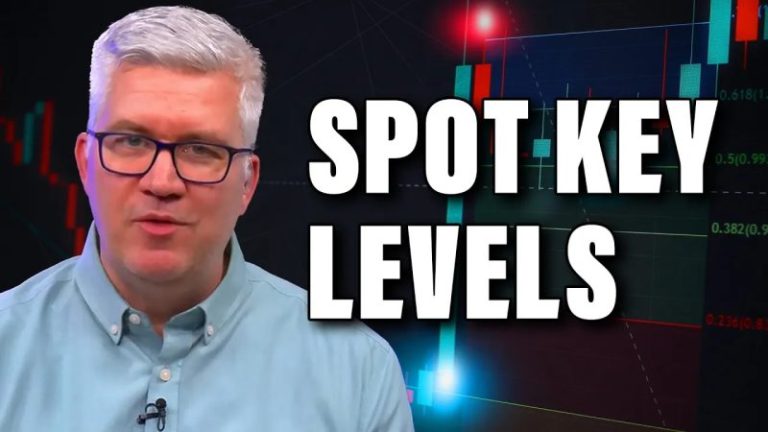
Think trading against the trend is risky? You may want to reconsider. When a stock or ETF is trending lower, the smart money watches for signs of a reversal; those early signals can get you into a trend before everyone else and lead to favorable risk-to-reward ratios.

In this video, options strategist Tony Zhang breaks down how to spot high-probability counter-trend setups using technical signals and practical examples. You’ll learn how to identify early reversal signals, why counter-trend setups can be lower-risk than you’d think, and how to apply these strategies through examples and live reviews.

Whether you’re new to options trading or leveling up your game, this is your opportunity to explore a low-risk, high-performing strategy.

The video premiered on June 25, 2025.

One of the sharpest copper supply crunches in recent memory is rattling global commodities markets, as inventories at the London Metal Exchange (LME) plummet and the spot price soars.

Bloomberg reported that as of Monday (June 23), copper for immediate delivery was trading at a premium of US$345 per metric ton over three month futures, the widest spread since a record squeeze in 2021.

That dramatic price divergence reflects the market’s acute concerns over access to physical copper, with readily available inventories on the LME falling by around 80 percent this year alone.

Available stockpiles now cover less than a single day of global demand, amplifying anxiety across the supply chain.

Historic backwardation signals market distress

Backwardation in metals markets typically suggests that buyers are scrambling to obtain physical supply. In copper’s case, a combination of logistical, geopolitical and structural forces is driving the surge.

LME stockpiles have been rapidly drawn down as traders and manufacturers shift metal to the US in anticipation of potential trade barriers, spurred by US President Donald Trump’s tariff moves.

That migration has created acute shortages in Europe and Asia. Chinese smelters, responding to the price premium and slackening domestic demand, have begun exporting surplus copper to global markets. Yet those flows have not kept pace with the drawdowns, and China’s own inventories have also dwindled.

The LME had hoped recent regulatory interventions would prevent another disorderly squeeze like the one that disrupted the nickel market in 2022. Last week, the exchange enacted new rules mandating that traders with large front-month positions offer to lend those holdings if they exceed available inventories.

The so-called “front-month lending rule” is meant to discourage hoarding and promote liquidity.

However, recent copper trading data suggest that no single trader is behind the current squeeze. On Monday, the Tom/next spread — a one day lending rate — spiked to US$69 per metric ton.

This would only occur if no one entity held enough copper to trigger lending obligations under the new rules, indicating the tightness is likely the result of broad-based market dynamics rather than manipulation.

LME tightens oversight

As mentioned, the LME has begun cracking down on oversized positions across its metals complex.

In a June 20 statement, the exchange introduced a temporary, market-wide rule to manage large front-month exposures. Under the updated rules, traders holding positions in the front-month contract for a metal that exceed the total available exchange inventories — excluding any stock they already own — must offer to lend those positions at “level,” meaning they are required to roll them over to the next month at the same price.

The rule aims to rein in aggressive moves by commodities trading houses that have made deep inroads into metals markets over the past year. The LME emphasized in its release that recent market interventions are targeted, adding that the newly introduced rule offers a standardized approach.

Still, the unprecedented depth of copper’s backwardation — now extending years into the future — suggests that broader supply/demand dynamics are at play, beyond what position limits alone can control.

For manufacturers and industrial users, the squeeze presents a serious cost and planning risk. Many rely on the LME as a pricing and hedging mechanism. But when exchange inventories drop this low, even large players can face trouble sourcing metal to meet contract obligations. With exchange-based supply nearly exhausted, companies may increasingly turn to off-market deals or bilateral supply agreements — often at higher prices.

This shift weakens the LME’s role as a central clearinghouse for global copper, and raises questions about its ability to handle future shocks, especially as energy transition policies boost long-term demand for the metal.

Market watchers will also be looking to the next moves from Chinese exporters, US trade policy under Trump and the LME’s enforcement of its new regulations.

Securities Disclosure: I, Giann Liguid, hold no direct investment interest in any company mentioned in this article.

This post appeared first on investingnews.com

Cobalt prices are surging after the Democratic Republic of Congo (DRC), the world’s largest producer, extended its export ban by three months in a bid to address global oversupply and stabilize plunging prices.

According to the Financial Times, cobalt prices on China’s Wuxi Stainless Steel Exchange rose nearly 10 percent after the DRC government announced the news over the weekend.

The ban — originally set to expire on Monday (June 23) — will now remain in effect until at least September.

The DRC’s Strategic Mineral Substances Market Regulation and Control Authority (ARECOMS) said the extension was necessary “due to the continued high level of stock on the market.”

The ban, first imposed in February of this year, was initially slated to last four months.

It came after a prolonged slump in cobalt prices, which have plummeted approximately 60 percent over the past three years, reaching a nine year low of US$10 per pound earlier this year.

The DRC produced 72 percent of the global cobalt mine supply in 2024, as per market intelligence firm Project Blue.

The export halt has already begun to ripple through international markets. In China, where most of the world’s cobalt is refined, prices for the metal and related company stocks spiked.

‘We are likely to see an initial price spike, but real pressure will be later in the year as intermediate stocks begin to dry up,’ Thomas Matthews, a battery materials analyst at CRU Group, told Bloomberg. ‘In short, strap yourselves in.’

The government of the DRC is attempting to tackle a persistent supply glut that has undermined the cobalt market since 2022. By curbing exports, Kinshasa is aiming to drive up prices, thereby increasing revenues from royalties and taxes on mining companies, while also incentivizing further investment in its domestic mining infrastructure.

ARECOMS said that a follow-up decision will be made before the new deadline in September, signaling that the ban could be modified, extended or lifted depending on market developments.

Reuters reported last week that Congolese officials are also exploring a quota-based system for cobalt exports, which would allow selected volumes to leave the country while still exerting downward pressure on global supply.

The proposal has garnered support from major industry players.

Glencore (LSE:GLEN,OTC Pink:GLCNF), the world’s second largest cobalt producer and a key stakeholder in Congolese mining operations, is backing the potential quota system. The Swiss trader declared force majeure on some of its cobalt supply contracts earlier this year due to the export restrictions, citing exceptional circumstances. Nevertheless, Glencore has managed to fulfill its obligations so far, thanks to pre-existing cobalt stockpiles located outside the DRC.

By contrast, CMOC Group (OTC Pink:CMCLF,HKEX:3993,SHA:603993), the China-based firm that overtook Glencore as the world’s top cobalt producer in 2024, has been lobbying for the ban’s complete removal.

CMOC, which processes a significant share of Congolese cobalt in China, argues that prolonged supply constraints could jeopardize downstream industries and global battery production.

A race against the clock

Despite initial cushioning from global stockpiles, experts warn that refined cobalt supply may soon run thin.

Transporting cobalt from the landlocked DRC to China’s processing hubs typically takes about 90 days. This means that if shipments do not recommence soon, shortages could begin to materialize in late Q3 or early Q4.

‘Stockpiles of cobalt outside the DR Congo will reach very low levels by the September 21 deadline if nothing else changes,’ Jack Bedder, founder of Project Blue, told the Financial Times.

Cobalt plays a vital role in lithium-ion batteries used in electric vehicles, consumer electronics and renewable energy storage. While many battery makers have begun shifting toward lower-cobalt or cobalt-free chemistries, demand for the metal remains strong — especially for high-performance applications.

Complicating the supply/demand dynamics is the fact that cobalt is often a by-product of copper mining.

With copper prices rebounding sharply — trading around US$9,600 per metric ton this week on the London Metal Exchange — producers have little incentive to curb overall output.

The move to extend the cobalt ban also coincides with the DRC’s recent efforts to assert greater control over its vast mineral wealth. The Central African nation is currently in discussions with the US over a potential minerals partnership aimed at strengthening supply chain security for clean energy technologies.

The export suspension is just the latest in a series of efforts by resource-rich countries to assert more control over key commodities. Similar moves have been seen in Indonesia, which banned nickel ore exports in 2020 to spur domestic processing, and in Chile, where the government is pushing for greater state participation in the lithium sector.

Securities Disclosure: I, Giann Liguid, hold no direct investment interest in any company mentioned in this article.

This post appeared first on investingnews.com

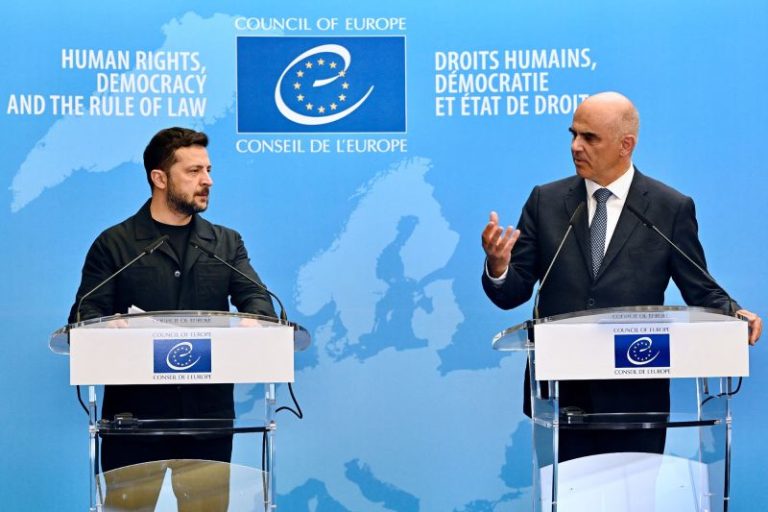
Ukrainian President Volodymyr Zelensky has signed an agreement with the Council of Europe (CoE) to create a tribunal that would allow for the prosecution of senior Russian officials who have led the war on Ukraine.

Zelensky signed the accord on Wednesday alongside CoE Secretary General Alain Berset in the French city of Strasbourg, where the organization is headquartered.

The Ukrainian leader has portrayed the special tribunal as paramount to holding Russian officials responsible for the full-scale invasion of his country, which began in February 2022 and has grinded on for more than three years, with a huge human cost.

The establishment of the tribunal is aimed at widening the net for those who can be tried over the conflict. The International Criminal Court (ICC), which focuses on crimes against humanity, has already issued arrest warrants for Russian President Vladimir Putin and several other high-profile political and military Russian figures.

The new body will deal with the crime of aggression, specifically regarding the use of armed force by one state against another. It marks the first time that the CoE has set up such a tribunal.

“The Tribunal, formally launched today, creates a real opportunity to hold the leadership of the Russian regime accountable for the crimes committed against our state and our people,” the Ukrainian president wrote on X.

“We will continue working to ensure justice for all victims. Criminals must face trial in The Hague and be punished.”

Berset said: “This historic signature reminds us that international law must apply to all – with no exceptions, and with no double standards.”

Alongside Putin, the ICC, based in The Hague, issued an arrest warrant for Maria Lvova-Belova, Russia’s presidential commissioner for children’s rights, in March 2023. Both are accused of the illegal deportation and transfer of children from occupied areas of Ukraine to Russia.

In March 2024, the court also issued arrest warrants for Viktor Sokolov, a Russian navy officer and former commander of the Black Sea Fleet, and Sergei Kobylash, a lLieutenant general in the Russian Armed Forces. The two are accused of the war crime of causing excessive incidental harm to civilians and the crime against humanity of inhumane acts.

Meanwhile, ceasefire negotiations to end the war in Ukraine have mostly stalled despite mediation from the Trump administration.

The talks between Russia, Ukraine and third countries have struggled to make progress after Moscow refused to back off its maximalist demands and presented a ceasefire proposal that would essentially amount to Ukraine’s capitulation.

At the same time, Russia keeps ramping up its attacks against Ukrainian cities. Russian forces killed dozens of Ukrainian civilians in less than 48 hours on Monday and Tuesday, according to Ukrainian officials, two of the deadliest days in many months.

This post appeared first on cnn.com

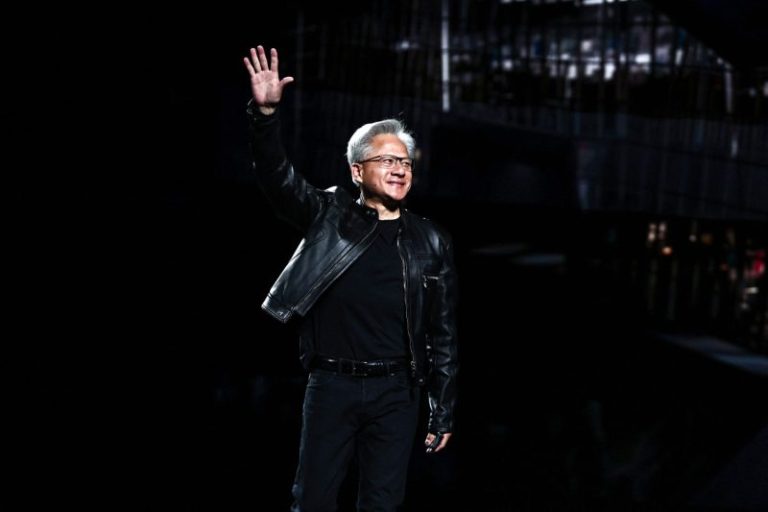
Nvidia CEO Jensen Huang sold 100,000 shares of the chipmaker’s stock on Friday and Monday, according to a filing with the U.S. Securities and Exchange Commission.

The sales are worth nearly $15 million at Tuesday’s opening price.

The transactions are the first sale in Huang’s plan to sell as many as 600,000 shares of Nvidia through the end of 2025. It’s a plan that was announced in March, and it’d be worth $873 million at Tuesday’s opening price.

The Nvidia founder still owns more than 800 million Nvidia shares, according to Monday’s SEC filing. Huang has a net worth of about $126 billion, ranking him 12th on the Bloomberg Billionaires Index.

The 62-year-old chief executive sold about $700 million in Nvidia shares last year under a prearranged plan, too.

Nvidia stock is up more than 800% since December 2022 after OpenAI’s ChatGPT was first released to the public. That launch drew attention to Nvidia’s graphics processing units, or GPUs, which were needed to develop and power the artificial intelligence service.

The company’s chips remain in high demand with the majority of the AI chip market, and Nvidia has introduced two subsequent generations of its AI GPU technology.

Nvidia continues to grow. Its stock is up 9% this year, even as the company faces export control issues that could limit foreign markets for its AI chips.

In May, the company reported first-quarter earnings that showed the chipmaker’s revenue growing 69% on an annual basis to $44 billion during the quarter.

This post appeared first on NBC NEWS

Chris Schwegmann is getting creative with how artificial intelligence is being used in law.

At Dallas-based boutique law firm Lynn Pinker Hurst & Schwegmann, he sometimes asks AI to channel Supreme Court Chief Justice John Roberts or Sherlock Holmes.

Schwegmann said after uploading opposing counsel’s briefs, he’ll ask legal technology platform Harvey to assume the role of a legal mind like Roberts to see how the chief justice would think about a particular problem.

Other times, he will turn to a fictional character like Holmes, unlocking a different frame of mind.

“Harvey, ChatGPT … they know who those folks are, and can approach the problem from that mindset,” he said. “Once we as lawyers get outside those lanes, when we are thinking more creatively involving other branches of science, literature, history, mythology, that sometimes generates some of the most interesting ideas that can then be put, using proper legal judgement, in a framework that works to solve a legal problem.”

It’s just one example of how smaller businesses are putting AI to work to punch above their weight, and new data shows there’s an opportunity for much more implementation in the future.

Only 24% of owners in the recent Small Business and Technology Survey from the National Federation of Independent Business said they are using AI, including ChatGPT, Canva and Copilot, in some capacity.

Notably, 98% of those using it said AI has so far not impacted the number of employees at their firms.

At his trial litigation firm of 50 attorneys, Schwegmann said AI is resolving work in days that would sometimes take weeks, and said the technology isn’t replacing workers at the firm.

It has freed up associate lawyers from doing “grunt work,” he said, and also means more senior-level partners have the time to mentor younger attorneys because everyone has more time.

The NFIB survey found AI use varied based on the size of the small business. For firms with employees in the single digits, uptake was at 21%. At firms with fifty or more workers, AI implementation was at nearly half of all respondents.

“The data show clearly that uptake for the smallest businesses lags substantially behind their larger competitors. … With a little attention from all the relevant stakeholders, a more equal playing field is possible,” the NFIB report said.

For future AI use, 63% of all small employers surveyed said the utilization of the technology in their industry in the next five years will be important to some degree; 12% said it will be extremely important and 15% said it will not be important at all.

Some of the most common uses in the survey were for communications, marketing and advertising, predictive analysis and customer service.

“We still have the need for the independent legal judgment of our associate lawyers and our partners — it hasn’t replaced them, it just augments their thinking,” Schwegmann said. “It makes them more creative and frees their time to do what lawyers do best, which is strategic thought and creative problem solving.”

The NFIB data echoes a recent survey from Reimagine Main Street, a project of Public Private Strategies Institute in partnership with PayPal.

Reimagine surveyed nearly 1,000 small businesses with annual revenue between $25,000 and $50,000 and also found that a quarter had already started integrating AI into daily workflows.

Schwegmann said at his firm, AI is helping to even the playing field.

“One of the things Harvey lets us do is review, understand and incorporate and respond much faster than we would prior to the use of these kinds of AI tools,” he said. “No longer does a party have an advantage because they can paper you to death.”

This post appeared first on NBC NEWS

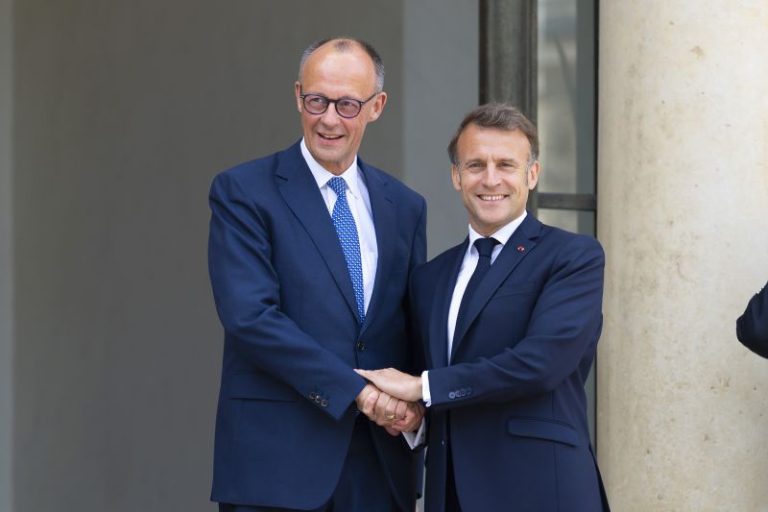
The clasped hands of French and German leaders have long embodied the spirit of European unity – most famously in 1984, when François Mitterrand and Helmut Kohl stood hand-in-hand at Verdun in a symbol of reconciliation.

So, when Chancellor Friedrich Merz grasped President Emmanuel Macron’s hand on the steps of the Élysée palace in early May – a handshake that was long, warm, and accompanied by backslapping – it wasn’t just a photo-op.

It was the clearest sign yet that Europe’s most important alliance was back in motion. After years of sputtering and frustration under Olaf Scholz, the Franco-German engine is humming again, and it has a new name: Merzcron.

Since Merz’s election, the two have met six times – most recently with other NATO leaders at The Hague. They will sit down together again on Thursday at the European Council meeting in Brussels.

Their shared agenda: to drive the European Union response on security, Ukraine and Trump-era uncertainties, and shape Europe’s role on the global stage.

Ahead of Wednesday’s NATO summit, Macron and Merz laid out their vision in a joint opinion piece in the Financial Times.

“In these testing times, Germany and France – together with our European and transatlantic friends and allies – stand united and strong, to defend our common values as well as the freedom and security of our citizens,” they wrote.

They outlined plans to boost defense spending – aiming to reach 3.5% of GDP in core military investments – and to deepen cooperation between NATO and the EU, calling for a stronger, more sovereign Europe that is no longer reliant on others for its security. They pledged to ensure Ukraine emerges “prosperous, robust and secure,” and warned that European stability for decades to come hangs in the balance.

The signs are that the powerful ‘Mercron’ or ‘Merkozy’ alliance, portmanteaus derived from the names of former German Chancellor Angela Merkel, Macron and his predecessor Nicholas Sarkozy, is evolving into an equally influential ‘Merzcron.’

The two-day European Council summit now underway in Brussels, hot on the heels of a G7 meeting in Canada and the NATO leaders’ summit in The Hague, is the first of Merz’s chancellorship. It will likely be another demonstration of how strong this union could be.

Leaders who ‘love interaction’

Under Scholz, the former German chancellor, the Berlin-Paris axis became strained, something that both Ischinger and Hollande noted.

Stefan Seidendorf, director at the Franco-German Institute in Ludwigsburg, Germany, said Scholz spent so much time doing “domestic homework” that he was never able to fully focus on Europe.

The three-way coalition he headed was beset with infighting on domestic and Europe issues and eventually collapsed in November last year, triggering an early election.

He added that the same went for Scholz, “who found it difficult to get along with this French president living in the palace of Élysée with all the gold and the glitter and the ceremony.”

But neither was Macron and Merz’s friendship a given, considering their different styles. Macron, 47, is Jupiterian and theatrical, hailed by some as a visionary, dismissed by others as a narcissist. Merz, 69, is impulsive, prickly under pressure and occasionally leans into populist bluster.

That said, Ischinger said both leaders “met rather easily – and got their act together.” Speaking about their shared character traits, he said they “love interaction. They enjoy difficult questions. These two have a way of understanding each other – they are open.”

‘Perfect unity’ over Ukraine

Their recent trip to Kyiv, alongside British and Polish leaders Keir Starmer and Donald Tusk, “was a symbol of a new kind of determined getting-together of the major European powers to make progress,” Ischinger said.

Paris has long been more hawkish than Berlin on its support for Ukraine. Macron has been a strong proponent of boots on the ground in the country and has allowed Ukraine to fire French-made long-range missiles deep into Russia.

However, Hollande said, “we’ve seen that Merz’s position is a bit different from that of his predecessor… including on the delivery of missiles capable of reaching Russian territory.”

Since taking office, Merz has welcomed Ukraine’s President Volodymyr Zelensky to Berlin and unveiled a new $5 billion package for Ukraine that includes joint co-operation in the development of long-range missiles capable of being fired deep into Russia, some of which could be online by the end of the year.

“Now we’re in perfect unity,” Ischinger said of the Franco-German alignment on Ukraine.

Russia’s unease over a more coordinated Franco-German approach to Ukraine is already starting to show.

News of last month’s visit to Kyiv by Merz and Macron was accompanied by the release of a photo taken ahead of a meeting between them. Sitting on the table was a white tissue.

Its presence sparked an online rumor, amplified by Kremlin officials and later traced back to pro-Russian accounts, that falsely claimed the crumpled tissue – which Macron picked up and pocketed – was a cocaine bag.

The Élysée countered by saying “when European unity becomes inconvenient, disinformation goes so far as to make a simple tissue look like drugs. This fake news is being spread by France’s enemies, both abroad and at home.”

European security

US President Donald Trump’s return to the White House has also forced a new alignment between the European powerhouses, particularly on the issue of Europe’s security.

The Trump administration’s insistence that Europe should do more to defend itself triggered the shift, Hollande explained, saying that it “forced France and Germany to work together diplomatically and militarily, whereas until then, their main alignment had been on monetary issues.

“Today there is a shared responsibility. Germany must do more for its defense, and France must be willing to share a number of proposals and initiatives – including on defense – with Germany,” Hollande says.

Before even formally taking office, Merz managed to push through the reform of Germany’s constitutional debt brake to unlock over half a trillion dollars in defense spending. He has also committed to creating Europe’s largest army. Both represent a major shift for Germany.

Previously, Hollande suggested, those moves might have been difficult for France to stomach.

“We used to be very reluctant about German rearmament. That was a politically sensitive issue after the war. But today, no one in France fears German rearmament –we welcome it,” he said.

Macron and Merz also appear to have taken a similar approach to dealing with Trump. Both have had effusive and positive meetings in the Oval Office with a president who has not always been so welcoming to visiting leaders.

Europe’s shifting center

Paris and Berlin are also trying to revive the decades-old “Weimar Triangle.” Established after German reunification in 1991, it aimed to bring Poland deeper into the European fold, led by Germany and France.

Ischinger feels the relative weight of the European Union has shifted eastwards due to the war in Ukraine, meaning that Warsaw, now more than ever, must now be a vital ally for Paris and Berlin. “Harmony (between France and Germany) is key, but it’s not sufficient,” he said.

“The center of gravity of the good old European Union was somewhere between France and Germany. But today, almost half of the members are to the east of Germany,” he added, and giving Poland more say is the best way to bring the continent together.

That shift, too, is already playing out. As well as taking part in the Kyiv trip, Tusk has found himself directly involved in European talks with Trump, as the US president has attempted to broker an end to the Russia-Ukraine war.

Poland’s status as Europe’s fastest growing economy, its commitment to NATO defense spending – way above other member states’ at 4.2% of GDP in 2024, projected to rise to 4.7% this year – and its geographic location bordering Russia, Ukraine and Belarus, have made the nation a key nexus for the continent.

Nonetheless, for Hollande, “Europe only moves forward when France and Germany speak with one voice and pull in the same direction. Only then can the European machine function properly.”

Ischinger added: “If Franco-German cooperation works well, you have a perfect precondition to get the entire European Union underway, moving forward.”

For now, the “Merzcron” engine is firing up and, if it keeps its momentum, it could pull the rest of Europe into gear.

This post appeared first on cnn.com

Join Dave as he shares how he uses the power of Fibonacci retracements to anticipate potential turning points. He takes viewers through the process of determining what price levels to use to set up a Fibonacci framework, and, from there, explains what Fibonacci retracements are telling him about the charts of NCLH, RTX, and the S&P 500

This video originally premiered on June 24, 2025. Watch on StockCharts’ dedicated David Keller page!

Previously recorded videos from Dave are available at this link.