
Author

admin

Browsing

Dr. Alaa al-Najjar left her ten children at home on Friday when she went to work in the emergency room at the Nasser Medical Complex in southern Gaza.

Hours later, the bodies of seven children – most of them badly burned – arrived at the hospital, according to the Gaza Ministry of Health. They were Dr. Najjar’s own children, killed in an Israeli airstrike on her family’s home, Gaza Civil Defense said. The oldest was 12, the youngest just three years old. The bodies of two more children – a 7-month-old and a two-year-old – remained trapped under the rubble as of Saturday morning.

Only one of her children – critically injured – survived. Dr. Najjar’s husband, himself a doctor, was also badly injured in the strike.

Civil defense and the health ministry say that the family’s home, in a neighborhood of Khan Younis in southern Gaza, was targeted by an Israeli airstrike.

Gaza Civil Defense published graphic video from the scene of the strike. It showed medics lifting an injured man onto a stretcher as other first responders try to extinguish a fire engulfing the house. They recover the charred remains of several children from the debris and wrap them in white sheets.

‘Wiping out entire families’

Munir al-Barsh, Director-General of the Ministry of Health in Gaza, said that Dr. Najjar’s husband had just returned home when the home was struck.

“Nine of their children were killed: Yahya, Rakan, Raslan, Gebran, Eve, Rival, Sayden, Luqman, and Sidra,” Barsh posted on X. He said her husband was in intensive care.

“This is the reality our medical staff in Gaza endure. Words fall short in describing the pain. In Gaza, it is not only healthcare workers who are targeted—Israel’s aggression goes further, wiping out entire families,” Barsh said.

Both the father and son underwent two surgeries at the hospital and are still receiving treatment, Farra said.

Youssef Abu al-Reesh, a senior official at the Health Ministry, said Dr. Najjar had left her children at home to “fulfill her duty and her calling toward all those sick children who have no place but Nasser Hospital.”

Reesh said that when he arrived at the hospital, he had seen her “standing tall, calm, patient, composed, with eyes full of acceptance. You could hear nothing from her but quiet murmurs of (glorification of God) and (seeking forgiveness).”

Dr. Najjar, 38, is a pediatrician, but like most doctors in Gaza, she has been working in the emergency room during Israel’s onslaught on the territory.

This post appeared first on cnn.com

It was a slow start to the week for gold, but it didn’t take long for the price to pick up.

The yellow metal began the period at the US$3,220 per ounce level, but was gaining steam by Tuesday (May 20), briefly breaking US$3,300. Gold continued higher the next day, and after pulling back briefly on Thursday (May 22) was able to finish the week strong, changing hands at the US$3,360 level.

Bond market turmoil is one factor that’s been influencing gold’s price movements.

A Wednesday (May 21) auction of 20-year bonds was poorly received, with yields surging past 5.1 percent to reach the highest level seen since November 2023. Yields for 10-year and 30-year bonds were also on the rise, with the latter nearing a two-decade high as stocks and the dollar took hits.

The upheaval in bonds came on the back of US President Donald Trump’s efforts to get the One Big Beautiful Bill through the House. Slowing the passage of the wide-ranging domestic policy package were concerns that Trump’s plan to cut taxes would significantly increase US debt.

‘Make no mistake, the bond market will have its own vote on the terms of the budget bill. It doesn’t seem this president or this Congress is actually going to meaningfully reduce the deficit’ — George Catrambone, DWS Americas

Last week’s downgrade of US debt from Moody’s (NYSE:MCO) also didn’t help bonds. The agency bumped its rating down from AAA, its highest ranking, to AA1, which is one step lower. It expects even larger deficits in the US in the coming decade as government revenue stays flat and entitlement spending rises.

The One Big Beautiful Bill ultimately passed on Thursday by a very slim margin, receiving 215 votes in favor and 214 against. It will now proceed to the Senate, where it may face further obstacles.

Contained in the bill are tax cut extensions for both individuals and corporations, as well as provisions for removing taxes on tips and overtime. Among other points, it also allows for tax deductions on American-made vehicles, and offers ‘Trump savings accounts’ for newborns. It cuts funding to initiatives like Medicaid and the Supplemental Nutrition Assistance Program, better known as SNAP.

Preliminary analysis from the Congressional Budget Office, which is a nonpartisan organization, suggests that the bill will increase the federal deficit by US$3.8 trillion during the 2026 to 2034 period.

Bullet briefing — Trump signs nuclear orders, ECB issues gold warning

Trump executive orders boost uranium stocks

The uranium sector got a boost on Friday (May 23) after Trump signed several executive orders geared at overhauling the country’s Nuclear Regulatory Commission and speeding up nuclear reactor deployment.

‘It’s a hot industry. It’s a brilliant industry. You have to do it right,’ Trump told reporters about the nuclear energy sector. The executive orders also focus on power up US uranium mining and enrichment, and will allow nuclear reactors to be built on federal land.

The news sent uranium stocks powering higher, with sector major Cameco (TSX:CCO,NYSE:CCJ) closing the day up 10.04 percent at C$80.55. Denison Mines (TSX:DML,NYSEAMERICAN:DNN) and Uranium Energy (NYSEAMERICAN:UEC) saw even larger gains of 13.49 percent and 25 percent, respectively.

The Sprott Uranium Miners ETF (ARCA:URNM) finished up 12.14 percent.

Gold a threat to financial stability?

A note from the European Central Bank (ECB) turned heads this week with the suggestion that certain dynamics could make the gold market a threat to financial stability. Here’s a key excerpt from the report:

While gold prices are driven by many factors, investors showed high demand for gold as a safe haven asset and, at the beginning of 2025, a notable preference for gold futures contracts to be settled physically. These dynamics hint at investors’ expectations that geopolitical risks and policy uncertainty could remain elevated or even intensify in the foreseeable future. Should extreme events materialise, there could be adverse effects on financial stability arising from gold markets.

The full ECB report is definitely worth a read if you have the time.

China’s April gold imports surge

Gold’s high price hasn’t deterred buyers in China — new customs data from the country shows that April imports clocked in at 127.5 metric tons, an 11 month high.

That’s also a 73 percent increase from the previous month, according to Bloomberg. The news outlet notes that China’s central bank controls the flow of gold in and out of the country, so the strong increase is likely the result of fresh quotas given to some commercial banks.

Securities Disclosure: I, Charlotte McLeod, hold no direct investment interest in any company mentioned in this article.

This post appeared first on investingnews.com

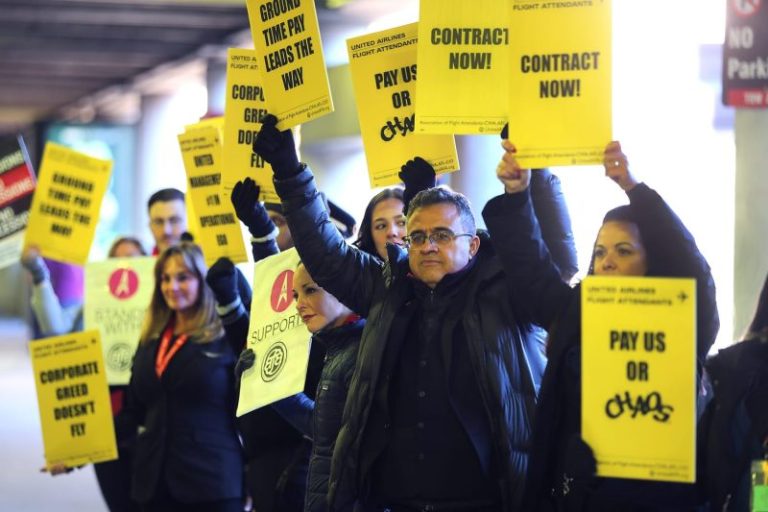
United Airlines reached an “industry-leading” tentative labor deal for its 28,000 flight attendants, their union said Friday.

The deal includes “40% of total economic improvements” in the first year and retroactive pay, a signing bonus, and quality of life improvements, like better scheduling and on-call time, the Association of Flight Attendants-CWA said.

The union did not provide further details about the deal.

United flight attendants have not had a raise since 2020.

The cabin crew members voted last year to authorize the union to strike if a deal wasn’t reached. They had also sought federal mediation in negotiations.

U.S. flight attendants have pushed for wage increases for years after pilots and other work groups secured new labor deals in the wake of the pandemic. United is the last of the major U.S. carriers to get a deal done with its flight attendants.

The deal must still face a vote by flight attendants, and contract language will be finalized in the coming days, United said.

This post appeared first on NBC NEWS

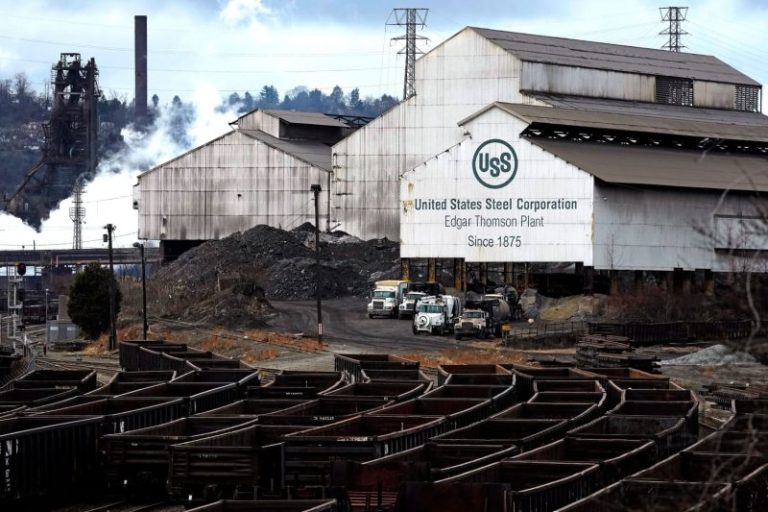
President Donald Trump on Friday cleared the merger of U.S. Steel and Nippon Steel, after the Japanese steelmaker’s previous bid to acquire its U.S. rival had been blocked on national security grounds.

“This will be a planned partnership between United States Steel and Nippon Steel, which will create at least 70,000 jobs, and add $14 Billion Dollars to the U.S. Economy,” Trump said in a post on his social media platform Truth Social.

U.S. Steel’s headquarters will remain in Pittsburgh and the bulk of the investment will take place over the next 14 months, the president said. U.S. Steel shares surged more than 20% to close at $52.01 per share after Trump’s announcement.

Pennsylvania Gov. Josh Shapiro applauded the agreement, saying he worked with local, state and federal leaders ‘to press for the best deal to keep U.S. Steel headquartered in Pittsburgh, protect union jobs, and secure the future of steelmaking in Western Pennsylvania.’

In his own statement, Lieutenant Gov. Austin Davis called the announcement ‘promising,’ but added: ‘I want to make sure everyone involved in the deal holds up their end of the bargain. I look forward to seeing the promised investments become a reality and the workers receive everything they’ve fought for.’

President Joe Biden blocked Nippon Steel from purchasing U.S. Steel for $14.9 billion in January, citing national security concerns. Biden said at the time that the acquisition would create a risk to supply chains that are critical for the U.S.

Trump, however, ordered a new review of the proposed acquisition in April, directing the Committee on Foreign Investment in the United States to determine “whether further action in this matter may be appropriate.”

Trump said he would hold a rally at U.S. Steel in Pittsburgh on May 30.

This post appeared first on NBC NEWS

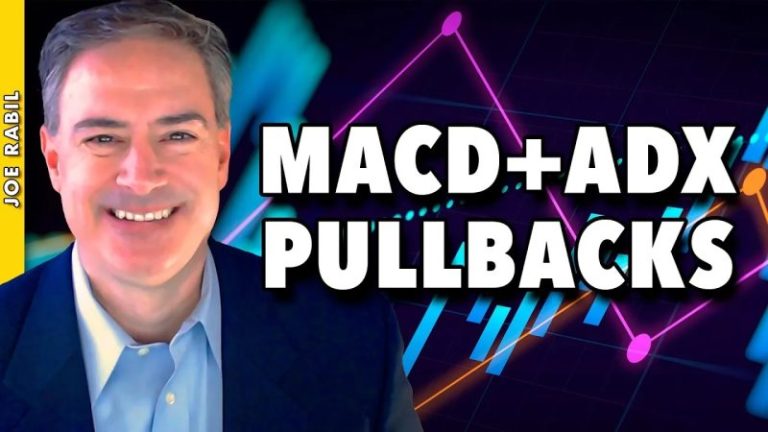
In this video, Joe shares how to use MACD and ADX indicators to analyze stock pullbacks, focusing on the good while avoiding the weak setups. He explains how these indicators can complement one another. Joe then shows the Summary Page in ACP and how he uses it on a regular basis to look at different markets, including the SPX, COMP, S&P 600, 10-Year Rates, Copper, Gas, and a few Country Funds. Finally, he goes through the symbol requests that came through this week, including CRSP, VC, and more.

The video premiered on May 21, 2025. Click this link to watch on Joe’s dedicated page.

Archived videos from Joe are available at this link. Send symbol requests to stocktalk@stockcharts.com; you can also submit a request in the comments section below the video on YouTube. Symbol Requests can be sent in throughout the week prior to the next show.

On Wednesday, only 4% of the S&P 500’s holdings logged gains — a pretty rare occurrence. Since the start of 2024, this has only happened three other times:

  • August 5, 2024: The last day of the summer correction
  • December 18, 2024: The Fed’s hawkish cut
  • April 4, 2025: Tariffs

Let’s recall that major trading lows were etched last August, and again just a few weeks ago in early April. The S&P 500 ($SPX) dropped 10% and 21%, respectively, from its peak to trough both times, with the lows being marked by emphatic capitulation events (April 7 was the real pivot low). The market’s rubber band violently snapped back in the ensuing weeks, both times.

FIGURE 1. PAST LOWS IN THE S&P 500 INDEX. Note the rebounds following the August 5, December 18, and April 4 drops.With the SPX now having gained 20% from the April low, the setup is more like mid-December 2024. The index had just gained 19% from early August through early December and was hovering near 6,100. The FOMC’s actions put a major dent in the calm uptrend.

The S&P 500 didn’t completely crumble after that, spending the next 10 weeks backing and filling. But the market’s character changed, and the cracks eventually gave way to the waterfall decline.

So, what does that tell us about this moment? There’s a clear risk given the one-sided advance the last few weeks, but, with bullish patterns still in play and the $SPX having built up a big cushion, it can afford to back and fill again now. It’s the first gut punch in four weeks, and the market must prove it can absorb it.

Short-Term View of the S&P 500

The drawdown measured from this Monday’s high now stands at -2.4% — most of which happened on Wednesday. Given how small the moves have been over the last few weeks, Wednesday’s big decline hit the 14-period relative strength index (RSI) on the two-hour chart very hard. It’s now at 41, which is very close to the 30-oversold threshold.

Again, we’ve seen the short-term indicator fall to oversold territory several times, even during the market’s upswing from August through December. Seeing that happen again this time wouldn’t be a surprise. If it happens, it will be important to see the ensuing bounce pull the SPX back to overbought territory relatively soon. Remember, we went nearly four months between overbought readings from late January through mid-May.

FIGURE 2. TWO-HOUR CHART OF THE S&P 500 WITH RSI.

S&P 500 Patterns

Despite the sell-off, there was no change in the patterns at work. The two bullish patterns remain in play, with targets of 6,125 and 6,555, respectively. The S&P 500 started Thursday, at about 2.5% above the last breakout zone (5,695).

FIGURE 3. DAILY CHART OF THE S&P 500 WITH BULLISH PATTERNS. Here you see the pattern with a 6,125 target.

FIGURE 4. DAILY CHART OF S&P 500 WITH 6,555 PRICE TARGET.

Monitor the VIX

Not surprisingly, the Cboe Volatility Index ($VIX) gained 15% on Wednesday in response to the market’s sell-off. It remains close to 20, but continues to log higher lows, which has been the trend since late 2024. Indeed, it’s way off spike highs from April, but it’s a trend worth watching.

Let’s recall that the VIX never truly capitulated in 2022, but its trend of higher lows coincided with the equity market’s downtrend. When the SPX logged a true low in October 2022, lower lows in the VIX became evident. This lasted through this past summer.

If the snapback in the SPX turns into a longer, new uptrend, the VIX’s uptrend will morph into a downtrend again.

FIGURE 5. WEEKLY CHART OF THE CBOE VOLATILITY INDEX ($VIX).

Bonds Display Bullish Patterns

The bullish pattern in the weekly 30-Year Treasury yields and 10-Year Treasury yields is crystal clear. An acceleration through the 2023 highs after Wednesday would have an obvious negative effect on stocks.

As discussed before, the equity market has shown it can advance with higher rates, as long as said rates go higher gradually. The intermittent up-moves in rates have been capped for the last two years as well. Thus, stocks have been able to withstand it. That wasn’t the case from January to September 2022, and that’s the potential concern.

FIGURE 6. WEEKLY CHART OF THE 30-YEAR US TRASURY YIELD INDEX.

FIGURE 7. WEEKLY CHART OF THE 10-YEAR US TREASURY YIELD INDEX.

Bitcoin Holding Strong

So far, Bitcoin has maintained noticeable relative strength even as stocks got hit hard on Wednesday. Simply put, continuing to hold above this breakout zone would keep the new measured move target of 142k in play.

FIGURE 8. WEEKLY CHART OF $BTCUSD WITH ITS MEASURED MOVE TARGET.

From another perspective, this move can also be viewed as the fourth wedge breakout since 2023. The prior three times, BTC’s 14-week RSI stayed very overbought for weeks before slowing down. The 14-week RSI is just approaching overbought levels, which suggests it has further to go.

FIGURE 9. WEEKLY CHART OF $BTCUSD WITH WEDGE BREAKOUTS AND RSI.

Rio Tinto (ASX:RIO,NYSE:RIO,LSE:RIO)said on Monday (May 19) that it has signed binding agreements with Corporación Nacional Del Cobre de Chile (Codelco) to develop and operate a high-grade lithium project.

The asset is located in the Salar de Maricunga, a large lithium-containing resource base in Atacama, Chile. Its brine is said to have one of the highest average grades of lithium content in the world.

According to Rio Tinto, it will acquire a 49.99 percent interest in the company Salar de Maricunga, through which Codelco holds its licenses and mining concessions related to the resource base.

Codelco is a state-owned firm formed in 1976. Its full name translates to “National Copper Corporation of Chile.”

“We are honoured to be chosen as Codelco’s partner to deliver a world-class project using Direct Lithium Extraction technology in the Salar de Maricunga, leveraging our expertise as a leading producer of lithium for the global market,” said Rio Tinto Chief Executive Jakob Stausholm. “Developing this significant lithium resource will deliver further value-adding growth in our portfolio of critical minerals essential for the energy transition.”

In 2023, Rio and Codelco entered a joint venture for the exploration of Nuevo Cobre, situated within the Potrerillos mining district, also in Atacama. Codelco owns about 43 percent of Nuevo Cobre, while Rio Tinto owns about 58 percent.

For the Salar de Maricunga partnership, Rio will invest AU$350 million in initial funding for additional studies and resource analysis that will assist in creating a final investment decision.

Once a decision is made, AU$500 million will be dedicated toward construction costs. Another AU$50 million will be allocated should the venture deliver its first lithium target by the end of 2030.

The new partnership with Codelco forms part of Rio Tinto’s long-term lithium plan, which includes a production goal of over 200,000 metric tons of lithium carbonate equivalent annually by 2028.

The company recently completed its acquisition of Arcadium Lithium, making it the world’s third top lithium producer.

Subject to regulatory approvals and the satisfaction of customary conditions, the Salar de Maricunga transaction is expected to close by the end of the first quarter of 2026.

Securities Disclosure: I, Gabrielle de la Cruz, hold no direct investment interest in any company mentioned in this article.

This post appeared first on investingnews.com

A Norwegian man managed to sleep through an enormous container ship running aground on his front lawn.

Johan Helberg, who lives in Byneset, on the Trondheim Fjord, was woken by his neighbor on Thursday morning asking if he had noticed a boat outside, TV2 Norway reported.

When he looked out his door, he saw a 135-meter-long (443-foot) container ship parked up in his front yard.

“If the ship had hit the rocky outcrop right next to it, it would have lifted up and hit the house hard. It only missed by a few meters,” Helberg told TV2.

His neighbor, Jostein Jørgensen, who lives about 40 meters (131 feet) from the beach, told TV2 he was woken around 5 a.m. by the sound of a boat approaching.

“When I looked out the window, I saw a boat speeding toward the shore,” he told the local TV network, adding that he ran outside and shouted to raise the alarm.

Jørgensen said the boat, the NCL Salten, got closer and closer until it ran aground about eight meters (26 feet) from the wall of his neighbor’s house.

“He was lying asleep and surprised he had a visitor,” Jørgensen told TV2.

The vessel was reportedly bound for Orkanger, at the southern end of the fjord, and had 16 people aboard when it ran aground.

Bente Hetland, managing director of the shipping company NCL, called it a “serious incident” and said the company was “grateful that nobody was injured in the grounding.”

“At present time, we do not know what caused the incident and are awaiting the conclusion of the ongoing investigation by the relevant authorities,” Hetland said in a statement. “We are currently assessing the damage to the ship.”

A tugboat was initially sent to try to pull the vessel free, to no avail.

On Thursday evening, a salvage company tried to mount an attempt to refloat the ship at high tide, but it was later decided it was not possible, the Norwegian Coastal Administration said in a statement.

It said geotechnical investigations were now needed before another attempt could be made.

While there have been no signs of oil leaking from the vessel, the authority said it had an oil response vessel on standby to respond, if needed.

This post appeared first on cnn.com

A major prisoner exchange between Russia and Ukraine is now under way, according to a Ukrainian source familiar with the matter.

The swap started on Friday, with Kyiv and Moscow swapping hundreds of prisoners.

As with previous exchanges, Ukrainian and Russian authorities were not expected to publicly state that it was taking place until after it had been completed. However, US President Donald Trump broke that convention on Friday, announcing the swap on social media as it was unfolding.

The agreement to release 1,000 prisoners on each side was the only significant outcome of the meeting between Kyiv and Moscow in Istanbul last week, which marked the first time the two sides have met directly since soon after Russia’s full-scale unprovoked invasion of Ukraine in February 2022.

The Istanbul meeting was initially proposed by Russian President Vladimir Putin in response to a ceasefire-or-sanctions ultimatum given to Moscow by Kyiv’s European allies – which many saw as a clear attempt by the Kremlin leader to distract and delay.

But while the return of hundreds of Ukrainian detainees will come as a huge relief to their families and loved ones, it remains somewhat underwhelming as the only tangible outcome of the highly touted meeting.

Prisoner swaps have been happening regularly, most recently earlier this month.

Ukraine’s Coordination Headquarters for the Treatment of Prisoners of War, a government department, said the exchange on May 7, which saw more than 200 Ukrainian service members return home, was the fifth swap this year and the 64th since the beginning of Russia’s full-scale invasion.

The department said at the time that at 4,757 Ukrainian citizens have been released since March 2022.

Ukraine and its allies demanded that Russia agree to an immediate and unconditional ceasefire in Istanbul, but that did not happen.

Kyiv also offered direct talks between President Volodymyr Zelensky and his Russian counterpart Vladimir Putin.

This post appeared first on cnn.com