Carbonxt Group (CG1:AU) has announced CG1 non-renounceable pro-rata entitlement offer
Download the PDF here.
This post appeared first on investingnews.com


Carbonxt Group (CG1:AU) has announced CG1 non-renounceable pro-rata entitlement offer
Download the PDF here.

Walmart on Thursday raised its full-year earnings and sales outlook as its online business posted another quarter of double-digit gains, even as the company said costs are rising from higher tariffs.
The big-box retailer topped Wall Street’s quarterly sales estimates but fell short of earnings expectations, the first time it missed on quarterly earnings since May 2022. The company said it felt pressure on profits for the period, including from some one-time expenses, such as restructuring costs, pricier insurance claims and litigation settlements.
Walmart said it now expects net sales to grow 3.75% to 4.75% for the fiscal year, up from its previous expectations of 3% to 4%. It raised its adjusted earnings per share outlook slightly to $2.52 to $2.62, up from a prior range of $2.50 to $2.60 per share.
In an interview with CNBC, Chief Financial Officer John David Rainey said the company is working hard to keep prices low — including speeding up imports from overseas and stepping up the number of Rollbacks, or limited-time discounts, in its stores.
“This is managed on an item-by-item and category-by-category basis,” he said. “There are certainly areas where we have fully absorbed the impact of higher tariff costs. There are other areas where we’ve had to pass some of those costs along.”
But he added “tariff-impacted costs are continuing to drift upwards.”
Even so, Rainey said Walmart hasn’t seen a change in customer spending. For example, sales of private label items, which typically cost less than national brands, were roughly flat year over year, he said.
“Everyone is looking to see if there are any creaks in the armor or anything that’s happening with the consumer, but it’s been very consistent,” he said. “They continue to be very resilient.”
Yet on the company’s earnings call, CEO Doug McMillon said middle- and lower-income households have been more sensitive to tariff-related price increases, particularly in discretionary categories.
“We see a corresponding moderation in units at the item level as customers switch to other items, or in some cases, categories,” he said.
Here’s what the big-box reported for the fiscal second quarter compared with what Wall Street expected, according to a survey of analysts by LSEG:
Walmart shares fell about 2% in premarket trading Thursday.
Walmart’s net income jumped to $7.03 billion, or 88 cents per share, in the three-month period that ended July 31, compared with $4.50 billion, or 56 cents per share, in the year-ago quarter.
Revenue rose from $169.34 billion in the year-ago quarter.
Comparable sales for Walmart U.S. climbed 4.6% in the second quarter, excluding fuel, compared with the year-ago period, as both the grocery and health and wellness category saw strong growth. That was higher than the 4% increase that analysts expected. The industry metric, also called same-store sales, includes sales from stores and clubs open for at least a year.
At Sam’s Club, comparable sales jumped 5.9% excluding fuel, higher than the 5.2% that analysts anticipated.
E-commerce sales jumped 25% globally and 26% in the U.S., as both online purchases and advertising grew. In the U.S., Walmart said sales through store-fulfilled delivery of groceries and other items grew nearly 50% year over year, with one-third of those orders expedited. The company charges a fee for some of those faster deliveries, and others are included as a benefit of its subscription-based membership program, Walmart+.
Its global advertising business grew 46% year over year, including Vizio, the smart TV maker it acquired for $2.3 billion last year. Its U.S. advertising business, Walmart Connect, grew by 31%.
As Walmart’s online business drums up more revenue from home deliveries, advertising and commissions from sellers on its third-party marketplace, e-commerce has become a profitable business. The company marked a milestone in May — posting its first profitable quarter for its e-commerce business in the U.S. and globally.
Rainey said on Thursday that Walmart doubled its e-commerce profitability in the fiscal second quarter from the prior quarter.
In the U.S., shoppers both visited Walmart more and spent more on those trips during the quarter. Customer transactions rose 1.5% year over year and average ticket increased 3.1% for Walmart’s U.S. business.
As the largest U.S. retailer, Walmart offers a unique window into the financial health of American households. As higher duties have come in fits and starts — with some getting delayed and others going into effect earlier this month — Wall Street has tried to understand how those costs will ripple through the U.S. economy.
Walmart warned in May that it would have to raise some prices due to higher levies on imports, even with its size and scale. The company’s comments drew the ire of President Donald Trump, who said in a social media post that Walmart should “EAT THE TARIFFS.”
About a third of what Walmart sells in the U.S. comes from other parts of the world, with China, Mexico, Canada, Vietnam and India representing its largest markets for imports, Rainey said in May.
According to an analysis by CNBC of about 50 items sold by the retailer, some of those price changes have already hit shelves. Items that rose in price at Walmart over the summer included a frying pan, a pair of jeans and a car seat.
Rainey on Thursday declined to specify items or categories where Walmart had increased prices, saying the company is “trying to keep prices as low as we can.”
He said one of the company’s strategies has been bringing in inventory early, particularly for Sam’s Club as it gets ready for the second half of the fiscal year and its crucial holiday season. At the end of the quarter, inventory was up about 3.5% at Sam’s Club, Rainey said. It was up 2.2% for Walmart U.S.
On the company’s earnings call, McMillon said the impact of tariffs has been “gradual enough that any behavioral adjustments by the customer have been somewhat muted.”
“But as we replenish inventory at post-tariff price levels, we’ve continued to see our costs increase each week, which we expect will continue into the third and fourth quarters,” he said.
Yet even with higher costs from tariffs, Walmart has fared better than its retail competitors as it has leaned into its reputation for value, competed on faster deliveries to customers’ homes and attracted more business from higher-income households.
The Arkansas-based retailer’s performance has diverged sharply from rival Target, which posted another quarter of sales declines on Wednesday and named the new CEO who will be tasked with trying to turn around the company.
Walmart has gained from Target’s struggles. It has followed the Target playbook by launching more exclusive and trend-driven brands, including grocery brand BetterGoods and activewear brand Love & Sports. It has also expanded its third-party marketplace to include prestige beauty brands and more.
Sales of general merchandise, items outside of the grocery department, were a bright spot for Walmart in the fiscal second quarter, Rainey said. That category struggled during peak inflation in recent years, as consumers spent less on discretionary items because of rising grocery bills.
Comparable sales for general merchandise rose by a low-single-digit percentage and accelerated throughout the quarter, Rainey told CNBC. He added clothing and fashion sales “really shined for us.”

NORTH KINGSTOWN, R.I. — The winged passenger ferry gliding over the surface of Narragansett Bay could be a new method of coastal transportation or a new kind of warship.
Its maker, Regent Craft, is betting on both.
Twelve quietly buzzing propellers line the 65-foot wingspan of Paladin, a sleek ship with an airplane’s nose. It looks nothing like the sailboats and fishing trawlers it speeds past through New England’s largest estuary.
“We had this vision five years ago for a seaglider — something that is as fast as an aircraft and as easy to drive as a boat,” said CEO Billy Thalheimer, jubilant after an hours-long test run of the new vessel.
On a cloudy August morning, Thalheimer sat in the Paladin’s cockpit and, for the first time, took control of his company’s prototype craft to test its hydrofoils. The electric-powered watercraft has three modes — float, foil and fly.
From the dock, it sets off like any motorized boat. Farther away from land, it rises up on hydrofoils — the same kind used by sailing ships that compete in America’s Cup. The foils enable it to travel more than 50 miles per hour — and about a person’s height — above the bay.
What makes this vessel so unusual is that it’s designed to soar about 30 feet above the water at up to 180 miles per hour — a feat that hasn’t quite happened yet, with the first trial flights off Rhode Island’s seacoast planned for the end of summer or early fall.
If successful, the Paladin will coast on a cushion of air over Rhode Island Sound, lifting with the same “ground effect” that pelicans, cormorants and other birds use to conserve energy as they swiftly glide over the sea. It could zoom to New York City — which takes at least three hours by train and longer on traffic-clogged freeways — in just an hour.
As it works to prove its seaworthiness to the U.S. Coast Guard and other regulators around the world, Regent is already lining up future customers for commercial ferry routes around Florida, Hawaii, Japan and the Persian Gulf.
Regent is also working with the U.S. Marines to repurpose the same vessels for island-hopping troops in the Pacific. Those vessels would likely trade electric battery power for jet fuel to cover longer journeys.
With backing from influential investors including Peter Thiel and Mark Cuban, Thalheimer says he’s trying to use new technology to revive the “comfort and refined nature” of 1930s-era flying boats that were popular in aviation’s golden age before they were eclipsed by commercial airlines.
This time, Thalheimer added, they’re safer, quieter and emission-free.
“I thought they made travel easier in a way that made total sense to me,” Cuban said by email this week. “It’s hard to travel around water for short distances. It’s expensive and a hassle. Regent can solve this problem and make that travel fun, easy and efficient.”
Co-founders and friends Thalheimer, a skilled sailor, and chief technology officer Mike Klinker, who grew up lobster fishing, met while both were freshmen at the Massachusetts Institute of Technology and later worked together at Boeing. They started Regent in 2020.
They’ve already tested and flown a smaller model. But the much bigger, 12-passenger Paladin — prototype of a product line called Viceroy — began foil testing this summer after years of engineering research and development. A manufacturing facility is under construction nearby, with the vessels set to carry passengers by 2027.
The International Maritime Organization classifies “wing-in-ground-effect” vehicles such as Regent’s as ships, not aircraft. But a database of civilian ships kept by the London-based organization lists only six around the world, all of them built before it issued new safety guidance on such craft in 2018 following revisions sought by China, France and Russia.
The IMO says it treats them as marine vessels because they operate in the vicinity of other watercraft and must use the same rules for avoiding collisions. The Coast Guard takes a similar approach.
“You drive it like a boat,” Thalheimer said. “If there’s any traffic on the harbor, you’ll see it on the screen. If you see a boat, you’d go around it. We’re never flying over boats or anything like that.”
One of the biggest technical challenges in Regent’s design is the shift from foiling to flying. Hydrofoils are fast for a seafaring vessel, but far slower than the speeds needed to lift a conventional airplane from a runway.
That’s where air blown by the 12 propellers comes in, effectively tricking the wing into generating high lift at low speeds.
All of this has worked perfectly on the computer simulations at Regent’s headquarters in North Kingstown, Rhode Island. The next step is testing it over the water.
For decades, the only warship known to mimic such a ground-effect design was the Soviet Union’s hulking ekranoplan, which was built to fly under radar detection but never widely used. Recently, however, social media images of an apparent Chinese military ekranoplan have caught the attention of naval experts amid increasingly tense international disputes in the South China Sea.
Regent has capitalized on those concerns, pitching its gliders to the U.S. government as a new method for carrying troops and cargo across island chains in the Indo-Pacific region. It could also do clandestine intelligence collection, anti-submarine warfare and be a “mothership” for small drones, autonomous watercraft or medical evacuations, said Tom Huntley, head of Regent’s government relations and defense division.
They fly below radar and above sonar, which makes them “really hard to see,” Huntley said.
While the U.S. military has shown increasing interest, questions remain about their detectability, as well as their stability in various sea states and wind conditions, and their “cost at scale beyond a few prototypes and maintainability,” said retired U.S. Navy Capt. Paul S. Schmitt, an associate research professor at the Naval War College, across the bay in Newport, Rhode Island.
Schmitt, who has seen Paladin from afar while sailing, said he also has questions about what kind of military mission would fit Regent’s “relatively short range and small transport capacity.”
The possibilities that most excite Cuban and other Regent backers are commercial.
Driving Interstate 95 through all the cities that span Florida’s Atlantic Coast can take the better part of a day, which is one reason why Regent is pitching Miami as a hub for its coastal ferry trips.
The Viceroy seagliders can already carry more passengers than the typical seaplane or helicopter, but a growing number of electric hydrofoil startups, such as Sweden’s Candela and California-based Navier, are trying to stake out ferry routes around the world.
Thalheimer sees his vehicles as more of a complement than a competitor to electric hydrofoils that can’t travel as fast, since they will all use the same docks and charging infrastructure but could specialize in different trip lengths.
Privately owned Rare Earths Americas (REA) has formed in a bid to explore and develop high-grade rare earths assets in the US and Brazil, looking to consolidate supply chains for various domestic sectors.
The company, which raised AU$25 million in a private funding round, said it combines experienced operators and investors with “deep expertise across global mining, energy and critical materials.”
Included in the company’s portfolio is the Foothills discovery, located in Georgia, US.
The site contains grades of up to 41.3 percent total rare earth oxides, including heavy rare earths crucial for high-performance magnets. REA has highlighted its strong logistics, low-cost power and streamlined path to permitting.
In Brazil, the Alpha and Constellation projects hold more than 1 billion metric tons of high-grade ionic clay rare earths mineralization, including dysprosium and terbium, which are essential for permanent magnets.
The Homer project, also located in Brazil, targets multiple carbonatite clusters with the potential for niobium discoveries in a region known for leading niobium mines.
“The rare earths market is undergoing a generational shift as the West races to secure its rare earths future,” said CEO Donald Swartz in a Monday (August 18) press release.
REA’s timing aligns with broader US efforts to reduce reliance on China, which currently controls nearly 70 percent of global rare earths processing and accounts for most heavy rare earths production.
In April, Beijing restricted shipments of seven rare earths to the US and other countries, prompting concern among automakers and defense contractors dependent on these materials.
The US government recently proposed a pricing support mechanism for domestic rare earths ventures in order to increase production and mitigate China’s influence.
Discussions last month, led by former White House Trade Advisor Peter Navarro and National Security Council official David Copley, included rare earths producers and major tech firms reliant on these critical minerals.
China’s dominance stems from billions of dollars invested in mining and processing since 2000, often with minimal environmental or safety oversight, allowing the country to produce rare earths at lower cost than western competitors.
The US response to the Asian nation’s rare earths stranglehold has included efforts to develop domestic mine supply and build out refinement, processing and production capacity. American companies have also sought to secure alternative sources in Africa and Latin America, but investment and technology barriers remain significant.
Mountain Pass in California, the country’s only large-scale rare earths mine, produces bastnaesite carbonate, but relies heavily on foreign processing. MP Materials (NYSE:MP), the mine’s operator, posted a net loss of US$65.4 million in 2024, highlighting the challenge of competing with China’s low-cost production model.
REA’s launch positions it as a potential strategic player in this evolving landscape.
According to the company, the Foothills project offers a “streamlined permitting pathway” in the US, while the Alpha and Constellation projects in Brazil provide access to large-scale, high-grade heavy rare earths.
“With grade and strategic geography on our side, we intend to advance our rare earths projects to support the long-term supply of critical materials essential to domestic innovation,” Swartz added.
Securities Disclosure: I, Giann Liguid, hold no direct investment interest in any company mentioned in this article.
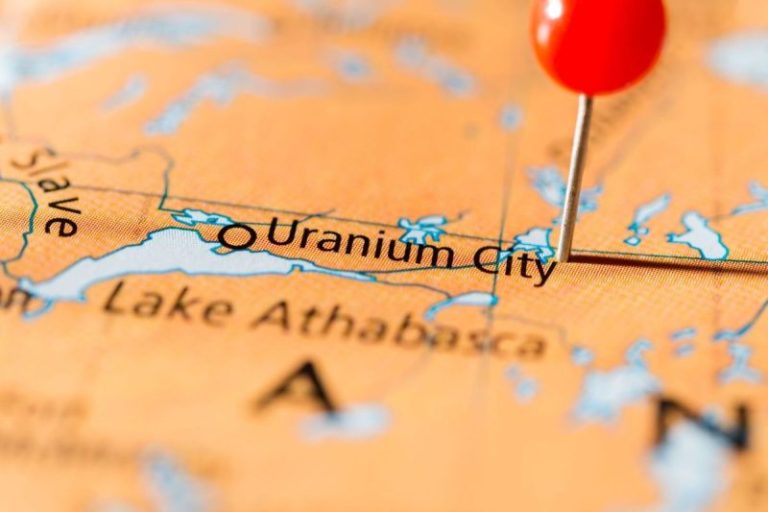
Uranium mining in Canada accounts for 13 percent of global output, making the Great White North the second largest producer of uranium in the world, behind only Kazakhstan.
Canada hosts 9 percent of the world’s uranium resources and is home to the biggest deposits of high-grade uranium. Their grades of up to 20 percent uranium are 100 times greater than the global average.
Canadian uranium deposits are found mainly in the provinces of Saskatchewan, Newfoundland and Labrador, and Québec, as well as the territory of Nunavut. Of these, Saskatchewan leads the country in both uranium exploration and production.
Canada is home to three producing uranium mines, Cigar Lake, McArthur River and McClean Lake, all of which are located in Saskatchewan’s Athabasca Basin.
Saskatchewan is a premier uranium mining jurisdiction as home to the Athabasca Basin, a mining-friendly region in the north of the province that’s renowned for its high-quality uranium deposits. The area’s long uranium-mining history has made Canada an international leader in the uranium sector.
Canada’s major uranium mining companies are Cameco (TSX:CCO,NYSE:CCJ) and Orano Canada, a subsidiary of the multinational company Orano Group. Cameco is the majority owner and operator of Cigar Lake and McArthur River. Orano holds a significant stake in both mines, and is also the majority owner and operator of the recently restarted McClean Lake operation.
Data and information on the Canadian uranium mines and advanced projects discussed below is taken from mining database MDO. The database only includes projects that have at least partial ownership by public companies.
Ownership:
54.547% — Cameco
40.453% — Orano Canada
5% — TEPCO Resources
Province: Saskatchewan
Mine type: Underground
Deposit type: Unconformity-related
Cigar Lake, which entered commercial production in 2015, is one of Canada’s largest uranium mines and the world’s highest grade uranium mine. The underground mining operation involves the use of innovative mining methods such as jet boring, which was purposely designed by Cameco to tackle the unique challenges of the Cigar Lake deposit.
For 2024, production at the Cigar Lake mine was reported at 16.9 million pounds U3O8, up 2 million pounds from the previous year. Guidance for 2025 stands at approximately 18 million pounds.
Cigar Lake’s proven and probable reserves stand at 551,400 metric tons of ore grading 15.87 percent U3O8 for 192.9 million pounds of contained U3O8. Its mine life is expected to run until 2036.
Ownership:
McArthur River mine
69.805% — Cameco
30.195% — Orano Canada
Key Lake mill
83.3% — Cameco
16.7% — Orano Canada
Province: Saskatchewan
Mine type: Underground
Deposit type: Unconformity-related
The McArthur River-Key Lake operation is home to the McArthur River mine and Key Lake mill, respectively the largest high-grade uranium mine and largest uranium mill in the world, according to MDO.
McArthur River was first brought into production in 2000 using raiseboring and blast hole stoping mining methods, but was put on care and maintenance temporarily in early 2018 due to low uranium prices. Cameco brought the mine and mill back into production in late 2022, progressively ramping up output over the next few years.
Production in 2024 came in at 20.3 million pounds U3O8, up nearly 43 percent from the previous year’s output, and production guidance for 2025 has been set at 18 million pounds.
McArthur River’s proven and probable reserves total 2.49 million metric tons grading 6.55 percent U3O8 for 359.6 million pounds of contained metal. Its mine life extends out to 2044.
Ownership:
77.5% — Orano Canada
22.5% — Denison Mines (TSX:DML)
Province: Saskatchewan
Mine type: Surface mine
Deposit type: Unconformity-related
The McClean Lake mine re-entered production in July 2025, 17 years after it was shuttered in 2008 due to low uranium prices made the operations uneconomic.
After studies demonstrated that the joint venture partners’ patented surface access borehole resource extraction (SABRE) mining method could bring McClean back to life economically, the decision was made in January 2024 to bring the asset back into production.
The site hosts multiple deposits, including the now-producing McClean North deposit. It also boasts the only mill in the world designed to process high-grade uranium ore without dilution, according to MDO. The mill has the capacity to produce 24 million pounds of uranium concentrate, or yellowcake, annually. Currently, the mill is processing ore from the Cigar Lake mine under a toll mining agreement.
Proven reserves at McClean Lake are in the form of ore stockpiles, and total 90,000 metric tons at a grade of 0.37 percent for U3O8 for 700,000 pounds of contained metal. The site also hosts significant indicated and inferred resources of 25.4 million pounds across the McLean North, Sue D and Sue F deposits.
The partners expect to produce approximately 800,000 pounds of U3O8 from McClean North in the first year of operations. In addition, mining at the McClean North and Sue F deposits has the potential to produce about 3 million pounds from 2026 to 2030.
There are a handful of contenders for Canada’s next uranium mine: Patterson Lake South, Rook 1 and Wheeler River. None are in the construction stage yet, but most are expecting to come online in the next few years. Learn about the advanced uranium projects below.
Ownership: Paladin Energy (TSX:PDN,ASX:PDN)
Province: Saskatchewan
Mine type: Underground
Deposit type: Basement hosted vein-type or fracture-filled
Currently in the permitting phase, the Patterson Lake South (PLS) project hosts the large, high-grade and near-surface Triple R deposit, which has the potential to produce both uranium and gold. The project has a probable mineral reserve estimate of 93.7 million pounds of contained uranium from 3 million metric tons grading 1.41 percent U3O8.
The 2023 feasibility study for PLS highlights average production of approximately 9 million pounds U3O8 per year over a 10 year mine life.
Paladin added the PLS uranium project to its portfolio in December 2024 via its acquisition of Fission Uranium. The company is continuing to develop the PLS’s resource potential outside of the Triple R deposit, with a significant focus on the project’s Saloon East zone. Advancing through the environmental permitting process remains ongoing.
Ownership: NexGen Energy (TSX:NXE)
Province: Saskatchewan
Mine type: Underground
Deposit type: Basement-hosted, vein-type
NexGen Energy’s Rook 1 project, home to the Arrow deposit, is in the permitting stage with a feasibility study completed in February 2021. Arrow hosts probable mineral reserves of 239.6 million pounds of U3O8 from 4.57 million metric tons of ore at a grade of 2.37 percent, as well as a measured and indicated resource of 256.7 million pounds from 3.75 million metric tons at 3.1 percent.
Over its 11.7 year mine life, Rook 1 is expected to produce an average of 19.8 million pounds of U3O8 per year, including over 25 million pounds during the first five years.
Provincial environmental assessment approval was granted in November 2023, and the federal environmental impact statement was accepted as final in January 2025. In March 2025, the company shared that the Canadian Nuclear Safety Commission has proposed hearing dates for the Rook I project on November 19, 2025, and February 9 to 13, 2026.
NexGen states that a full project execution team is at the ready and the site is fully prepared for construction activities to commence following final federal approval.
Ownership:
95% — Denison Mines
5% — Uranium Energy (TSX:UEC,NYSEAMERICAN:UEC)
Province: Saskatchewan
Mine type:
Phoenix — In-situ recovery
Gryphon — Underground
Deposit type: Unconformity-related
The Wheeler River uranium project, billed as the largest undeveloped uranium project in the eastern region of the Athabasca Basin, is home to the high-grade Phoenix and Gryphon deposits. Each deposit is considered a standalone asset, and the Phoenix deposit is the more advanced of the two.
A feasibility study for the Phoenix deposit as an in-situ recovery operation was completed in mid-2023. In February 2025, Denison reported that the Canadian Nuclear Safety Commission is set to conduct hearings for the project’s environmental assessment and license to prepare and construct a uranium mine and mill on October 8 and December 8 to 12, 2025. If granted approval, Denison is prepared to start construction in early 2026, followed by first production by the first half of 2028.
As for the Gryphon deposit, an update to the pre-feasibility study for a conventional underground mining operation was completed in 2023. Denison conducted a field program in the first quarter of 2025 as part of its efforts to support a feasibility study.
Canada is also home to a slew of uranium exploration and development companies focused on discovering uranium in Saskatchewan, Nunavut and Newfoundland and Labrador.
For more insight on the uranium companies operating in the Athabasca Basin discussed in this article, check out our breakdown of the 15 uranium companies exploring the basin.
Securities Disclosure: I, Melissa Pistilli, hold no direct investment interest in any company mentioned in this article.

Here’s a quick recap of the crypto landscape for Monday (August 18) as of 9:00 p.m. UTC.
Get the latest insights on Bitcoin, Ethereum and altcoins, along with a round-up of key cryptocurrency market news.
Bitcoin (BTC) was priced at US$116,339, a 1.1 percent decline in 24 hours. Its lowest valuation of the day was US$114,985, while its highest was US$116,751.
Bitcoin price performance, August 18, 2025.
Chart via TradingView.
Markets pulled back considerably on Sunday (August 17) night ahead of a pivotal meeting between US President Donald Trump, Ukrainian President Volodymyr Zelenskyy and other European leaders.
Later this week, US Federal Reserve Chair Jerome Powell will deliver a speech after the Jackson Hole Economic Policy Symposium. His remarks are highly anticipated by investors who are looking for clarity on the Fed’s next move.
Ethereum (ETH) was priced at US$4,359.32, down by 2.3 percent over the past 24 hours. Its lowest valuation of the day was $4,282.60, and its highest valuation was US$4,381.21.
South Korea’s Financial Services Commission (FSC) is set to introduce a regulatory framework for a won-backed stablecoin in October, according to a report from South Korean news outlet MoneyToday.
The initiative, part of the nation’s Virtual Asset User Protection Act, aims to establish clear rules for crypto service providers and is expected to outline requirements for stablecoin issuance, collateral management and internal control systems. The FSC has been developing this framework since 2023 through its virtual asset committee.
Democratic Party of Korea Representative Park Min-kyu confirmed that the government bill is expected to be submitted to the National Assembly around October. This regulatory move follows a June collaboration among major South Korean banks to develop a won-pegged stablecoin, intended to safeguard the currency against increasing dollar dominance. At the time, the token was projected to launch in late 2025 or early 2026.
Japan is also set to approve its first stablecoin, with its Financial Services Agency preparing to greenlight the issuance of a Japanese yen-denominated digital currency as early as this fall.
According to a Sunday report from Japanese news outlet the Nihon Keizai Shimbun, Tokyo-based fintech firm JPYC will spearhead the initiative, aiming to maintain a fixed value of one JPY per Japanese yen, backed by liquid assets like bank deposits and Japanese government bonds.
Tokens will be issued to digital wallets via bank transfer after purchase applications from individuals or corporations. The company plans to register as a money transfer business within the month.
Gemini, the crypto exchange founded by Cameron and Tyler Winklevoss, has formally filed to go public with plans for a Nasdaq listing under the ticker GEMI. Founded in 2014, the company says it has processed US$285 billion in lifetime trading volume, with custodies of over US$18 billion in digital assets as of June 30.
Its registration statement does not specify how many shares will be offered or at what price range.
In the filing, the Winklevoss twins said crypto is entering “a new Golden Age,” emphasizing their vision of financial markets moving increasingly on-chain. They describe Gemini as a “super app” for digital assets, offering trading, custody and broader crypto financial services under one platform.
If successful, Gemini would join Coinbase Global (NASDAQ:COIN) as one of the few US exchanges to list publicly, offering investors direct equity exposure to crypto market infrastructure.
Amsterdam-based Amdax announced plans to list a new Bitcoin treasury firm, Amsterdam Bitcoin Treasury Strategy (AMBTS), on the Euronext Amsterdam exchange.
The company said the goal is to create a vehicle that holds Bitcoin long term on behalf of institutional and private investors, reflecting growing corporate adoption of digital reserves.
CEO Lucas Wensing noted that more than 10 percent of Bitcoin’s supply is already held by corporations, governments and institutions, suggesting a structural shift in how the asset is used.
Bitcoin’s rally of 32 percent in 2025, alongside pro-crypto regulatory momentum following Trump’s election, has reinforced the case for such vehicles. AMBTS plans to raise capital in a private round before listing, with a long-term target of accumulating at least 1 percent of total Bitcoin supply.
The move could make Euronext Amsterdam a more prominent hub for European digital asset investment products, challenging London and Frankfurt.
Securities Disclosure: I, Giann Liguid, hold no direct investment interest in any company mentioned in this article.
Securities Disclosure: I, Meagen Seatter, hold no direct investment interest in any company mentioned in this article.

Top silver miners around the world delivered a slate of strong second quarter earnings reports as a mixture of higher metals prices and production gains boosted results across the sector.
The silver price has broken decisively above the US$35 per ounce level, rising to levels not seen in over a decade. Its run has been fueled by a structural supply deficit and robust industrial demand.
Analysts also note that silver is finally beginning to catch up with gold — the gold-silver ratio has narrowed from April’s peak of 105 to around 94, signaling the white metal’s relative strength.
Read on for details on Q2 earnings from major silver producers.
Pan American Silver (TSX:PAAS,NYSE:PAAS) posted record net earnings of US$189.6 million, or US$0.52 per share, for the second quarter, supported by record mine operating earnings of US$273.3 million. Revenue came in at US$811.9 million, while silver output reached 5.1 million ounces and gold production was 178,700 ounces.
The firm’s acquisition of MAG Silver (TSX:MAG,NYSEAMERICAN:MAG), which was approved by shareholders in July, is expected to close in the second half of the year. Pan American said MAG’s Juanicipio asset should lift its silver production by roughly 35 percent on an annualized basis and meaningfully lower all-in sustaining costs.
The company also confirmed that it remains engaged in consultations with the local Xinka parliament at the Escobal mine in Guatemala under ILO Convention 169 amid pushback regarding the project’s planned restart.
First Majestic Silver (TSX:AG,NYSE:AG) recorded its strongest quarter to date, with silver equivalent production rising 48 percent year-on-year to 7.9 million ounces, including 3.7 million ounces of silver.
The company also posted record quarterly revenue of US$264.2 million, nearly double the US$136.2 million recorded a year earlier. Average realized silver prices rose to US$34.62 per silver equivalent ounce, while payable sales volumes climbed 42 percent. First Majestic ended the quarter with 424,272 ounces of silver in inventory, valued at US$15.3 million (but not recognized in quarterly revenue). The board also declared a dividend of US$0.0048 per share.
Production gains were driven by stronger performance at the San Dimas mine in Mexico, where output rose 9 percent, and contributions from the Los Gatos joint venture, also in Mexico, which added 1.5 million attributable ounces of silver.
Endeavour Silver (TSX:EDR,NYSE:EXK) reported Q2 silver production of 1.48 million ounces and gold output of 7,755 ounces, for total silver equivalent production of 2.5 million ounces, up 13 percent year-on-year.
The silver-focused company’s overall revenue rose 46 percent to US$85.3 million for the period, supported by higher realized prices of US$32.95 per ounce of silver and US$3,320 per ounce of gold.
Furthermore, the company completed its acquisition of Minera Kolpa on May 1, funded in part by a US$50 million equity financing. Endeavour also said that it has advanced commissioning at its Mexico-based Terronera project, which is nearing commercial production. Milling rates reached up to 2,000 metric tons per day by late July, with silver recoveries averaging 71 percent and gold recoveries at 67 percent.
Hecla Mining (NYSE:HL) reported record quarterly revenue of US$304 million, a 16 percent increase from the prior quarter. Net income came in at US$57.6 million, or US$0.09 per share, while adjusted EBITDA reached US$132.5 million. The company said free cashflow also reached record levels.
The US- and Canada-focused firm’s silver costs remained low, with cash cost per ounce after by-product credits at negative US$5.46 and all-in sustaining costs at US$5.19.
On the production side, milestones were set at key operations: the Lucky Friday mine (Idaho) established a new milling record of 114,475 metric tons, while Greens Creek (Alaska) delivered positive gold output owing to higher grades.
Silvercorp Metals (TSX:SVM,NYSEAMERICAN:SVM) produced 1.8 million ounces of silver in its fiscal first quarter of 2026, along with 2,050 ounces of gold, 15.7 million pounds of lead and 5.2 million pounds of zinc.
Output came from its Ying Mining District in China’s Henan Province. The firm also posted revenue of US$81.3 million, with income from mine operations standing at US$35.8 million. Silvercorp said that the margins are slightly lower compared to the prior year as higher processing volumes increased costs and royalties in China.
The company said even though higher royalties and processing expenses have offset some benefits of stronger realized prices, it remains profitable and cashflow positive.
Fresnillo (LSE:FRES,OTC Pink:FNLPF), one of Mexico’s largest gold and silver producers, reported revenues of US$1.94 billion for the first half of 2025, up 30 percent from the same period in 2024.
The company reported that attributable silver production was 24.9 million ounces in the first half, down 11.7 percent from the year prior due to the closure of San Julián DOB and lower grades at Ciénega and Juanicipio. By contrast, attributable gold production rose 15.9 percent to 313,800 ounces, supported by higher ore grades at Herradura.
Fresnillo also confirmed that parent company Industrias Peñoles agreed to buy back the longstanding Silverstream contract for US$40 million. Since 2007, Peñoles has paid Fresnillo US$882 million for approximately 52 million ounces of silver delivered from the Sabinas mine under the arrangement.
MAG Silver entered Q2 under the spotlight as its pending acquisition by Pan American Silver moved forward.
The transaction, approved by MAG shareholders in July, offers shareholders the option of receiving either cash or Pan American shares, with closing expected in the second half of 2025, subject to regulatory approvals in Mexico.
Operationally, exploration remained active across the company’s portfolio.
At Juanicipio in Mexico, MAG drilled nearly 9,500 meters underground, with results pending, while surface work added over 6,000 meters targeting the Cañada Honda and Magdalena structures.
In the US, geophysical surveys advanced at the Deer Trail project in Utah, and drilling commenced at Ontario’s Larder project, where over 5,200 meters were completed at the Italian zone.
Avino Silver & Gold Mines (TSX:ASM,NYSEAMERICAN:ASM) posted strong second quarter financials, with revenues rising 47 percent year-on-year to US$21.8 million.
Net income more than doubled to US$2.9 million, while mine operating income surged 118 percent to US$10.2 million, supported by economies of scale and record mill throughput.
Production from the company’s portfolio of Mexican projects reached 645,602 silver equivalent ounces, a 5 percent increase despite lower feed grades, as throughput gains offset grade variability.
Beyond operations, Avino secured inclusions in both the S&P/TSX Global Mining Index (INDEXTSI:TXGM) and the Solactive Global Silver Miners Index during the quarter.
Coeur Mining (NYSE:CDE) reported record Q2 results with revenues of US$481 million and net income from continuing operations of US$71 million, marking its fifth consecutive profitable quarter. Adjusted EBITDA rose 64 percent from the prior quarter to US$244 million, while free cashflow soared eightfold to US$146 million.
The company produced 4.7 million ounces of silver and 108,487 ounces of gold, up 79 and 38 percent year-on-year, respectively, with strong contributions from all five operations. Meanwhile, crushed ore rates and production volumes climbed sharply from the company’s expanded Rochester mine in Nevada. Coeur reaffirmed its full-year guidance of 380,000 to 440,000 ounces of gold and 16.7 million to 20.3 million ounces of silver.
Silver’s breakout above US$35 has injected new momentum into the precious metals complex, and has put silver back into focus after more than a decade of underperformance relative to gold.
Traders are already eyeing the psychologically important US$40 level and ultimately the 2011 peak near US$50, with market strategists noting that previous moves through the mid-US$30s have often triggered rapid runs higher.
The renewed excitement comes as the gold price sits at a historically high level, providing a strong comparative benchmark that has many investors looking to silver as a value trade.
Behind the price action, silver’s fundamentals remain compelling. Industrial demand tied to green energy applications, paired with persistent multi-year supply deficits, continues to erode aboveground stocks.
Whether or not silver makes a sustained run in the near term, the alignment of macroeconomic factors and strong tailwinds proves that silver’s resurgence in 2025 is being built on more than just speculation.
Securities Disclosure: I, Giann Liguid, hold no direct investment interest in any company mentioned in this article.

Best Buy is launching a third-party marketplace, as it tries to bulk up the variety of merchandise it offers and reverse slower sales.
Starting on Tuesday, shoppers who go to Best Buy’s website and app will see products and brands that weren’t available there before, including more tech-related accessories like custom video game controllers and some nontech items including seasonal decor and sports collectibles.
The company’s online marketplace riffs off those of other retailers, such as Amazon and Walmart, by relying on third-party sellers to stock, sell and ship inventory and taking a cut of their sales in the form of a commission.
“Everything we do is really centered around the customer and their technology needs, and we do see customers actually doing a lot of consumer electronics transactions through marketplaces,” Chief Customer, Product and Fulfillment Officer Jason Bonfig said. “And as a result of that, we need to make adjustments to be where the customer’s at.”
He said Best Buy noticed gaps in its assortment that the new platform will help it fill. For instance, Bonfig said the company didn’t carry batteries for some older cameras or cases for older smartphones. And it didn’t offer some items that complement Best Buy purchases, such as furniture that goes around a big-screen TV or cookware to use with a new kitchen appliance.
Along with adding those items, the marketplace makes it possible for smaller vendors with innovative products to sell on Best Buy’s website when they’re not yet big enough to make or distribute the volume needed for its stores, he added.
Best Buy’s marketplace launches at a time when its business could use a boost. Its annual sales have declined over the past three years as the company contends with a sluggish housing market, selective consumer spending and a decline in device replacements after a spike in tech purchases during the Covid pandemic.
The company cut its sales outlook in May and said it expects full-year revenue to range from $41.1 billion to $41.9 billion. That would be similar to Best Buy’s annual revenue of $41.5 billion in the most recent fiscal year, but below the numbers it posted in the years leading up to and during the pandemic.
Best Buy will share its most recent earnings results and sales forecast on Aug. 28.
Tariffs have complicated the backdrop for Best Buy, too, since the higher duties have added costs for consumer electronics vendors and distracted them from other priorities like research and development that leads to new and innovative products, said Jonathan Matuszewski, a retail analyst at Jefferies. He said Best Buy tends to win sales instead of big-box or online competitors when there’s a leap forward in technology.
With the platform’s launch, Best Buy joins other retailers that have jumped on the trend of introducing or expanding third-party marketplaces. Lowe’s and Nordstrom started marketplaces last year. Ulta Beauty plans to launch its own later this year. And Target said it will expand its existing marketplace, Target Plus.
On Best Buy’s earnings call in May, CEO Corie Barry described the third-party marketplace as one of the company’s strategic priorities for the year. She said that new profit stream “is even more important in this environment” and will provide greater flexibility with the range of items and price points.
Plus, she said the marketplace supports the company’s growing advertising business. Sellers can buy ads for their products, including by paying for better placement in search results.
Marketplaces and the advertising opportunities that come with them tend drive higher profits for retailers, said Justin MacFarlane, a managing director for the global retail group of AlixPartners. Sellers buy, stock and ship products instead of the retailer, and take on both the expense of buying inventory and the risk that they may have to mark down unwanted items, he said.
Yet the business model comes with risks, too, he said. For instance, sellers may not have the same standards as a retailer and it could anger a retailer’s customers if they send products in torn boxes, with missing pieces or days later than expected. And he said retailers can flood their websites with so many different categories, brands and products that they overwhelm customers with choices that seem irrelevant to their company’s identity.
“You get addicted to the growth and more is more until it’s not,” he said.
At launch, Best Buy’s marketplace will have about 500 sellers, Bonfig said. He said the company vetted applicants and whittled them down to the ones who can provide a high-quality customer experience. The sellers must match Best Buy’s return policy, he added.
Customers can return purchases either directly to the seller or to Best Buy stores, he said.

Apple clinched a major win Monday after the U.S. government announced that the U.K. had agreed to drop its demand for the company to provide a “back door” granting officials access to users’ encrypted data.
The iPhone maker won’t be alone to rejoice in the outcome.
The development came after extensive talks between Britain and the U.S., which had raised national security concerns over the request.
At the root of the row was end-to-end encryption, a technology which secures communications between two devices in a way that means not even the company providing a chat service can view any messages.
The story of Apple’s U.K. privacy battle started earlier this year, when it was reported that the British government had demanded access to the company’s encrypted cloud service via a technical “back door.”
Such a back door has long been contested by Apple. In 2016, the Federal Bureau of Investigation tried to get Apple to create software that would enable it to unlock an iPhone it recovered from one of the shooters involved in the 2015 terror attack in San Bernardino, California.
Other companies have also had to fend off government attempts to undermine end-to-end encryption. For example, when Meta announced plans to encrypt all messages on its Facebook Messenger app, the move drew condemnation from the U.K. Home Office. Meta had already offered encryption on WhatsApp.
The Monday news could have broader implications for the debate around end-to-end encryption globally.
Governments and law enforcement agencies have long pushed for methods to break such encryption systems to assist with criminal investigations into terrorism and child sexual abuse.
However, tech companies have said that building an encryption back door would not only undermine user privacy, but also expose them to possible cyberattacks. Cybersecurity experts say that any back door built for a government would eventually be found and exploited by hackers.
U.S. national intelligence officials were also worried by the ramifications of Apple offering such a back door.
For Apple, the U.K.‘s concession over encryption could mean that the company can bring back its most secure service for users’ cloud data, Advanced Data Protection (ADP), which the company stopped offering to Brits in February.
It is not yet clear if Apple will reintroduce its ADP service to the U.K. market.
CNBC has reached out to Apple and the U.K. government for comment.

Oversupply and trade concerns were the most impactful factors in the graphite market through the first half of 2025.
China’s control of much of the market also came into focus as the US launched an investigation into the security of numerous supply chains including anodes which are key end use for graphite.
Heading into 2025, the graphite market was expected to see continued divergence between China and ex-China regions. The split was further hampered by a glut in the market.
As such prices for graphite fell by 10-20 percent in 2024, as noted in an International Energy Agency report.
Analysts anticipated domestic Chinese prices to remain low, while US and European benchmarks were forecasted to climb as supply shifts away from China create tighter markets.
While excess inventory and high supply levels were forecasted to keep prices under pressure in the first half of 2025, analysts aren’t ruling out a moderate recovery in the second half as inventories normalize, though competition from synthetic graphite could limit gains.
Caught in the cross hairs of tariff troubles between US and China, graphite prices fell to their lowest levels since 2018, according to Fastmarkets.
In January, The US Department of Commerce officially launched anti-dumping (AD) and countervailing duty (CVD) investigations into imports of active anode material from China, following petitions filed by the American Active Anode Material Producers (AAMP) in mid-December 2024.
These probes stem from concerns that Chinese producers are unfairly undercutting domestic manufacturers through subsidized or dumped pricing.
“The new antidumping and countervailing duty investigation on active anode imports from China demonstrates that the anode production is the most challenging part of the battery supply chain for the US to compete with China,” wrote Fastmarkets Georgi Georgiev in a February report.
He added: “The existing 25 percent tariff has had limited impact on anode imports from China, demonstrating that currently Chinese anode makers remain the cornerstone of global anode supply chains.”
In May, the Department of Commerce issued an affirmative preliminary finding in its countervailing duty probe, identifying subsidy rates as high as 721 percent for some producers, while others faced rates near 6.55 percent.
In the related anti-dumping investigation, a July 17 preliminary determination confirmed dumping, and a provisional 93.5 percent duty was imposed.
If both Commerce and the US International Trade Commission deliver final affirmative decisions, steep duties could be imposed as soon as fall 2025 and remain in place for at least five years.
Despite natural graphite mined supply growing year over year from 2020’s 966,000 metric tons to 1,600,000 metric tons in 2024, concerns abound about future supply.
“Rare earth elements appear to be sufficiently supplied in 2035 based on the project pipeline. However, supply concentration for rare earths and graphite remains a key vulnerability,” a recent IEA report read.
The energy oversight agency expects graphite demand to double between now and 2040, driven by an uptick in eclectic vehicle demand.
To ensure ample supply is available, the IEA recommends broad growth outside of China up and down the supply chain.
“Diversification is the watchword for energy security, but the critical minerals world has moved in the opposite direction in recent years, particularly in refining and processing. Between 2020 and 2024, growth in refined material production was heavily concentrated among the leading suppliers,” it read.
Refining capacity for critical minerals has become increasingly concentrated, with graphite among the most affected. By 2024, the top three refining nations controlled an average of 86 percent of global output for key energy minerals, up from about 82 percent in 2020.
In graphite’s case, China dominates the sector, accounting for nearly all recent supply growth, a trend mirrored by Indonesia in nickel and China again in cobalt and rare earths.Despite China’s stronghold of the market, the IEA sees that weakening over the next decade.
“There is some diversification emerging in the mining of lithium, graphite and rare earth elements. The share of mined lithium supply from the top three producers is set to fall below 70 percent by 2035, down from over 75 percent in 2024,” the IEA states. “ Graphite and rare earth elements also see some improvement as new mining suppliers emerge over the next decade – Madagascar and Mozambique for graphite and Australia for rare earths.”
While mine supply diversification is a positive first step, growth in refinement and processing capacity is unlikely to see the same ex-China growth trends.
The IEA expects refining capacity for critical minerals to remain heavily concentrated well into the next decade, with graphite among the most tightly controlled.
Although some diversification is emerging for lithium and select minerals, China’s dominance shows little sign of waning. By 2035, the country is projected to supply roughly 80 percent of the world’s battery-grade graphite, alongside similar market shares in rare earths, and more than 60 percent of refined lithium and cobalt.
To counter China’s control the US is moving aggressively to curb reliance on Chinese graphite anodes, which account for more than 95 percent of global anode output.
Since June 2024, tariffs on Chinese synthetic graphite anodes have risen from zero to 160 percent — including the existing 25 percent Section 301 tariff and additional levies. North American producers have petitioned for duties as high as 920 percent.
Chinese producers initially absorbed much of the cost of early tariffs, but analysts expect they will pass more of the recent increases on to buyers.
US automakers and battery makers are bracing for higher costs, with trade data showing that all US graphite anode imports for the EV sector came from China in 2024.
China has responded with its own 84 percent import tariff on US petroleum coke and needle coke. While China has reduced reliance on US supply, it still sources about 30 percent of each from American producers, meaning higher costs for Chinese synthetic graphite and downstream anode products.
“US electric vehicle and battery producers have battled in recent years to keep US imports of graphite anodes from China tariff-free, but their efforts have proved futile over the past nine months and the trade status of graphite anodes has shifted dramatically,” Amy Bennett, principal consultant of metals and mining at Fastmarkets wrote in a May market report.
Global demand for battery-grade graphite is projected to surge by 600 percent over the next decade as the energy transition and electric vehicle (EV) adoption accelerate.
Yet, at today’s depressed prices, developing new supply outside China remains economically unviable — a challenge that’s fueling a looming supply crunch.
The US, which mines no natural graphite, was entirely dependent on imports to meet domestic demand in 2024, according to the US Geological Survey, leaving it and other non-China markets in a vulnerable position.
History offers a cautionary precedent: in 2010, rare earth prices spiked tenfold after China restricted exports.
Should a similar disruption hit lithium, nickel or graphite, prices could surge five to ten times, pushing average global battery pack costs up by 20 to 50 percent, the IEA warns.
Such a jump would erode EV affordability, slow adoption and threaten the pace of the clean energy transition.
Securities Disclosure: I, Georgia Williams, hold no direct investment interest in any company mentioned in this article.